
Orthodontic pliers are among the most frequently used instruments in every orthodontic practice. Whether used for wire bending, bracket placement, ligature cutting, or archwire adjustments, these precision instruments must remain in excellent condition to deliver consistent clinical performance. However, even premium stainless steel orthodontic pliers can develop rust if they are cleaned, sterilized, or stored improperly(Avoiding Rust on Orthodontic Pliers).
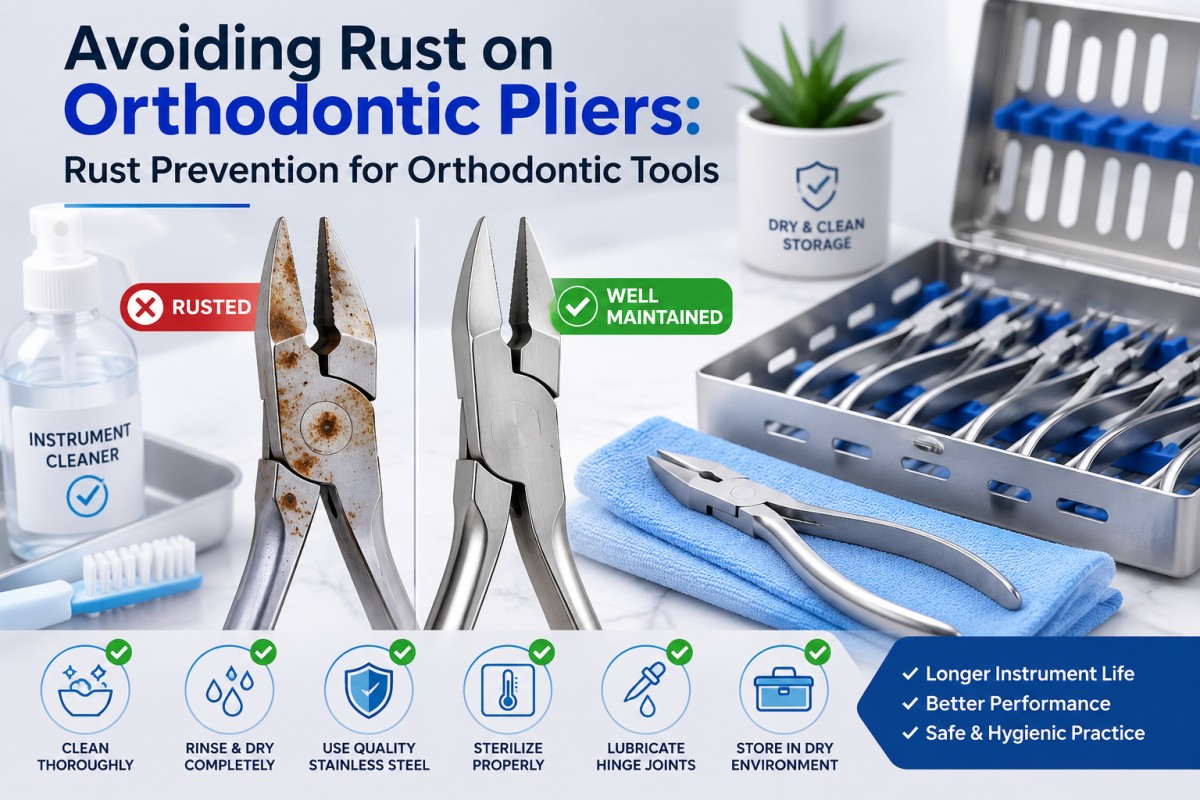
Rust not only affects the appearance of orthodontic tools but also compromises their functionality, precision, and longevity. More importantly, corroded instruments may create infection control concerns and increase replacement costs for dental practices.
Fortunately, preventing rust is straightforward when proper instrument care protocols are followed. This guide explains why orthodontic pliers rust, how to prevent corrosion, common mistakes to avoid, and best practices for extending the lifespan of your orthodontic instruments(Avoiding Rust on Orthodontic Pliers).
Why Rust Prevention Matters for Orthodontic Pliers
Orthodontic pliers are precision-engineered instruments designed with carefully aligned beaks, cutting edges, and box joints. Even minor corrosion can interfere with their smooth movement and accuracy(Avoiding Rust on Orthodontic Pliers).
Proper rust prevention helps:
- Preserve cutting efficiency
- Maintain smooth hinge movement
- Extend instrument lifespan
- Protect expensive orthodontic investments
- Reduce replacement costs
- Improve infection control
- Maintain professional clinical standards
Additionally, well-maintained instruments create a better experience for both clinicians and patients.
Can Stainless Steel Orthodontic Pliers Rust?
One of the biggest misconceptions is that stainless steel never rusts.
The reality is that stainless steel is rust-resistant—not rust-proof.
Orthodontic pliers are manufactured using high-grade surgical stainless steel that contains chromium. Chromium forms a protective oxide layer on the instrument’s surface. However, this protective layer can become damaged through improper handling, harsh chemicals, poor cleaning practices, or exposure to moisture.
Once the protective layer breaks down, corrosion may begin.
Common Causes of Rust on Orthodontic Pliers
Understanding why rust develops is the first step toward preventing it.
1. Inadequate Cleaning Before Sterilization
Organic debris, blood, saliva, and dental materials left on orthodontic pliers can react during sterilization cycles.
Over time, these contaminants promote corrosion.
Always clean instruments thoroughly before placing them in the autoclave.
2. Prolonged Moisture Exposure
Moisture is one of the leading causes of rust.
Leaving orthodontic pliers wet after cleaning or sterilization creates ideal conditions for oxidation.
Dry instruments completely before storage.
3. Poor Water Quality
Hard water contains minerals such as calcium, magnesium, and iron.
These mineral deposits remain on instrument surfaces and gradually contribute to staining and corrosion.
Using deionized or distilled water during the final rinse significantly reduces mineral buildup.
4. Harsh Chemical Cleaners
Bleach, chlorine-based disinfectants, and highly acidic cleaning agents can damage stainless steel.
These chemicals destroy the protective chromium oxide layer, making instruments more vulnerable to rust.
Always use cleaning products specifically designed for dental instruments.
5. Contact with Dissimilar Metals
Mixing orthodontic pliers with carbon steel or lower-grade instruments during cleaning or sterilization may lead to galvanic corrosion.
Separate premium stainless steel instruments whenever possible.
6. Incorrect Sterilization Procedures
Overloading autoclaves, using incorrect sterilization parameters, or failing to dry instruments properly can increase corrosion risk.
Follow manufacturer recommendations for every sterilization cycle.
Signs Your Orthodontic Pliers Are Developing Rust
Early detection helps prevent permanent damage.
Watch for:
- Brown or orange discoloration
- Small rust spots
- Rough instrument surfaces
- Stiff box joints
- Reduced cutting efficiency
- Difficulty opening or closing pliers
- Surface pitting
If corrosion progresses, instrument performance can decline rapidly.
Step-by-Step Rust Prevention for Orthodontic Tools
Step 1: Clean Immediately After Use
The sooner orthodontic pliers are cleaned, the easier it becomes to remove contaminants.
Avoid allowing blood, composite, cement, or saliva to dry on instrument surfaces.
Immediate cleaning minimizes corrosion risk.
Step 2: Use Enzymatic Instrument Cleaners
Enzymatic cleaners dissolve biological debris without damaging stainless steel.
These solutions are safer than harsh household chemicals and help preserve the instrument finish.
Step 3: Ultrasonic Cleaning
Ultrasonic cleaners remove debris from difficult-to-reach areas such as:
- Box joints
- Hinges
- Serrated jaws
- Fine tips
Ultrasonic cleaning reduces manual scrubbing, which can scratch protective surfaces.
Step 4: Rinse with Distilled or Deionized Water
A final rinse using purified water prevents mineral deposits.
This simple step significantly reduces staining and corrosion over time.
Step 5: Dry Instruments Completely
Never package damp orthodontic pliers.
Use:
- Medical-grade compressed air
- Lint-free towels
- Instrument drying cabinets
Even small amounts of moisture can initiate corrosion.
Step 6: Lubricate Hinged Instruments
Orthodontic pliers contain moving joints that benefit from routine lubrication.
Apply water-soluble instrument lubricant before sterilization according to the manufacturer’s instructions.
Benefits include:
- Reduced friction
- Smoother movement
- Lower wear
- Better corrosion protection
Step 7: Sterilize Correctly
Autoclaving remains the gold standard for orthodontic instrument sterilization.
However, proper loading is essential.
Do not:
- Overload trays
- Stack heavy instruments
- Block steam circulation
Adequate steam penetration ensures both sterilization and proper drying.
Step 8: Store Instruments Properly
Storage conditions play a major role in rust prevention.
Store orthodontic pliers:
- In dry environments
- Inside sterilization pouches or cassettes
- Away from humidity
- Away from chemical vapors
- In dedicated instrument drawers
Proper organization also reduces accidental damage.
Best Practices for Daily Orthodontic Pliers Maintenance
Daily maintenance keeps instruments functioning like new.
Develop a routine that includes:
- Immediate rinsing after procedures
- Thorough cleaning
- Inspection under adequate lighting
- Lubricating moving joints
- Checking cutting edges
- Ensuring complete dryness
- Safe storage after sterilization
Consistent maintenance reduces long-term repair costs.
Mistakes That Cause Orthodontic Instruments to Rust
Many practices unintentionally shorten instrument life through avoidable errors.
Common mistakes include:
- Leaving instruments soaking overnight
- Using bleach-based cleaners
- Scrubbing with steel wool
- Storing damp instruments
- Skipping lubrication
- Mixing stainless steel with carbon steel instruments
- Ignoring small rust spots
- Using damaged sterilization pouches
- Failing to inspect instruments regularly
Correcting these habits can dramatically increase instrument longevity.
How Often Should Orthodontic Pliers Be Inspected?
Routine inspections should occur:
After every cleaning cycle
Check for:
- Corrosion
- Cracks
- Loose joints
- Misaligned beaks
- Dull cutting edges
- Surface stains
Monthly maintenance inspections provide an additional opportunity to identify wear before it affects clinical performance.
Can Rust Be Removed from Orthodontic Pliers?
Minor surface stains may sometimes be removed using dental instrument rust removers approved for surgical stainless steel. However, aggressive polishing or abrasive materials can damage the protective surface.
If rust has caused:
- Deep pitting
- Cutting edge damage
- Joint corrosion
- Misalignment
Replacement is usually the safest option.
Patient safety should always take priority over extending the life of severely corroded instruments.
Choosing High-Quality Orthodontic Pliers Reduces Rust Risk
Quality begins with manufacturing.
When purchasing orthodontic pliers, look for:
- Surgical-grade stainless steel
- Precision machining
- Smooth polished surfaces
- Corrosion-resistant finish
- Reliable box joints
- Reputable manufacturers
- Compliance with international quality standards
Higher-quality instruments typically offer better resistance to corrosion and require fewer repairs over time.
Frequently Asked Questions (FAQs)
Why do stainless steel orthodontic pliers rust?
Although stainless steel is corrosion-resistant, improper cleaning, moisture, harsh chemicals, and damaged protective surfaces can still lead to rust formation.
What is the best way to prevent rust on orthodontic tools?
Clean instruments immediately after use, rinse with distilled water, dry thoroughly, lubricate hinged joints, sterilize correctly, and store them in a clean, dry environment.
Can ultrasonic cleaners prevent rust?
Yes. Ultrasonic cleaners effectively remove debris from hard-to-reach areas, reducing contaminants that contribute to corrosion when used alongside proper drying and sterilization.
Should orthodontic pliers be lubricated?
Yes. Water-soluble instrument lubricants help protect moving joints, reduce friction, and improve long-term instrument performance.
Is surface rust dangerous?
Even minor rust indicates that the protective surface has been compromised. Instruments showing corrosion should be inspected carefully and serviced or replaced if necessary.
Final Thoughts
Avoiding rust on orthodontic pliers is not simply about preserving their appearance—it is essential for maintaining precision, ensuring patient safety, and protecting your investment in high-quality orthodontic instruments. By following a consistent routine that includes immediate cleaning, proper drying, correct sterilization, regular lubrication, and appropriate storage, dental professionals can significantly reduce the risk of corrosion.
Moreover, routine inspections and adherence to manufacturer-recommended maintenance protocols help identify early signs of wear before they affect clinical performance. In the long run, implementing these best practices for rust prevention not only extends the lifespan of orthodontic tools but also supports reliable treatment outcomes and a more efficient, cost-effective orthodontic practice.