
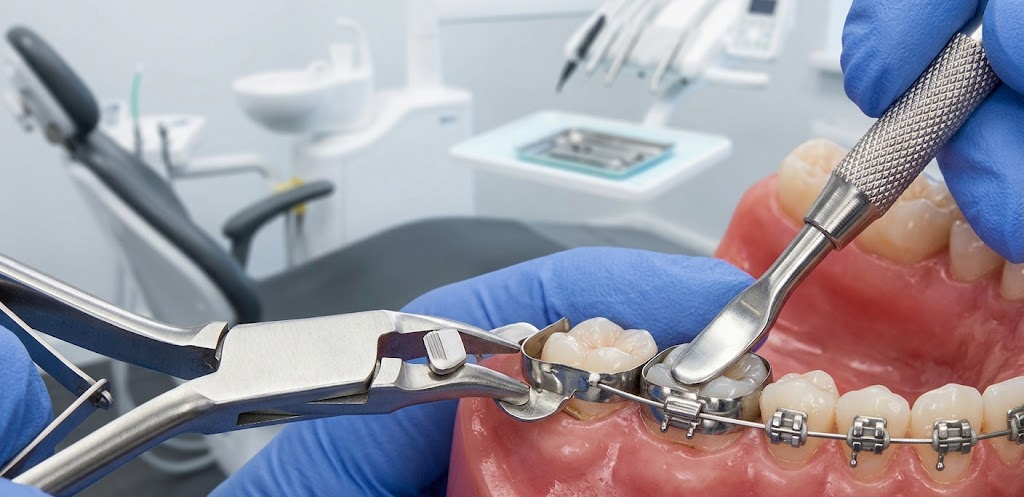
Orthodontic treatment relies on precision at every stage, from bracket placement to band positioning. Among the most essential instruments used in orthodontic procedures are band seating and removal tools, which help clinicians accurately place and safely remove orthodontic bands. These instruments are designed to improve control, reduce chair time, and enhance patient comfort during treatment.
Understanding the mechanics and design features of these tools allows orthodontists to work more efficiently while maintaining the highest standards of clinical accuracy.
What Are Orthodontic Bands?
Orthodontic bands are thin metal rings that fit around the molars and premolars. They serve as stable anchors for orthodontic appliances such as archwires, brackets, and attachments.
Unlike bonded brackets, bands must be precisely seated around the tooth to ensure:
- Secure appliance attachment
- Proper force distribution during tooth movement
- Long-term stability throughout treatment
Because bands must fit tightly around teeth, specialized instruments are required to place and remove them safely.
The Role of Band Seating Tools
Band seating tools are designed to help orthodontists apply controlled pressure when positioning bands onto teeth. Proper seating ensures that the band fits snugly without damaging surrounding structures.
Key Functions
Band seating instruments help clinicians:
- Apply even pressure during placement
- Position bands accurately around molars
- Avoid slippage during insertion
- Reduce patient discomfort
These tools allow orthodontists to seat bands quickly while maintaining precise control over the applied force.
Structural Features of Band Seating Instruments
The effectiveness of a band seater depends largely on its design. Several structural features contribute to its functionality.
1. Ergonomic Handle Design
An ergonomic handle provides a comfortable grip and allows clinicians to maintain steady control throughout the procedure.
Benefits include:
- Reduced hand fatigue during long procedures
- Improved tactile feedback
- Better control when applying seating pressure
Handles often feature textured or knurled surfaces to prevent slipping.
2. Soft or Replaceable Seating Tips
Many band seaters include soft plastic or polymer tips that help distribute pressure evenly across the band.
Advantages include:
- Protection of tooth enamel
- Reduced patient discomfort
- Better force distribution when seating the band
Replaceable tips also help maintain hygiene and ensure consistent performance.
3. Angled Working Ends
Angled working ends allow clinicians to access posterior teeth more easily. Since molars are located deep in the oral cavity, angled tips help maintain visibility and control.
This feature helps orthodontists:
- Reach difficult areas of the mouth
- Maintain a natural wrist position
- Apply pressure precisely where needed
Mechanics of Band Removal Instruments
At the end of orthodontic treatment—or when adjustments are required—bands must be removed carefully without damaging teeth or surrounding tissues.
Band removal pliers are specifically designed to break the bond between the band and tooth while protecting the enamel.
How Band Removal Tools Work
Band removal instruments use a lever-action mechanism. One tip grips the band while another rests gently against the tooth surface, allowing controlled lifting of the band.
This design ensures:
- Controlled removal force
- Reduced risk of enamel damage
- Minimal discomfort for the patient
Key Structural Elements of Band Removal Pliers
1. Stabilizing Pad or Rest
A protective pad rests against the tooth surface while the plier tip engages the band. This pad distributes pressure safely and prevents direct force on enamel.
2. Precision Beak Design
The beak is shaped to grip the edge of the orthodontic band securely. Precision machining allows the instrument to lift the band without slipping.
3. Spring-Loaded Mechanism
Many band removal pliers include a spring-loaded handle, which automatically reopens the instrument after compression.
This feature helps:
- Reduce hand fatigue
- Improve procedural speed
- Maintain consistent force during removal
Clinical Benefits of Well-Designed Band Instruments
When band seating and removal tools are properly engineered, they offer several advantages in orthodontic practice.
Improved Efficiency
Precise instruments allow orthodontists to place and remove bands quickly, reducing chair time during appointments.
Enhanced Patient Comfort
Controlled pressure and ergonomic design minimize discomfort during procedures.
Better Clinical Accuracy
High-quality tools help ensure that bands are properly seated and safely removed, maintaining treatment effectiveness.
Reduced Hand Fatigue
Ergonomic handles and spring mechanisms help clinicians perform repetitive tasks comfortably.
Importance of High-Quality Materials
Orthodontic instruments are exposed to repeated sterilization and constant clinical use. High-quality materials such as medical-grade stainless steel ensure durability and performance.
Benefits of premium materials include:
- Corrosion resistance
- Long-term structural stability
- Reliable performance after multiple sterilization cycles
- Maintained precision of tips and working edges
Investing in durable instruments ensures consistent clinical outcomes and long-term reliability.
Choosing the Right Band Seating and Removal Tools
When selecting orthodontic positioning tools, clinicians should consider several factors:
- Ergonomic handle design
- Precision-machined working tips
- Replaceable or protective seating pads
- Durable stainless steel construction
- Balanced spring tension for removal pliers
These features help ensure efficiency, safety, and comfort during orthodontic procedures.
Final Thoughts
Band seating and removal may appear to be simple procedures, but they require precise instruments and careful technique. Orthodontic positioning tools are specifically engineered to provide controlled force, accurate placement, and safe removal of bands.
By understanding the mechanics and structural features of these tools, orthodontists can improve workflow efficiency, reduce patient discomfort, and maintain consistent treatment outcomes.
In modern orthodontics, well-designed instruments are not just accessories—they are essential components of successful clinical practice.