
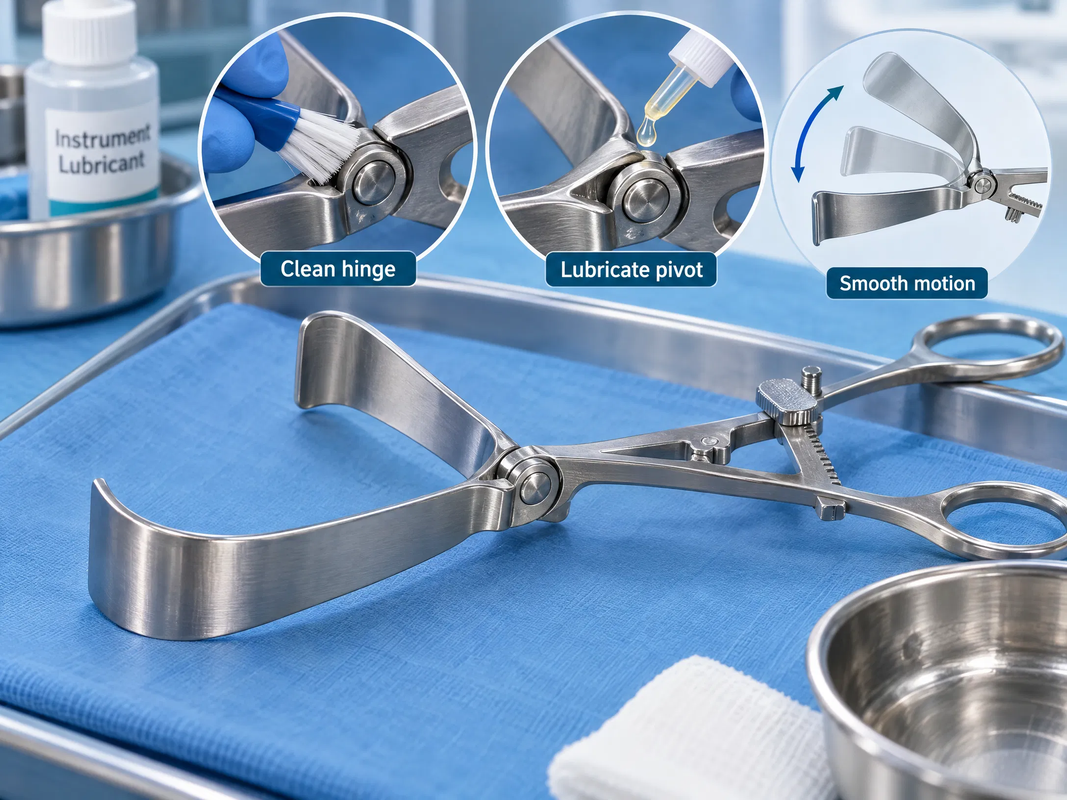
In surgical and dental settings, stainless steel retractors with hinged joints are essential for holding tissue and maintaining visibility during procedures. However, frequent sterilization, improper cleaning, and lack of lubrication can cause joint stiffness, making instruments difficult to open or close (Stainless steel retractor maintenance).
Proper maintenance not only ensures smooth instrument movement but also extends the lifespan of valuable surgical tools. This guide explains why hinged retractors become stiff and how healthcare facilities can prevent it through proper care and maintenance.
Why Do Hinged Retractors Become Stiff?
Hinged surgical instruments contain box locks, joints, or pivot screws that allow movement. Over time, these areas can accumulate residues or corrosion.
Common causes of joint stiffness include:
- Protein and blood residue trapped in the joint
- Mineral deposits from hard water during washing
- Improper sterilization cycles
- Lack of instrument lubrication
- Chemical damage from harsh cleaning agents
When these issues occur repeatedly, the hinge mechanism loses its smooth function, leading to resistance or complete locking.
Importance of Regular Retractor Maintenance
Maintaining stainless steel retractors helps healthcare facilities achieve several operational benefits:
- Smooth surgical workflow – instruments function without interruption
- Extended instrument lifespan – reduces replacement costs
- Improved infection control – proper cleaning eliminates contaminants
- Protection against corrosion and wear
Consistent care ensures that retractors remain safe, precise, and reliable during surgical procedures.
Step-by-Step Cleaning Process for Hinged Retractors
Proper cleaning is the first defense against stiffness.
1. Immediate Pre-Cleaning After Use
After a surgical procedure:
- Rinse instruments with lukewarm distilled water
- Remove visible blood and tissue debris
- Avoid allowing contaminants to dry on the instrument
Dry residues are harder to remove and may damage joints during sterilization.
2. Ultrasonic Cleaning
Ultrasonic cleaners help remove microscopic debris trapped inside joints.
Best practices include:
- Use neutral pH enzymatic detergents
- Open the hinged instrument fully
- Follow manufacturer-recommended cleaning cycles
Ultrasonic cleaning prevents residue buildup that causes joint friction.
3. Manual Brushing of Joints
Even with automated systems, manual cleaning may still be necessary.
Use:
- Soft nylon brushes
- Cleaning tools designed for box locks and hinges
This ensures debris hidden inside pivot areas is removed completely.
Proper Drying Techniques
Moisture left inside joints can cause corrosion and mineral deposits.
Effective drying methods:
- Use lint-free cloths
- Apply compressed air to joints
- Ensure instruments are completely dry before sterilization
Dry instruments are less likely to develop stiffness or corrosion.
Lubrication: The Key to Smooth Hinges
One of the most overlooked maintenance steps is instrument lubrication.
Use medical-grade instrument milk or water-soluble lubricants designed for surgical tools.
Benefits of lubrication include:
- Reduces metal-to-metal friction
- Prevents wear in box locks
- Maintains smooth opening and closing action
Important tips:
- Apply lubrication after cleaning and before sterilization
- Use sterilization-compatible lubricants
- Avoid oil-based lubricants that can interfere with sterilization
Sterilization Best Practices
Incorrect sterilization can also damage hinged retractors.
Recommended practices:
- Do not overload autoclave trays
- Keep hinged instruments in an open position
- Follow recommended temperature and cycle settings
- Allow instruments to cool naturally before handling
This prevents pressure stress on joints and ensures proper sterilization.
Routine Inspection and Preventive Maintenance
Regular inspection helps detect issues before they affect surgical performance.
Healthcare staff should check for:
- Joint stiffness or resistance
- Visible rust or discoloration
- Loose or misaligned hinges
- Surface pitting or corrosion
If problems appear, the instrument should be serviced or removed from surgical use immediately.
Storage Practices That Prevent Joint Damage
Proper storage is often overlooked but plays a major role in instrument longevity.
Best practices include:
- Store retractors in dedicated surgical instrument trays
- Avoid stacking instruments heavily on top of each other
- Use protective silicone holders or racks
- Keep storage areas clean and dry
These steps prevent mechanical damage and preserve hinge alignment.
Training Staff on Instrument Care
Hospitals and dental clinics should ensure that sterilization technicians and surgical staff understand proper instrument maintenance procedures.
Training programs should cover:
- Correct cleaning protocols
- Safe sterilization cycles
- Lubrication procedures
- Routine inspection methods
Well-trained staff significantly reduce the risk of instrument damage and joint stiffness.
Conclusion
Stainless steel retractors are built for durability, but improper maintenance can quickly lead to joint stiffness and reduced performance. By following structured cleaning, drying, lubrication, and sterilization practices, healthcare facilities can keep hinged instruments functioning smoothly for years.
Regular inspection, proper storage, and staff training ensure that surgical retractors remain safe, reliable, and ready for every procedure.