
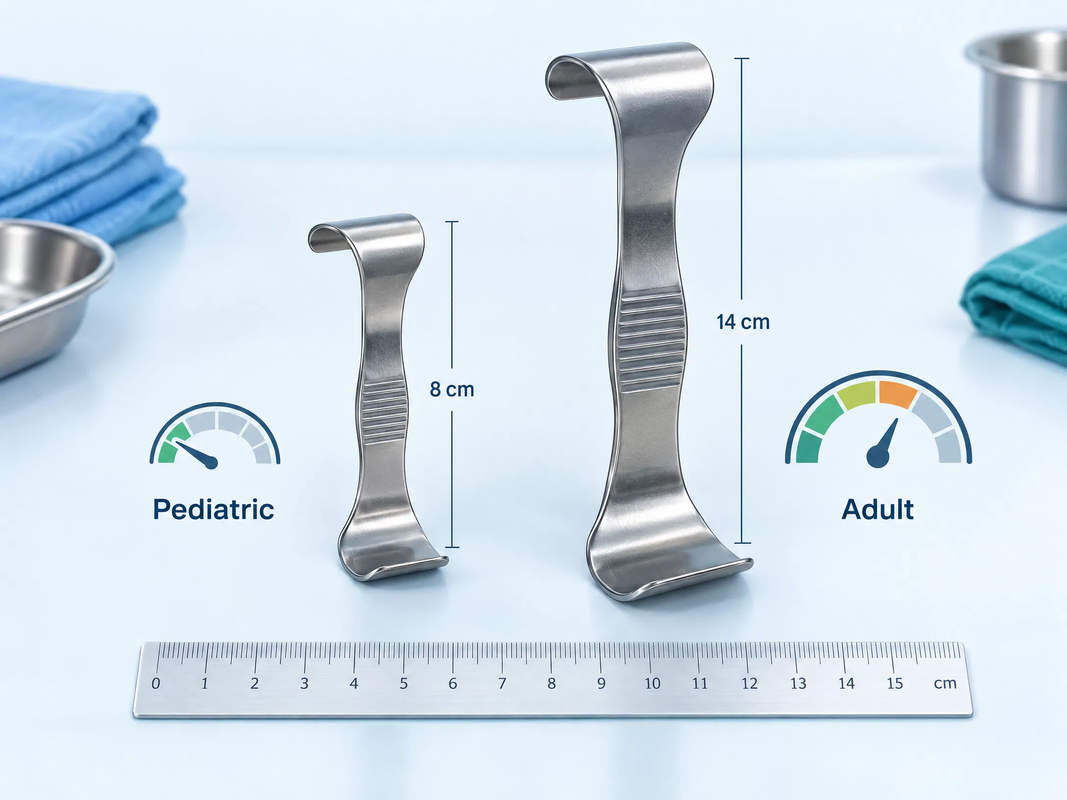
Surgical retractors are essential instruments used to hold tissues aside and provide clear visibility during medical and dental procedures. However, selecting the correct type of retractor is crucial because pediatric and adult patients require different instrument designs.
Children have smaller and more delicate anatomical structures, whereas adults typically require stronger instruments capable of managing thicker tissues. Therefore, understanding the size specifications and force requirements of both types of retractors is critical for safe surgical practice.
Understanding the Role of Surgical Retractors
Retractors are designed to separate tissue, expose surgical sites, and maintain access during procedures. These instruments are widely used in various specialties, including:
- Dental and oral surgery
- ENT procedures
- Plastic and reconstructive surgery
- Orthopedic surgery
- General surgical operations
Depending on the surgical requirement, retractors may be hand-held or self-retaining. Moreover, their size and blade design must match the patient’s anatomy to ensure safe and effective retraction.
Why Retractor Size Is Important
Patient anatomy significantly influences instrument selection. In pediatric patients, tissues are smaller, softer, and more sensitive to pressure. As a result, using adult-sized retractors can lead to unnecessary tissue stress.
In contrast, adult surgical fields often require larger blades and stronger retraction capability. Consequently, retractors designed for adult patients are usually longer and structurally stronger.
Proper instrument sizing helps surgeons achieve:
- Improved surgical visibility
- Reduced tissue trauma
- Greater procedural control
- Enhanced patient safety
Pediatric Retractors: Design and Size Specifications
Pediatric retractors are specifically developed for smaller surgical spaces and delicate tissues. Because of this, their design focuses on precision and gentle tissue handling.
Key Design Features
Typically, pediatric retractors include:
- Shorter overall instrument length
- Narrower blades
- Smooth or rounded edges
- Lightweight construction
In most cases, the typical size specifications are:
- Instrument length: 8 cm – 14 cm
- Blade width: 5 mm – 15 mm
- Shallow blade depth
These dimensions allow surgeons to work efficiently while minimizing pressure on surrounding tissues.
Common Clinical Applications
Pediatric retractors are frequently used in:
- Pediatric dentistry
- Tonsil and ENT surgeries
- Pediatric plastic surgery
- Minor surgical procedures in infants and children
Because surgical spaces are smaller in these cases, compact instruments significantly improve access and visibility.
Adult Retractors: Design and Size Specifications
Unlike pediatric instruments, adult retractors are designed to manage larger surgical fields and stronger tissue resistance. For this reason, they are typically longer and more robust.
Structural Features
Adult retractors commonly include:
- Longer handles for better leverage
- Wider blades for larger exposure areas
- Deeper blade curvature
- Stronger construction for sustained retraction
Generally, the size specifications are:
- Instrument length: 14 cm – 30 cm
- Blade width: 15 mm – 40 mm
- Deeper blade design
These features enable surgeons to maintain stable exposure throughout longer or more complex procedures.
Clinical Applications
Adult retractors are widely used in:
- Oral and maxillofacial surgery
- Orthopedic procedures
- General surgery
- Plastic and reconstructive operations
- Abdominal and thoracic surgeries
As a result, these instruments support effective retraction in larger anatomical areas.
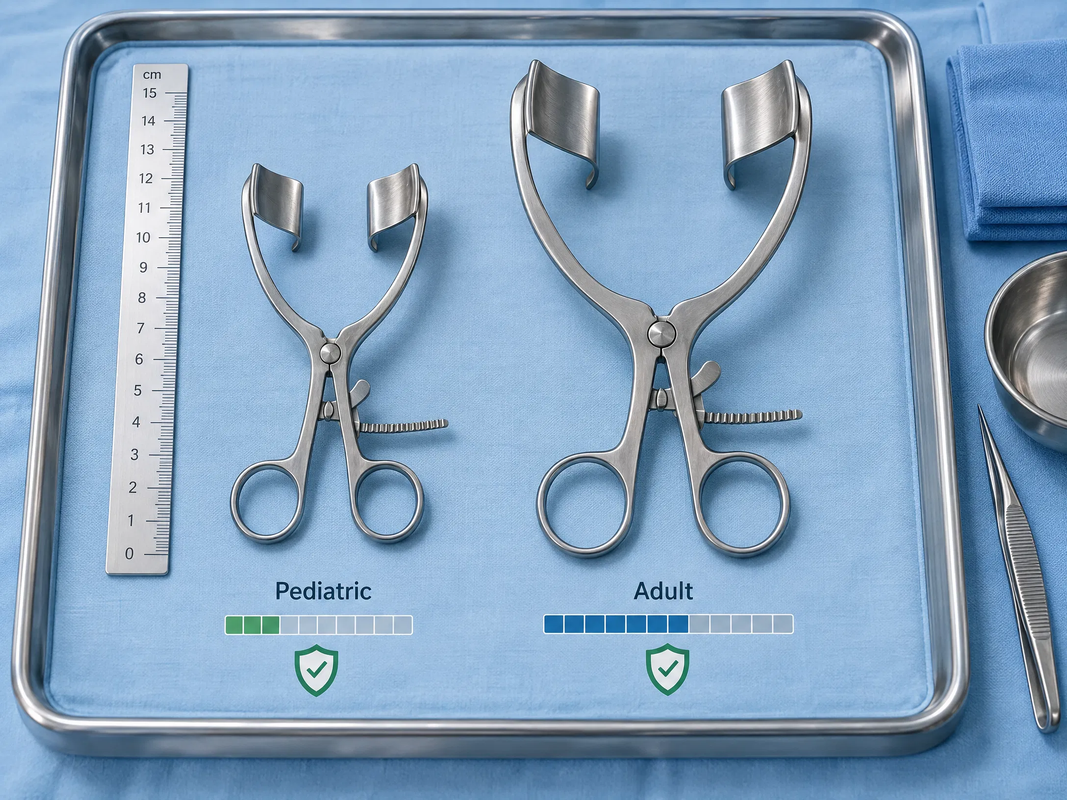
Force Considerations in Pediatric Surgery
Applying the correct amount of force is critical during pediatric procedures. Since children’s tissues are more elastic and fragile, excessive pressure can easily cause trauma.
Therefore, surgeons must apply minimal and carefully controlled retraction force. Pediatric retractors are designed to distribute pressure more evenly across tissues. Additionally, their lightweight structure allows clinicians to maintain precise control.
Proper force management helps prevent:
- Tissue bruising
- Nerve compression
- Postoperative swelling
- Unnecessary surgical complications
Force Considerations in Adult Surgery
Adult tissues are generally thicker and more resistant to mechanical pressure. Consequently, surgical retractors for adult patients are engineered to tolerate higher retraction forces.
Nevertheless, controlled force remains essential. Excessive pressure may still damage tissue or impair circulation. For this reason, surgeons must maintain a balance between adequate exposure and patient safety.
Furthermore, ergonomic instrument designs help reduce hand fatigue while maintaining stable tissue retraction.
Major Differences Between Pediatric and Adult Retractors
| Feature | Pediatric Retractors | Adult Retractors |
|---|---|---|
| Instrument Length | 8–14 cm | 14–30 cm |
| Blade Width | Narrow | Wide |
| Force Requirement | Minimal | Moderate to High |
| Instrument Weight | Lightweight | Heavier |
| Surgical Space | Small anatomical areas | Larger surgical fields |
Clearly, selecting the correct retractor type improves both surgical efficiency and patient safety.
Best Practices for Safe Retractor Use
To ensure optimal surgical outcomes, healthcare professionals should follow several important guidelines:
- Choose retractors based on patient age and anatomy
- Apply gentle and controlled retraction force
- Monitor tissue condition throughout the procedure
- Use instruments with smooth and polished surfaces
- Ensure proper cleaning, sterilization, and maintenance
Additionally, many hospitals maintain separate pediatric and adult instrument sets to simplify instrument selection.
Conclusion
Pediatric and adult retractors differ significantly in size, blade design, and force requirements. While pediatric retractors prioritize gentle handling and compact design, adult retractors provide stronger support for larger surgical fields.
Therefore, selecting the appropriate instrument is essential for safe tissue management, improved surgical visibility, and successful patient outcomes. By understanding these differences, healthcare professionals can ensure safer procedures for patients of all ages.