
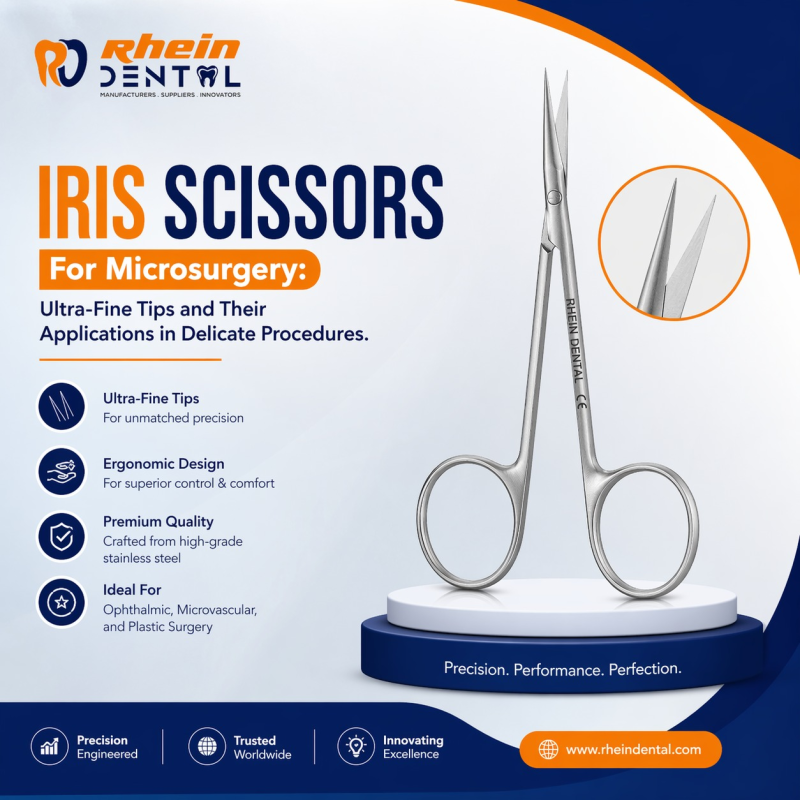
In the world of microsurgery, precision is everything. When working with tiny structures such as blood vessels, nerves, or delicate tissues, even the smallest error can have significant consequences. Among the essential tools that enable surgeons to perform with exceptional accuracy are Iris scissors—a finely crafted instrument designed for intricate and controlled cutting.
Originally developed for ophthalmic procedures, Iris scissors have evolved into a staple across multiple surgical specialties due to their ultra-fine tips, sharp blades, and superior maneuverability. This article explores their design, features, and the critical role they play in delicate surgical procedures.
What Are Iris Scissors?
Iris scissors are small, lightweight surgical scissors characterized by their short blades and fine, pointed or curved tips. They are typically made from high-quality stainless steel, ensuring durability, corrosion resistance, and consistent performance.
Although initially designed for eye surgeries involving the iris, these scissors are now widely used in:
- Microsurgery
- Plastic and reconstructive surgery
- Dermatology
- ENT (ear, nose, and throat) procedures
- Veterinary surgery
Their versatility and precision make them indispensable in any procedure requiring delicate tissue handling.
Key Features of Iris Scissors
1. Ultra-Fine Tips
The defining feature of Iris scissors is their extremely fine, sharp tips, allowing surgeons to perform precise cuts in confined and sensitive areas without damaging surrounding tissues.
2. Straight and Curved Variants
- Straight Iris scissors are ideal for surface-level cutting and suture trimming.
- Curved Iris scissors provide better visibility and control when working beneath tissue layers or in deeper surgical fields.
3. Precision Blades
The blades are designed for clean, controlled cuts, minimizing tissue trauma and promoting faster healing.
4. Lightweight Design
Their compact size reduces hand fatigue, enabling surgeons to maintain steady control during prolonged procedures.
Applications in Microsurgery
1. Ophthalmic Surgery
Iris scissors are most commonly associated with eye procedures, where precision is critical. Surgeons use them for:
- Cutting delicate eye tissues
- Performing iridectomy procedures
- Trimming sutures in confined ocular spaces
2. Plastic and Reconstructive Surgery
In cosmetic and reconstructive procedures, these scissors are used to:
- Shape and refine soft tissues
- Remove excess skin or fine structures
- Perform detailed work in facial surgeries
3. Vascular and Nerve Surgery
Microsurgical procedures involving tiny blood vessels and nerves demand extreme accuracy. Iris scissors help in:
- Dissecting fine tissues
- Avoiding accidental damage to critical structures
4. Dermatological Procedures
Dermatologists use Iris scissors for:
- Removing small lesions or growths
- Performing minor skin surgeries with minimal scarring
5. Suture Removal and Trimming
Their sharp tips allow for precise suture cutting without disturbing healing tissues, making them ideal for post-operative care.
Advantages of Using Iris Scissors
- Exceptional precision in delicate procedures
- Minimal tissue trauma, improving patient outcomes
- Versatility across multiple surgical disciplines
- Enhanced control due to ergonomic design
- Reliable performance with high-quality materials
Choosing the Right Iris Scissors
When selecting Iris scissors for professional use, consider the following:
- Tip type: Sharp tips for precision, blunt tips for safer dissection
- Blade curvature: Straight or curved based on surgical needs
- Material quality: Surgical-grade stainless steel or tungsten carbide inserts for extended durability
- Grip and balance: Ensure comfortable handling for long procedures
Maintenance and Care
To maintain optimal performance and longevity:
- Clean and sterilize after each use
- Avoid cutting materials beyond intended tissue types
- Inspect regularly for blade alignment and sharpness
- Store in protective cases to prevent tip damage
Proper care ensures that the scissors retain their precision and remain safe for repeated use.
Conclusion
Iris scissors are a cornerstone of microsurgical instrumentation, offering unmatched precision through their ultra-fine tips and expertly engineered design. Whether in ophthalmology, plastic surgery, or dermatology, these scissors empower surgeons to perform delicate procedures with confidence and accuracy.