
In dental laboratory workflows, achieving a precise marginal fit is non-negotiable. Whether you’re working on crowns, bridges, or inlays, the final adaptation of metal margins directly impacts clinical success. Among the essential instruments used for this delicate task are burnishers. However, not all burnishers perform the same—especially when comparing smooth and serrated surfaces (Smooth vs Serrated Burnishers).
This guide explores how each type functions and when to use them for optimal metal margin adaptation.
What Is a Burnisher in Dental Lab Work?
A burnisher is a hand instrument designed to refine, adapt, and polish metal surfaces—particularly at the margins of restorations. By applying controlled pressure, it helps improve the fit of a casting against the die, ensuring better sealing and reducing marginal discrepancies.
Why Metal Margin Adaptation Matters
Proper marginal adaptation is critical because it:
- Minimizes microleakage
- Enhances longevity of restorations
- Improves patient comfort
- Reduces risk of secondary caries and periodontal issues
Even a well-cast restoration may require minor adjustments, and that’s where the correct burnisher surface becomes essential.
Smooth Burnishers: Precision and Polish
Smooth burnishers feature a polished, rounded working end without any texture. They are widely used in the final stages of margin refinement.
Key Advantages
- Gentle Pressure Application: Ideal for thin margins without risking distortion
- Surface Polishing: Leaves a clean, shiny finish
- Controlled Adaptation: Helps refine margins without removing material
Best Use Cases
- Final margin adaptation after initial fitting
- Burnishing gold or soft metal alloys
- Polishing and refining marginal edges
Practical Tip
Use light, consistent strokes and avoid excessive force—smooth burnishers are designed to refine, not reshape.
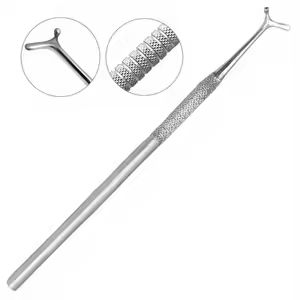
Serrated Burnishers: Grip and Control
Serrated burnishers have fine grooves or textured patterns on the working end. These provide enhanced grip during manipulation.
Key Advantages
- Improved Traction: Prevents slipping on metal surfaces
- Effective for Initial Adaptation: Helps move metal into place
- Better Control in Tight Areas: Especially useful for subgingival margins
Best Use Cases
- Early-stage margin adaptation
- Working with harder alloys
- Adjusting slightly overextended margins
Practical Tip
Apply controlled pressure and follow with a smooth burnisher to eliminate any surface marks left by the serrations.
Smooth vs. Serrated: When to Use Each?
| Feature | Smooth Burnisher | Serrated Burnisher |
|---|---|---|
| Surface Texture | Polished, non-textured | Grooved or textured |
| Primary Function | Refining and polishing | Initial adaptation and grip |
| Pressure Application | Light, controlled | Moderate, controlled |
| Risk of Surface Marks | Minimal | Slight (requires finishing) |
| Best Stage | Final finishing | Early adjustment |
Combining Both for Optimal Results
In practice, dental technicians often use both types in sequence:
- Start with a serrated burnisher to adjust and seat the margin
- Follow with a smooth burnisher to refine and polish the surface
This combination ensures both accurate adaptation and a high-quality finish.
Common Mistakes to Avoid
- Using serrated burnishers for final finishing: Can leave unwanted marks
- Applying excessive pressure: May distort thin margins
- Skipping polishing: Leads to rough edges and poor fit
- Using the wrong tool for the alloy type: Softer metals need gentler handling
Pro Tips for Better Margin Adaptation
- Work under magnification for better visibility
- Ensure the die is clean and properly trimmed
- Maintain your instruments—worn surfaces reduce effectiveness
- Practice consistent hand pressure and angulation
Conclusion
Understanding the difference between smooth and serrated burnishers can significantly improve your laboratory outcomes. While serrated burnishers offer control and grip during initial adaptation, smooth burnishers bring finesse and polish to the final result.
Mastering when and how to use each type ensures precise metal margin adaptation—leading to restorations that perform better, last longer, and meet the highest clinical standards.