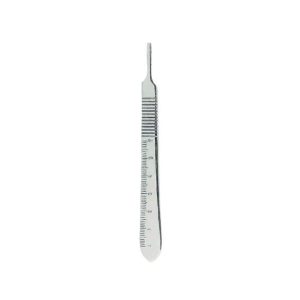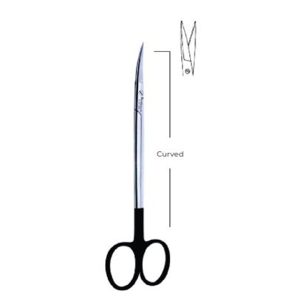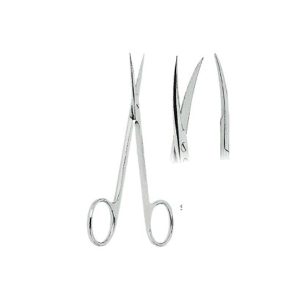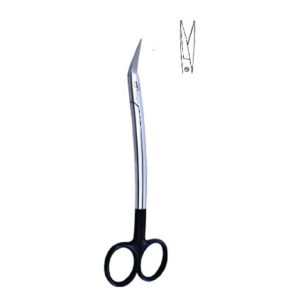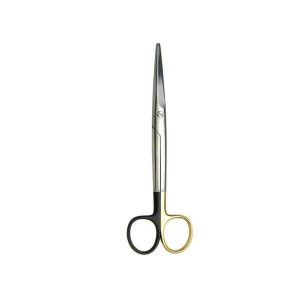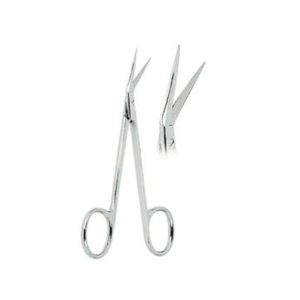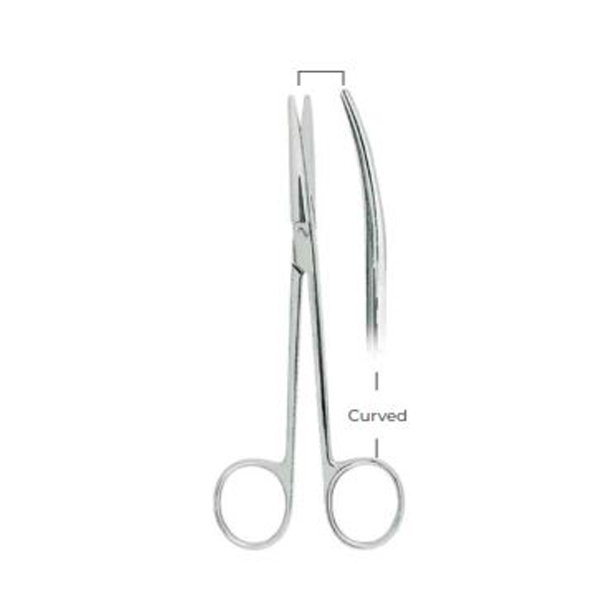

Metzenbaum-Delicate Dissecting Scissors Straight Fig.1 (14.5cm)
The Metzenbaum-Delicate Dissecting Scissors Straight Fig.1 (14.5cm) is a highly specialized surgical tool designed for precise dissection and smooth cutting.
Surgeons frequently use these scissors in general, plastic, and cardiovascular surgeries, where controlled movements and accuracy are essential.
Additionally, their straight blade design provides enhanced stability for cutting on flat surfaces.
One of the most notable features of these scissors is their long, slender blades, which allow for fine dissection with minimal tissue trauma.
Moreover, manufacturers craft them from high-quality stainless steel, ensuring exceptional durability and corrosion resistance.
As a result, they maintain their sharpness even after repeated sterilization.
Furthermore, their lightweight and ergonomic design minimizes hand fatigue, making them ideal for extended surgical procedures.
Since the straight blades provide better control, they enable surgeons to make precise, clean incisions with ease.
In addition, their smooth cutting action reduces unnecessary force, thereby improving overall surgical efficiency.
Besides delicate tissue dissection, surgeons also use these scissors for trimming sutures and removing dressings.
Consequently, medical professionals widely utilize them in general surgery, reconstructive procedures, and microsurgery.
Additionally, their non-slip handles offer a secure grip, ensuring steady and controlled movements.
Proper maintenance and sterilization are necessary to preserve their sharpness and functionality.
Given their superior precision, durability, and ergonomic design, the Metzenbaum-Delicate Dissecting Scissors Straight (14.5 cm) remains an indispensable tool in modern surgical settings.
In conclusion, these scissors provide exceptional accuracy and control, making them essential for delicate surgical procedures.
Whether used for tissue dissection or suture trimming, they significantly contribute to surgical efficiency and patient safety.