
Choosing the Right Implant Screwdrivers for Prosthetic Tightening
In implant dentistry, precision is crucial at every step, especially during prosthetic tightening. First, using the right implant screwdriver ensures screws are secured accurately (Implant screwdrivers). This prevents common complications such as loosening, fractures, or poor prosthetic fit, which can compromise the success of the implant. Choosing the correct tool also saves time and reduces stress for both the clinician and the patient.
Types of Implant Screwdrivers
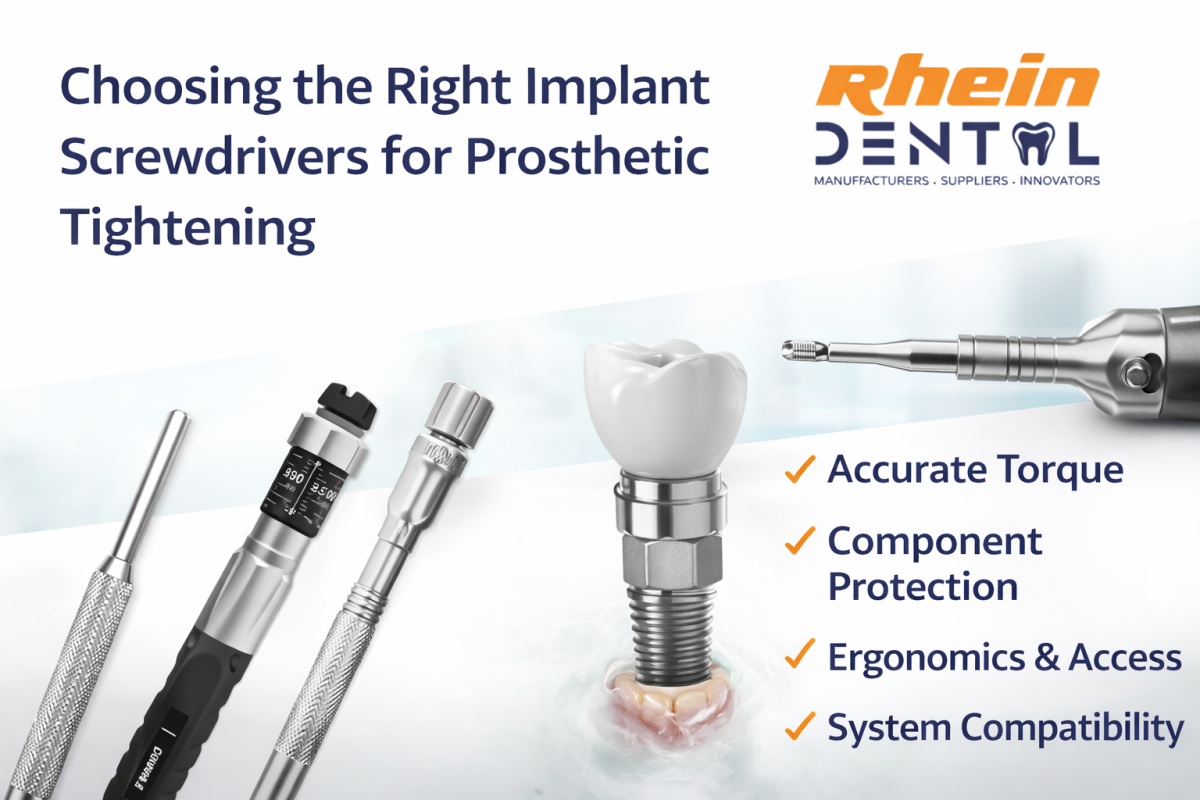
Manual screwdrivers provide tactile feedback, allowing dentists to control the tightening process precisely. Meanwhile, torque-controlled screwdrivers apply the manufacturer-recommended torque consistently, reducing the risk of over- or under-tightening. Additionally, ratchet screwdrivers improve access in difficult areas while maintaining accurate torque, making them ideal for posterior or angled implant placements. Each type has its own advantages depending on the clinical situation, number of implants, and patient anatomy.
Why Choosing the Right Screwdriver Matters
The correct screwdriver affects both clinical outcomes and prosthetic longevity:
- Accurate Torque Application: Each implant system requires specific torque. Using the correct screwdriver ensures proper tightening and reduces the risk of screw loosening or implant micro-movements.
- Protection of Components: Proper tools prevent damage to screw heads or internal implant connections, preserving the integrity of the implant system.
- Ergonomics and Access: High-quality screwdrivers improve comfort for the clinician and allow better access to posterior or angled sites.
- System Compatibility: Manufacturer-specific screwdrivers fit precisely, preventing slippage and ensuring consistent results.
Tips for Choosing the Right Screwdriver
- Always select the manufacturer-recommended screwdriver for your implant system.
- Consider ergonomics and handle design for efficiency.
- Prefer torque-controlled tools to maintain consistent results.
- Finally, regularly inspect and replace worn tips to avoid damage.
- Additionally, maintain proper sterilization protocols to ensure instrument longevity and patient safety.
Conclusion
In conclusion, choosing the right implant screwdriver is essential for precise prosthetic tightening. By using proper tools, clinicians can improve implant stability, reduce complications, and deliver long-lasting restorations. Ultimately, precision begins with selecting the right instrument, which ensures safe, predictable, and successful outcomes for every patient. Proper tool selection not only enhances clinical results but also builds patient trust in implant treatments.