
Dental Elevators in Tooth Extraction: Blade Design, Shank Angulation & Handle Structure Explained Through Luxation Physics
Tooth extraction is not just about force — it’s about controlled biomechanics. Dental elevators are precision instruments designed to luxate teeth gently, expand the alveolar socket, and mobilize roots before forceps delivery (Dental Elevators Design).
Understanding blade design, shank angulation, and handle structure helps clinicians apply the right physics with maximum control and minimum trauma.
Understanding Luxation: The Physics Behind Tooth Mobilization
Luxation is the process of loosening a tooth by severing periodontal ligament (PDL) fibers and expanding the surrounding bone. Dental elevators work primarily through:
- Lever mechanics
- Wedge principle
- Wheel-and-axle motion (in specific elevators)
Instead of brute pulling force, elevators convert controlled hand pressure into mechanical advantage, reducing trauma to bone and soft tissue (Dental Elevators Design).
1️⃣ Blade Design: Precision at the Working End
The blade (working tip) is the most critical structural component of a dental elevator.
Key Structural Features
- Concave inner surface – Adapts to the convex root surface for secure engagement
- Sharp but controlled edge – Helps cut PDL fibers without excessive bone damage
- Thin tapered tip – Allows insertion into narrow periodontal space
- Rounded back surface – Minimizes soft tissue trauma
How Blade Design Supports Luxation Physics
- Acts as a wedge when inserted between bone and root
- Converts vertical pressure into lateral expansion force
- Enables controlled leverage against alveolar bone
Straight elevators are commonly used for initial luxation, while Cryer-type elevators are effective for fractured roots using wheel-and-axle mechanics.
2️⃣ Shank Angulation: Force Direction & Accessibility
The shank connects the blade to the handle and plays a major role in force transmission and visibility.
Structural Characteristics
- Straight shank – Direct force transmission for anterior teeth
- Angled shank – Improved posterior access
- Offset design – Enhances visibility and prevents hand obstruction
- Rigid stainless steel construction – Prevents flex under load
Biomechanical Importance
- Controls direction of applied force
- Improves ergonomics and wrist positioning
- Reduces operator fatigue
- Maintains stability during deep root engagement
Correct angulation ensures that applied force remains controlled rather than destructive.
3️⃣ Handle Structure: Control, Grip & Torque Management
The handle is often overlooked, yet it directly influences precision and safety.
Common Handle Features
- Large diameter grip – Improves torque control
- Textured or serrated surface – Prevents slippage
- Ergonomic contouring – Supports palm grip technique
- Solid-core construction – Maintains balance and durability
Physics in Action
A well-designed handle allows:
- Controlled rotational movements
- Gradual force buildup
- Reduced hand strain
- Better tactile feedback
In luxation, excessive sudden force can fracture bone. A stable handle design ensures progressive and controlled force application.
Types of Elevators and Their Mechanical Role
- Straight Elevators – Used for initial loosening and PDL separation
- Cryer Elevators – Designed for broken roots using wheel-and-axle mechanics
- Periotomes – Focus on PDL severance with minimal bone expansion
- Warwick James Elevators – Thin blades for delicate root mobilization
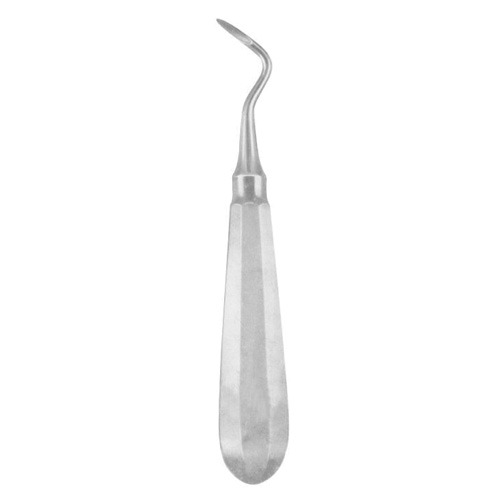
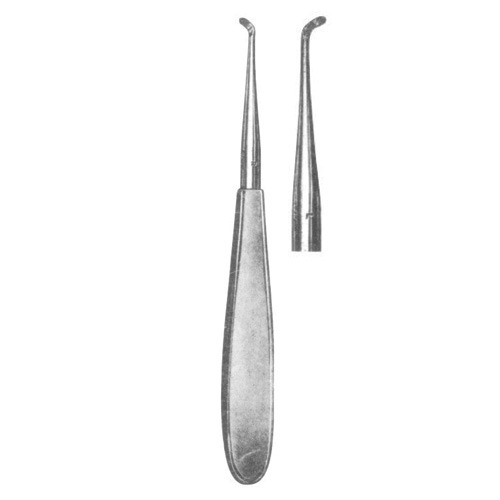
Each design supports a specific mechanical principle during extraction.
Why Structural Design Matters in Modern Exodontia
Modern extraction techniques prioritize:
- Minimal trauma
- Preservation of alveolar bone
- Reduced postoperative complications
- Improved implant-site integrity
High-quality stainless steel construction ensures:
- Corrosion resistance
- Repeated sterilization compatibility
- Long-term structural stability
When structural design aligns with biomechanical principles, extractions become more predictable and less traumatic.
Clinical Benefits of Understanding Elevator Physics
✔ More controlled luxation
✔ Reduced root fracture risk
✔ Improved patient comfort
✔ Lower risk of bone plate damage
✔ Better surgical outcomes
Conclusion
Dental elevators are biomechanical instruments engineered for controlled force application — not brute strength.
Blade geometry creates wedge action, shank angulation directs force efficiently, and handle design ensures torque control.
When clinicians understand the physics behind luxation and root mobilization, tooth extraction becomes a precise, efficient, and minimally traumatic procedure.