
Introduction
In modern dentistry, precision is no longer optional—it’s expected. As procedures become more refined and patient expectations continue to rise, clinicians are increasingly turning to enhanced visualization tools to improve diagnostic accuracy. Among these, magnifying dental mirrors stand out as a simple yet powerful upgrade to traditional instruments.
But when exactly should you use them? And how do they improve clinical outcomes? This blog explores the role of magnifying dental mirrors in achieving detailed, reliable inspections.
What Are Magnifying Dental Mirrors?
Magnifying dental mirrors are specially designed mirrors that incorporate optical magnification, allowing clinicians to view oral structures in greater detail than standard mirrors.
They typically offer:
- Magnification levels ranging from 2x to 5x
- Anti-fog and front-surface mirror technology
- High reflectivity for clearer images
These mirrors enhance visibility without requiring complex equipment, making them a practical addition to everyday dental practice.
Why Enhanced Visualization Matters
The oral cavity is a compact and complex environment. Detecting subtle changes—such as early caries, microfractures, or margin discrepancies—requires exceptional visual clarity.
Without magnification, clinicians may face:
- Missed early-stage conditions
- Reduced diagnostic confidence
- Increased reliance on additional imaging
Magnifying mirrors help bridge this gap by bringing fine details into clear focus.
Key Situations to Use Magnifying Dental Mirrors
1. Early Caries Detection
Initial carious lesions can be difficult to identify with the naked eye. Magnification allows clinicians to:
- Spot white spot lesions
- Detect enamel demineralization early
- Improve preventive care planning
2. Margin Inspection in Restorations
Checking the integrity of restoration margins is critical for long-term success.
Magnifying mirrors help in:
- Identifying marginal gaps
- Detecting overhangs or irregularities
- Ensuring proper finishing and polishing
3. Endodontic Procedures
Root canal treatments demand extreme precision.
With magnification, clinicians can:
- Locate canal orifices more easily
- Identify accessory canals
- Improve overall treatment accuracy
4. Periodontal Assessment
Evaluating gingival health and pocket conditions requires attention to detail.
Magnifying mirrors assist in:
- Observing subtle inflammation
- Detecting calculus deposits
- Monitoring tissue changes over time
5. Crack and Fracture Detection
Hairline cracks are often invisible under standard viewing.
Enhanced visualization enables:
- Early identification of fractures
- Better treatment planning
- Prevention of further tooth damage
Benefits of Using Magnifying Dental Mirrors
Improved Diagnostic Accuracy
Magnification reduces the chances of oversight, leading to more reliable diagnoses.
Enhanced Clinical Confidence
Clearer visibility allows clinicians to make decisions with greater certainty.
Minimally Invasive Dentistry
Early detection supports conservative treatment approaches, preserving more natural tooth structure.
Better Patient Communication
Magnified findings can be explained more effectively, helping patients understand their condition and treatment needs.
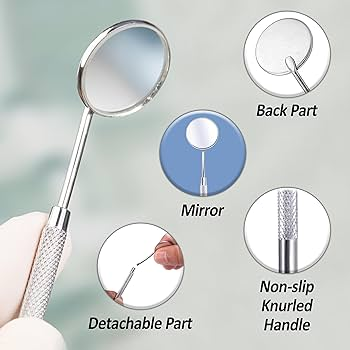
Magnifying Mirrors vs. Other Visualization Tools
| Tool | Advantages | Limitations |
|---|---|---|
| Magnifying Mirrors | Simple, cost-effective, easy to use | Limited magnification range |
| Loupes | Hands-free magnification | Requires adaptation |
| Microscopes | उच्च precision and magnification | Expensive, less portable |
Magnifying mirrors serve as a middle ground, offering enhanced visibility without the complexity of advanced systems.
Choosing the Right Magnifying Mirror
When selecting a magnifying dental mirror, consider:
- Magnification level (2x–3x for general use, higher for specialized tasks)
- Mirror size and shape
- Anti-fog properties
- Compatibility with handle systems
A well-chosen mirror can seamlessly integrate into daily workflows without disrupting efficiency.
Best Practices for Use
To maximize effectiveness:
- Maintain proper lighting conditions
- Keep mirrors clean and scratch-free
- Use indirect vision techniques effectively
- Combine with other diagnostic tools when necessary
Conclusion
Magnifying dental mirrors are a valuable asset for clinicians seeking greater precision in diagnosis and treatment. Whether detecting early caries, inspecting restorations, or performing endodontic procedures, these tools enhance visibility where it matters most.
In a field where detail defines success, investing in enhanced visualization isn’t just an upgrade—it’s a necessity.