
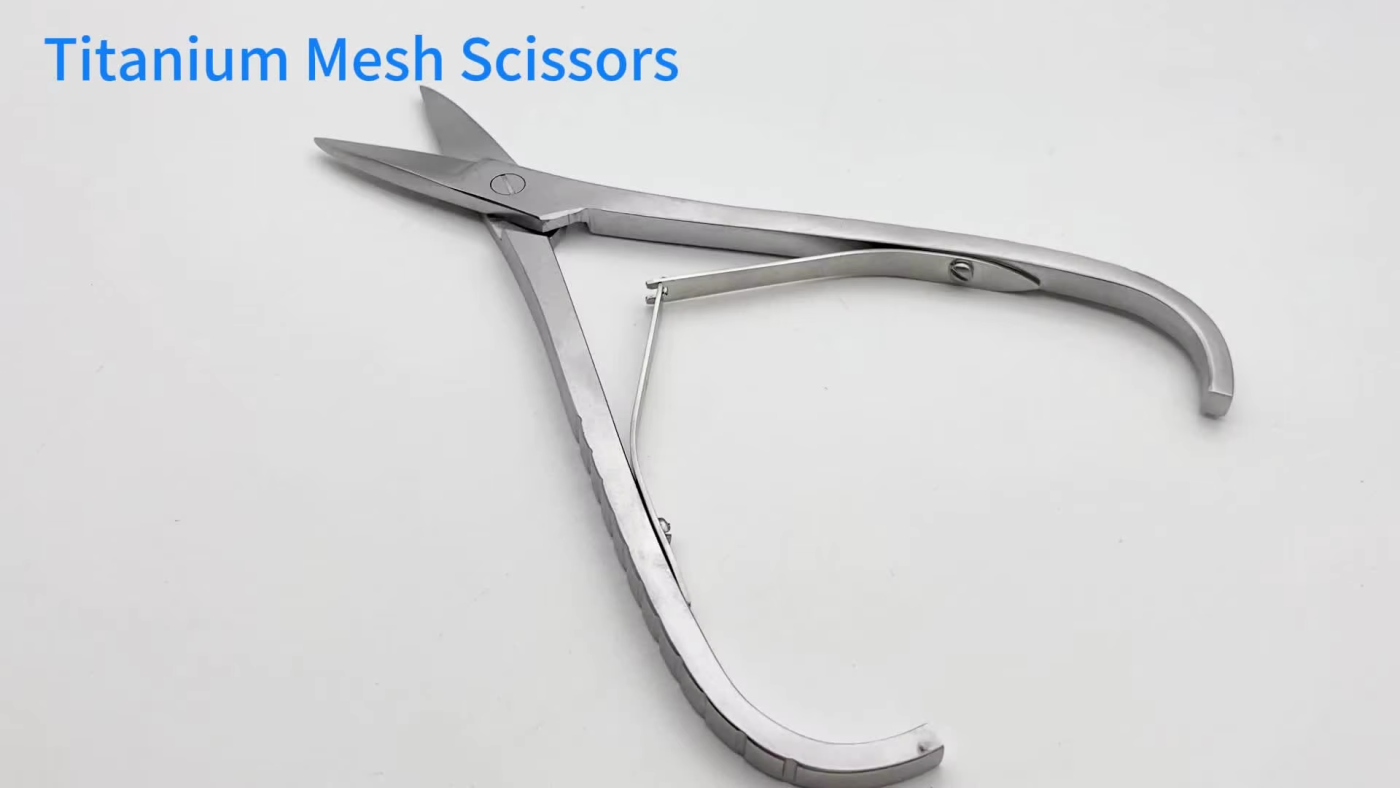
In guided bone regeneration (GBR) and advanced implantology, titanium mesh plays a critical role in maintaining space and supporting bone growth. However, shaping this rigid yet delicate material requires more than standard surgical scissors. Using the wrong instrument can lead to jagged edges, mesh deformation, or even compromised clinical outcomes.
That’s where specialized titanium mesh cutting scissors come in—designed specifically to deliver clean, controlled cuts without distorting the structure of the membrane.
Why Titanium Mesh Needs Specialized Cutting Instruments
Titanium mesh is strong, biocompatible, and resistant to corrosion. However, these same properties make it challenging to cut precisely. Unlike soft membranes, titanium mesh:
- Resists conventional blade pressure
- Can spring back or deform if mishandled
- Develops sharp, irregular edges if cut improperly
As a result, standard scissors often fail to provide the control and durability needed. Specialized instruments are engineered to overcome these limitations while preserving the integrity of the mesh.
Key Features of Titanium Mesh Cutting Scissors
1. Reinforced Cutting Edges
These scissors typically feature hardened blades or tungsten carbide inserts, allowing them to cut through titanium mesh without dulling quickly. The enhanced edge retention ensures consistent performance across multiple procedures.
2. Short, Robust Blades
Unlike long, delicate scissors, titanium mesh cutters often have shorter, thicker blades. This design provides:
- Greater القوة (force) transmission
- Improved control during intricate shaping
- Reduced risk of blade flex or misalignment
3. Serrated or Micro-Toothed Edges
Many designs incorporate micro-serrations to grip the mesh securely during cutting. This prevents slippage and ensures a clean, non-frayed edge, which is essential for safe placement.
4. Ergonomic Handle Design
Precision work in confined surgical areas demands comfort and control. These instruments often include:
- Finger ring or spring handles
- Non-slip grip surfaces
- Balanced الوزن (weight) distribution
This reduces hand fatigue and enhances accuracy during longer procedures.
Types of Titanium Mesh Cutting Instruments
1. Heavy-Duty Surgical Scissors
Designed specifically for cutting metal-based membranes, these scissors offer maximum القوة and durability. They are ideal for thicker meshes or repeated use in high-volume surgical settings.
2. Micro Scissors for Fine Shaping
When working in delicate areas, such as the anterior maxilla, micro scissors provide enhanced precision. They allow clinicians to contour the mesh with minimal trauma to surrounding tissues.
3. Wire Cutters and Nippers
In some cases, orthodontic-style cutters or nippers are used for trimming thicker sections or edges. However, they lack the finesse required for detailed shaping and should be used selectively.
Why Clean Cuts Matter in GBR Procedures
The quality of your cut directly impacts the success of the procedure. Poorly cut titanium mesh can:
- Irritate soft tissue due to sharp edges
- Compromise flap closure
- Increase the risk of exposure or infection
- Affect the stability of the graft site
On the other hand, smooth, well-shaped mesh adapts better to anatomical contours and promotes optimal healing conditions.
Maintenance and Longevity
High-quality titanium mesh scissors are an investment, and proper care extends their lifespan.
- Clean immediately after use to prevent debris buildup
- Ultrasonically clean before sterilization
- Autoclave according to manufacturer guidelines
- Avoid using on non-indicated materials (e.g., wires or bone)
- Inspect cutting edges regularly for wear or misalignment
Using the instrument exclusively for titanium mesh preserves its sharpness and structural integrity.
Choosing the Right Instrument for Your Practice
When selecting titanium mesh cutting scissors, consider:
- Blade material (tungsten carbide vs. standard stainless steel)
- Cutting capacity (mesh thickness compatibility)
- Ergonomics and handling comfort
- Sterilization compatibility
- Reputation of the manufacturer
Clinics performing frequent GBR procedures should prioritize durability and precision, while occasional users may opt for more versatile designs.
Final Thoughts
Titanium mesh shaping is a delicate balance between strength and precision. Standard scissors simply aren’t built for the task. Investing in specialized titanium mesh cutting instruments ensures clean cuts, better adaptation, and ultimately more predictable surgical outcomes.
In a field where millimeters matter, the right tool doesn’t just make the job easier—it makes it clinically reliable.