
Orthodontic treatment depends on precision, efficiency, and the right instruments. Among the most essential tools in every orthodontic setup are orthodontic pliers. Designed for specific clinical tasks, these specialized instruments allow orthodontists to bend wires, place brackets, cut archwires, remove appliances, and make precise adjustments throughout treatment (Types of Orthodontic Pliers).
Understanding the different types of orthodontic pliers helps dental professionals select the correct instrument for each procedure, improving treatment accuracy while enhancing patient comfort (Types of Orthodontic Pliers).
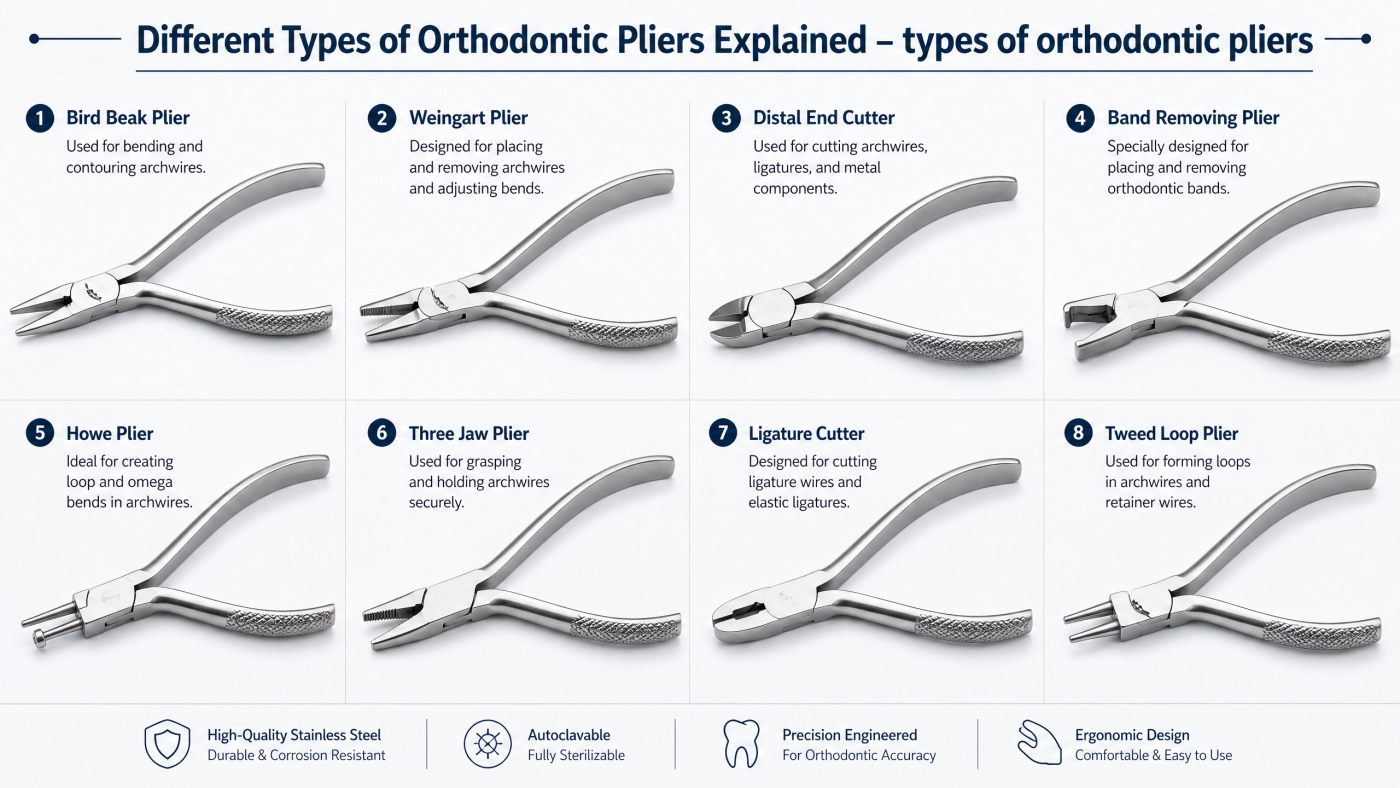
In this comprehensive guide, we’ll explain the most commonly used types of orthodontic pliers, their functions, applications, and how choosing high-quality instruments can improve clinical outcomes.
What Are Orthodontic Pliers?
Orthodontic pliers are precision dental instruments specifically engineered for orthodontic procedures. Unlike general dental pliers, they feature uniquely shaped beaks designed to manipulate orthodontic wires, brackets, bands, ligatures, and other appliances with exceptional accuracy.
Whether placing braces, adjusting archwires, or removing appliances, every orthodontic procedure relies on specialized pliers that perform a specific function.
Why Choosing the Right Orthodontic Pliers Matters
Using the appropriate orthodontic pliers provides several important advantages:
- Greater treatment precision
- Improved wire control
- Reduced chairside time
- Better patient comfort
- Lower risk of appliance damage
- Increased instrument longevity
- Enhanced clinical efficiency
Selecting the correct pliers also minimizes stress on orthodontic materials and reduces operator fatigue during lengthy procedures.
Different Types of Orthodontic Pliers
Below are the most commonly used orthodontic pliers found in modern orthodontic practices.
1. Bird Beak Pliers
Primary Function
Bird Beak Pliers are among the most versatile orthodontic instruments used for bending and forming archwires.
Common Uses
- Forming loops
- Creating wire bends
- Fabricating springs
- Adjusting stainless steel wires
- Wire contouring
Features
- One round beak
- One tapered flat beak
- Excellent control during wire bending
- Suitable for light and medium wires
Best For:
- Initial wire adjustments
- Custom appliance fabrication
- Loop formation
2. Weingart Utility Pliers
Weingart Pliers are considered one of the most frequently used orthodontic utility pliers.
Primary Function
Designed for gripping and guiding archwires into brackets and buccal tubes.
Applications
- Wire insertion
- Wire removal
- Holding ligatures
- Appliance positioning
- General orthodontic handling
Features
- Serrated tips
- Angled beaks
- Strong gripping capability
- Excellent intraoral access
3. Distal End Cutter
One of the most important cutting instruments in orthodontics.
Primary Function
Cuts excess archwire extending beyond the molar tube.
Advantages
- Safely captures the cut wire
- Prevents accidental swallowing
- Improves patient safety
- Reduces soft tissue trauma
Clinical Uses
- Finishing archwire placement
- Routine wire adjustments
- Long archwire trimming
4. Ligature Cutter
Ligature cutters are specifically designed for cutting ligature wires without damaging surrounding appliances.
Applications
- Cutting stainless steel ligatures
- Removing ligature ties
- Trimming excess ligature material
Benefits
- Precise cutting edges
- Minimal effort required
- Clean cuts
- Long-lasting sharpness
5. Hard Wire Cutter
Unlike ligature cutters, hard wire cutters are designed for thicker orthodontic wires.
Used For
- Stainless steel archwires
- Nickel Titanium wires
- Beta Titanium wires
- Rectangular wires
Advantages
- Heavy-duty construction
- High cutting strength
- Precision cutting
- Durable carbide inserts
6. Mathieu Ligature Pliers
These pliers simplify ligature placement during bracket engagement.
Common Uses
- Holding elastic ligatures
- Placing ligatures
- Wire engagement
- Elastic module placement
Features
- Spring-loaded handle
- Locking mechanism
- Comfortable grip
- Improved efficiency
7. Bracket Removing Pliers
Bracket removal requires controlled force to prevent enamel damage.
Applications
- Debonding brackets
- Removing ceramic brackets
- Removing metal brackets
Benefits
- Controlled pressure
- Reduced patient discomfort
- Safe bracket removal
- Preserves tooth structure
8. Band Removing Pliers
Orthodontic bands require specialized removal instruments.
Used For
- Removing molar bands
- Removing orthodontic appliances
- Band debonding procedures
Features
- Protective plastic tip
- Controlled leverage
- Comfortable handling
9. Three-Prong Pliers
Three-Prong Pliers provide excellent wire adjustment capabilities.
Applications
- Archwire adjustment
- Appliance modifications
- Bending heavy wires
- Correcting wire positioning
Advantages
- Excellent control
- Stable grip
- Precise wire manipulation
10. Jarabak Pliers
Jarabak Pliers are designed for loop formation and complex wire bending.
Common Uses
- Closing loops
- Omega loops
- T-loops
- Spring fabrication
Features
- Round tapered beaks
- Precision bending
- Smooth wire contouring
11. How Utility Pliers
These are multi-purpose orthodontic pliers.
Applications
- Holding wires
- Positioning brackets
- Carrying small appliances
- Ligature placement
Benefits
- Strong gripping force
- Excellent versatility
- Comfortable ergonomics
12. Torque Forming Pliers
Torque adjustments are essential during finishing stages.
Used For
- Third-order bends
- Torque correction
- Wire adjustment
- Precision finishing
13. Cinch Back Pliers
Designed to bend distal wire ends behind molar tubes.
Clinical Uses
- Distal wire cinching
- Preventing wire migration
- Improving patient comfort
Orthodontic Pliers by Function
| Function | Common Orthodontic Pliers |
|---|---|
| Wire Bending | Bird Beak, Jarabak, Three-Prong |
| Wire Holding | Weingart, How Utility |
| Wire Cutting | Distal End Cutter, Hard Wire Cutter, Ligature Cutter |
| Bracket Removal | Bracket Removing Pliers |
| Band Removal | Band Removing Pliers |
| Loop Formation | Bird Beak, Jarabak |
| Torque Adjustment | Torque Forming Pliers |
| Ligature Placement | Mathieu Ligature Pliers |
Materials Used in High-Quality Orthodontic Pliers
Premium orthodontic instruments are commonly manufactured from:
- German stainless steel
- Surgical-grade stainless steel
- Tungsten carbide inserts (for cutters)
- Satin finish stainless steel
- Corrosion-resistant alloys
High-quality materials improve durability, maintain cutting efficiency, and withstand repeated sterilization cycles.
How to Choose the Best Orthodontic Pliers
When selecting orthodontic pliers, consider:
Instrument Quality
Choose instruments made from premium surgical stainless steel with excellent corrosion resistance.
Ergonomic Design
Comfortable handles reduce hand fatigue during long procedures.
Precision Tips
Accurately aligned beaks ensure precise wire manipulation.
Cutting Performance
Carbide insert cutters provide cleaner cuts and longer service life.
Sterilization Compatibility
Ensure compatibility with repeated autoclave sterilization without compromising performance.
Manufacturer Reputation
Purchase from trusted dental instrument manufacturers known for precision engineering and quality control.
Maintenance Tips for Orthodontic Pliers
Proper maintenance extends instrument lifespan.
- Clean immediately after use
- Ultrasonically clean before sterilization
- Lubricate hinged joints regularly
- Inspect cutting edges for wear
- Store in protective instrument trays
- Avoid cutting materials beyond recommended capacity
- Follow autoclave guidelines
Routine maintenance preserves instrument precision and reduces replacement costs.
Common Mistakes to Avoid
Even experienced professionals should avoid:
- Using wire cutters on hard materials
- Cutting oversized wires with ligature cutters
- Using damaged pliers
- Improper sterilization
- Excessive force during bracket removal
- Skipping routine maintenance
Proper instrument use ensures consistent clinical performance.
Conclusion
Choosing the right types of orthodontic pliers is fundamental to delivering precise, efficient, and predictable orthodontic treatment. From Bird Beak Pliers for intricate wire bending to Distal End Cutters for safe wire trimming and Bracket Removing Pliers for atraumatic debonding, every instrument serves a specialized purpose in orthodontic practice.
Investing in high-quality, ergonomically designed orthodontic pliers not only enhances clinical performance but also improves workflow efficiency, instrument longevity, and patient comfort. By understanding the function of each plier type and maintaining them properly, orthodontic professionals can ensure consistent, high-quality treatment outcomes.
Frequently Asked Questions (FAQs)
Which orthodontic pliers are used most frequently?
The most commonly used orthodontic pliers include Bird Beak Pliers, Weingart Utility Pliers, Distal End Cutters, Ligature Cutters, and How Utility Pliers.
What is the difference between Bird Beak and Three-Prong Pliers?
Bird Beak Pliers are primarily used for forming loops and bending wires, while Three-Prong Pliers provide enhanced stability for adjusting and contouring heavier orthodontic wires.
Can one orthodontic plier perform every procedure?
No. Each orthodontic plier is specifically designed for a particular clinical purpose. Using the correct instrument improves precision, efficiency, and patient safety.
Why are tungsten carbide cutters preferred?
Tungsten carbide inserts remain sharper longer, produce cleaner cuts, and resist wear better than standard stainless steel cutting edges.
How often should orthodontic pliers be replaced?
With proper maintenance and regular inspection, premium orthodontic pliers can provide many years of reliable service. Replace instruments when cutting edges beco