
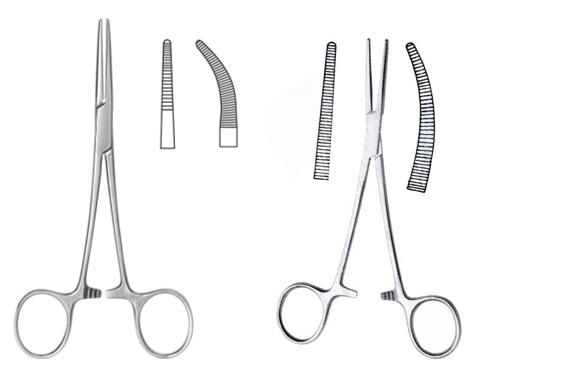
In surgical and dental procedures, effective bleeding control is essential for precision, visibility, and patient safety. Two of the most commonly used instruments for this purpose are Kelly and Crile hemostats. Although they look similar, their jaw design and length differences make them suitable for different clinical applications.
What Are Hemostats?
Hemostats are locking surgical forceps used to:
- Clamp blood vessels
- Control bleeding
- Hold tissues or sutures
They feature serrated jaws and a ratchet locking mechanism that allows controlled pressure without continuous hand force.
Kelly Hemostats: Design & Features
Kelly hemostats are widely used in both general surgery and dentistry for moderate bleeding control.
Key Features:
- Jaw Serration: Serrations only on the distal half (tip)
- Length: Typically 14–18 cm
- Design: Smooth inner jaw near the hinge, serrated at the tip
- Types: Straight and curved
Clinical Benefits:
- Strong grip at the tip for clamping vessels
- Reduced crushing effect on surrounding tissue
- Ideal for larger or superficial vessels
Crile Hemostats: Design & Features
Crile hemostats are designed for precision and secure clamping, especially in delicate procedures.
Key Features:
- Jaw Serration: Serrations along the entire length of the jaws
- Length: Typically 12–16 cm
- Design: Fully serrated inner jaw
- Types: Straight and curved
Clinical Benefits:
- Uniform grip across the entire jaw
- Better control for small blood vessels
- Reduced risk of slippage in delicate areas
Key Differences: Kelly vs. Crile
| Feature | Kelly Hemostats | Crile Hemostats |
|---|---|---|
| Serration | Half (tip only) | Full jaw length |
| Grip | Strong at tip | Even pressure throughout |
| Length | 14–18 cm | 12–16 cm |
| Best Use | Larger vessels | Small, delicate vessels |
| Control | Moderate precision | High precision |
How Length Impacts Performance
Longer Instruments (Kelly):
- Better reach in deep surgical areas
- Useful in general and dental procedures
- Provide greater leverage
Shorter Instruments (Crile):
- Better suited for fine, controlled work
- Ideal for confined surgical spaces
- Offer improved handling precision
Which One Should You Choose?
Choose Kelly Hemostats if you need:
- Versatility
- Longer reach
- Control over larger vessels
Choose Crile Hemostats if you need:
- Precision
- Secure grip on small vessels
- Better control in delicate procedures
Final Thoughts
While Kelly and Crile hemostats may appear nearly identical, their jaw serration pattern and length differences significantly impact performance.
- Kelly hemostats are best for general use and larger vessels
- Crile hemostats excel in precision and delicate bleeding control
Selecting the right instrument ensures better surgical outcomes, improved efficiency, and minimized tissue trauma.