
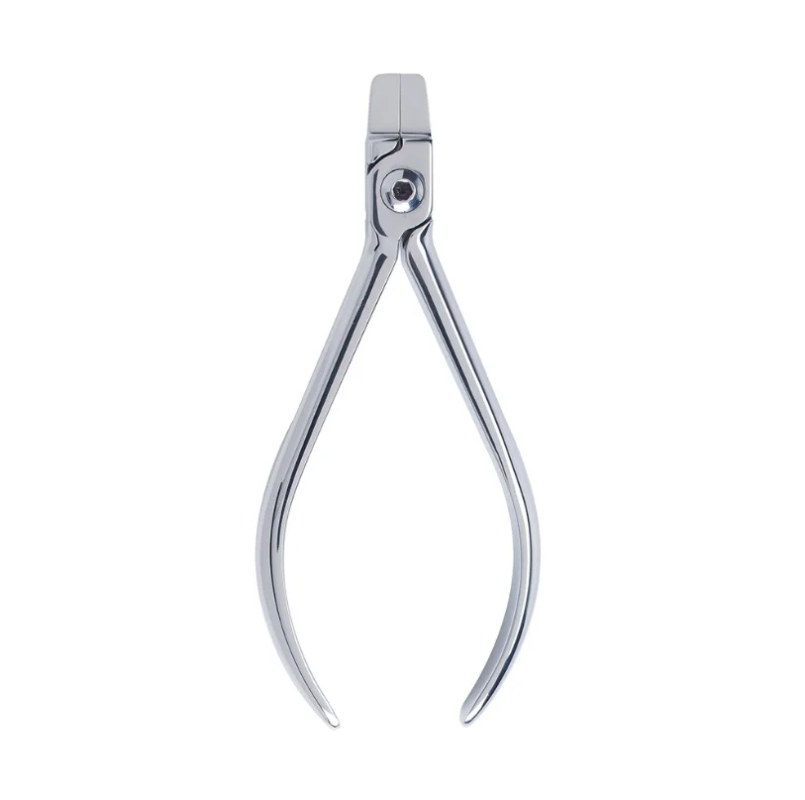
In orthodontics, even the smallest adjustment in arch wire form can influence treatment efficiency, tooth movement, and overall patient comfort. That’s why arch wire forming pliers are not just hand instruments they are precision tools that directly affect biomechanical outcomes.
The challenge lies in shaping orthodontic wire without compromising its structural integrity. Poor technique or unsuitable instruments can introduce micro-fractures, reduce elasticity, or weaken the wire’s force delivery. Properly designed pliers help clinicians achieve accurate bends while preserving the wire’s strength.
Why Wire Integrity Matters in Orthodontics
Orthodontic wires are engineered to deliver controlled, continuous forces. When these wires are improperly bent:
- Stress concentrations can form at bend points
- Elastic memory may be reduced
- Fracture risk increases under cyclic loading
- Force delivery becomes inconsistent
This ultimately affects treatment predictability and may prolong overall treatment time. Therefore, maintaining material integrity during bending is essential.
What Makes Arch Wire Forming Pliers Different?
Unlike general-purpose pliers, arch wire forming pliers are specifically designed to manipulate orthodontic wires with precision and minimal damage.
1. Rounded, Polished Jaws
The jaws are typically smooth and highly polished to prevent surface scratching. This reduces friction and avoids creating weak points in the wire.
2. Controlled Pressure Distribution
Well-designed pliers distribute force evenly across the contact area. This prevents localized stress that could lead to micro-cracks or deformation.
3. Precision Tips for Accurate Bends
Fine, tapered tips allow clinicians to create detailed adjustments such as:
- Step bends
- Offset bends
- Torque adjustments
- Closing loops
These subtle modifications are critical in achieving desired tooth movement.
4. Ergonomic Handle Design
Comfort matters during repetitive adjustments. Ergonomic grips help reduce hand fatigue and improve control, especially during fine wire adjustments in limited oral space.
Types of Arch Wire Forming Pliers
1. Light Wire Forming Pliers
These are used for fine adjustments on smaller diameter wires. They allow controlled bends without overworking the material.
2. Heavy Wire Forming Pliers
Designed for thicker stainless steel wires, these pliers provide greater leverage while maintaining structural safety during bending.
3. Loop Forming Pliers
Loop-forming instruments help create consistent loops used in space closure mechanics and alignment corrections.
4. Torque and Angle Bending Pliers
These specialized designs help adjust root torque and angulation, ensuring precise control over tooth positioning.
Proper Technique for Bending Without Weakening Wire
Using the right instrument is only part of the process. Technique plays an equally important role.
1. Avoid Sharp, Abrupt Bends
Sharp angles can concentrate stress and weaken the wire. Instead, apply gradual, controlled pressure.
2. Use the Correct Jaw Position
Always place the wire at the intended bending point within the plier jaws. Misalignment leads to uneven stress distribution.
3. Limit Repeated Adjustments
Repeated bending in the same area increases fatigue risk. Plan adjustments carefully to minimize reworking.
4. Match Plier Type to Wire Material
Different wires behave differently:
- Nickel-titanium wires require gentle handling due to elasticity
- Stainless steel wires tolerate more force but still need controlled bending
- Beta-titanium wires fall in between and require balanced pressure
Common Mistakes That Weaken Arch Wires
Even experienced clinicians can unintentionally compromise wire integrity.
- Using universal pliers instead of specialized forming pliers
- Over-tightening during bends
- Bending at the same point repeatedly
- Using damaged or worn instrument jaws
- Applying excessive force instead of controlled pressure
Avoiding these errors helps preserve wire performance and ensures predictable orthodontic results.
Maintenance of Arch Wire Forming Pliers
Instrument care directly impacts precision and longevity:
- Clean immediately after use to remove debris
- Inspect jaws for wear or rough edges
- Lubricate joints regularly for smooth operation
- Sterilize according to manufacturer guidelines
- Store in protective trays to avoid tip damage
A well-maintained instrument ensures consistent, damage-free wire manipulation.
Choosing the Right Pliers for Clinical Precision
When selecting arch wire forming pliers, consider:
- Wire compatibility (light, heavy, or specialty alloys)
- Jaw finish quality (mirror-polished preferred)
- Ergonomics and balance
- Precision of tip alignment
- Durability under repeated sterilization cycles
High-quality pliers reduce chair time and improve treatment accuracy.
Final Thoughts
Arch wire forming is both a technical skill and an art. The right pliers allow orthodontists to shape wires with precision while preserving their mechanical properties. When used correctly, they ensure efficient force delivery, predictable movement, and better patient outcomes.
In orthodontics, precision tools create precision results and arch wire forming pliers are at the heart of that equation.