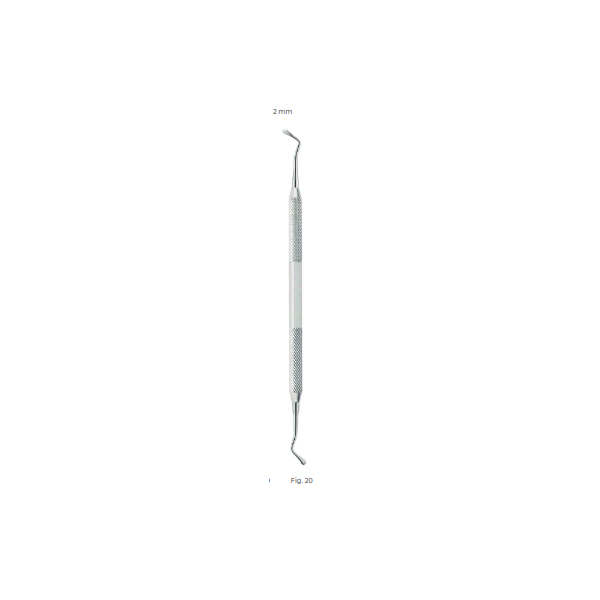

Excavators, SS. White type, 2mm, Fig 20
Excavators, SS. White type, 2mm, Fig 20, are essential dental instruments used in restorative and operative procedures.
Firstly, these excavators efficiently remove decay and prepare cavities, playing a crucial role in modern dentistry.
Their sharp, spoon-shaped working end allows for controlled excavation of decayed or damaged dentin while preserving as much healthy tooth structure as possible.
One of the standout features of the SS. White type excavator, 2mm, Fig 20, is its size and precision.
Specifically, The 2mm tip is particularly effective for larger cavities, allowing dentists to remove decayed material efficiently.
Furthermore, Its ergonomic design ensures ease of use, offering a comfortable grip that reduces hand fatigue during prolonged procedures.
Additionally, the angled shank enhances maneuverability, making it easier to access different areas of the tooth structure.
Manufactured from high-quality stainless steel, this excavator provides exceptional durability and resistance to corrosion.
Its robust construction allows it to withstand frequent sterilization and rigorous use in demanding clinical environments.
The sharp cutting edge maintains its effectiveness over time, ensuring consistent performance for dental professionals.
The Fig 20 variation actively supports conservative treatment approaches through its specialized design.
By enabling precise removal of decayed tissue, it minimizes unnecessary loss of healthy enamel and dentin.
This approach aligns with modern minimally invasive dentistry, which focuses on preserving natural tooth structure whenever possible.
The ability to maintain more of the patient’s original tooth material contributes to long-term oral health and reduces the need for extensive restorative procedures.
In conclusion, the SS. White type excavator, 2mm, Fig 20, is an indispensable tool for dentists.
Its precision, durability, and ergonomic design make it a reliable choice for cavity preparation and decay removal.
Finally, Dental professionals trust this instrument to enhance efficiency, improve patient outcomes, and ensure high-quality treatment.