
Orthodontic treatment relies on precision, efficiency, and carefully designed instruments. Among the essential orthodontic pliers used daily by dental professionals, Weingart pliers have earned a reputation for their exceptional versatility and reliability. Whether placing archwires, guiding ligatures, or retrieving small components from the oral cavity, these orthodontic pliers are indispensable in modern clinical practice.
Manufactured with fine tapered beaks and serrated gripping surfaces, Weingart orthodontic pliers allow clinicians to securely grasp wires without causing damage while maintaining optimal visibility in confined intraoral spaces. Their ergonomic design reduces operator fatigue and improves procedural accuracy during routine and complex orthodontic treatments.
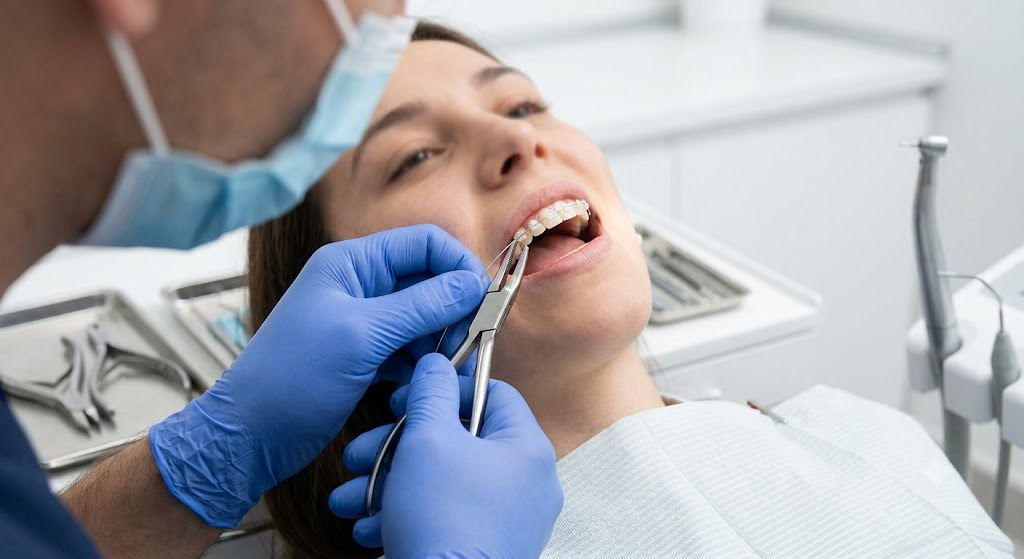
This comprehensive guide explores the applications, design features, benefits, techniques, maintenance, and selection criteria for while highlighting why they remain one of the most frequently used orthodontic instruments worldwide.
What Are Weingart Pliers?
They are specialized orthodontic pliers designed primarily for gripping, inserting, positioning, and removing orthodontic archwires. Unlike cutting pliers, they are intended for holding and manipulating wires with maximum control.
The instrument features:
- Long, narrow beaks
- Serrated gripping surfaces
- Angled working tips
- Smooth locking-free mechanism
- Ergonomic handles
- Precision stainless steel construction
Their slender profile allows clinicians to access posterior teeth comfortably while maintaining visibility throughout treatment.
Why Weingart Pliers Are Essential in Orthodontics
Every orthodontic appointment involves wire adjustments, bracket engagement, elastic placement, or appliance management. During these procedures, clinicians require instruments capable of:
- Secure wire gripping
- Precise positioning
- Gentle manipulation
- Reduced patient discomfort
- Safe intraoral handling
They meet all these requirements while minimizing the risk of wire slippage.
Design Features of Weingart Orthodontic Pliers
Fine Angled Beaks
The angled beaks improve access to both anterior and posterior regions of the mouth.
Benefits
- Better visibility
- Improved control
- Easier wire insertion
- Comfortable working angle
Serrated Tips
The finely serrated surfaces firmly grip orthodontic wires without excessive force.
Advantages include:
- Reduced slipping
- Better wire control
- Safe manipulation
- Increased procedural precision
Slim Working Profile
The narrow design enables easy access around crowded teeth and orthodontic appliances.
Ideal for:
- Deep posterior access
- Crowded dentition
- Limited mouth opening
- Precision adjustments
Stainless Steel Construction
Premium surgical stainless steel offers:
- Corrosion resistance
- Long instrument life
- Repeated sterilization compatibility
- Excellent durability
Ergonomic Handles
Comfortable handles help reduce fatigue during lengthy orthodontic procedures while enhancing precision.
Primary Applications of Weingart Pliers in Modern Practice
1. Archwire Placement
The most common use of is inserting orthodontic archwires into bracket slots.
The clinician can:
- Grip the wire securely
- Guide it accurately
- Seat it comfortably
- Prevent accidental wire displacement
This improves treatment efficiency while reducing patient discomfort.
2. Archwire Removal
At adjustment appointments, orthodontists frequently remove existing wires.
Weingart pliers allow clinicians to:
- Hold the wire firmly
- Remove smoothly
- Prevent wire recoil
- Protect surrounding tissues
3. Wire Positioning
Precise wire positioning is essential for effective tooth movement.
These pliers help:
- Align wire within brackets
- Guide flexible wires
- Position rectangular wires
- Correct minor displacement
4. Ligature Wire Manipulation
Weingart orthodontic pliers assist in handling ligature wires by:
- Holding twisted ligatures
- Positioning ligatures
- Adjusting wire ends
- Improving placement accuracy
5. Elastic Chain Placement
Orthodontists often use the pliers to:
- Hold elastic chains
- Guide placement
- Reach posterior brackets
- Improve clinical efficiency
6. Appliance Placement
Various orthodontic appliances require controlled handling.
Examples include:
- Coil springs
- Power chains
- Retainers
- Auxiliary springs
- Space maintainers
7. Retrieval of Small Objects
If a bracket, elastic, or wire segment becomes loose intraorally, Weingart pliers allow safe retrieval while minimizing aspiration risk.
8. Assisting During Bonding Procedures
During bracket bonding, clinicians frequently manipulate wires and accessories using Weingart pliers for greater precision.
9. Posterior Wire Engagement
The angled beaks make it significantly easier to engage molar tubes located deep within the oral cavity.
10. General Orthodontic Adjustments
Throughout treatment, clinicians use for:
- Minor appliance corrections
- Wire guidance
- Accessory placement
- Appliance adjustments
Clinical Advantages of Weingart Pliers
Modern orthodontic practices value Weingart pliers because they offer numerous benefits.
Improved Precision
Fine beaks allow accurate wire positioning with minimal movement.
Enhanced Safety
Secure gripping minimizes accidental wire release and soft tissue injuries.
Better Patient Comfort
Controlled wire manipulation reduces unnecessary pressure during procedures.
Increased Efficiency
Orthodontists complete routine adjustments faster with reliable wire control.
Excellent Accessibility
Slim tips improve access to difficult posterior regions.
Versatility
Few orthodontic instruments are used across as many procedures as Weingart pliers.
Procedures That Commonly Require Weingart Pliers
These orthodontic pliers are frequently used during:
- Initial archwire placement
- Wire changes
- Alignment appointments
- Space closure
- Finishing stages
- Retainer adjustments
- Appliance repair
- Elastic chain placement
- Coil spring positioning
- Ligature adjustments
Why Orthodontists Prefer Weingart Pliers
Professionals consistently choose because they offer:
- Reliable grip
- Minimal wire distortion
- High procedural accuracy
- Excellent tactile feedback
- Comfortable handling
- Long-lasting durability
Their versatility makes them one of the first instruments picked up during almost every orthodontic appointment.
Choosing High-Quality Weingart Pliers
When purchasing orthodontic pliers, several factors should be considered.
Material Quality
Choose:
- Surgical-grade stainless steel
- Rust-resistant finish
- Precision machining
- High hardness
Tip Alignment
Properly aligned tips ensure:
- Secure gripping
- Better control
- Longer instrument life
Grip Performance
High-quality serrations provide:
- Firm wire engagement
- Reduced slipping
- Improved precision
Ergonomics
Look for:
- Balanced weight
- Comfortable handles
- Smooth joint movement
- Reduced hand fatigue
Sterilization Compatibility
Premium orthodontic pliers should withstand repeated:
- Steam autoclaving
- Ultrasonic cleaning
- Chemical disinfection
without corrosion or joint stiffness.
Proper Technique When Using Weingart Pliers
For optimal clinical performance:
- Grip wires near the beaks.
- Avoid excessive squeezing.
- Maintain a stable hand position.
- Support wire movement with controlled force.
- Use appropriate wire insertion angles.
- Never use the instrument as a wire cutter.
- Inspect the tips before every procedure.
Following proper technique extends instrument life and improves treatment outcomes.
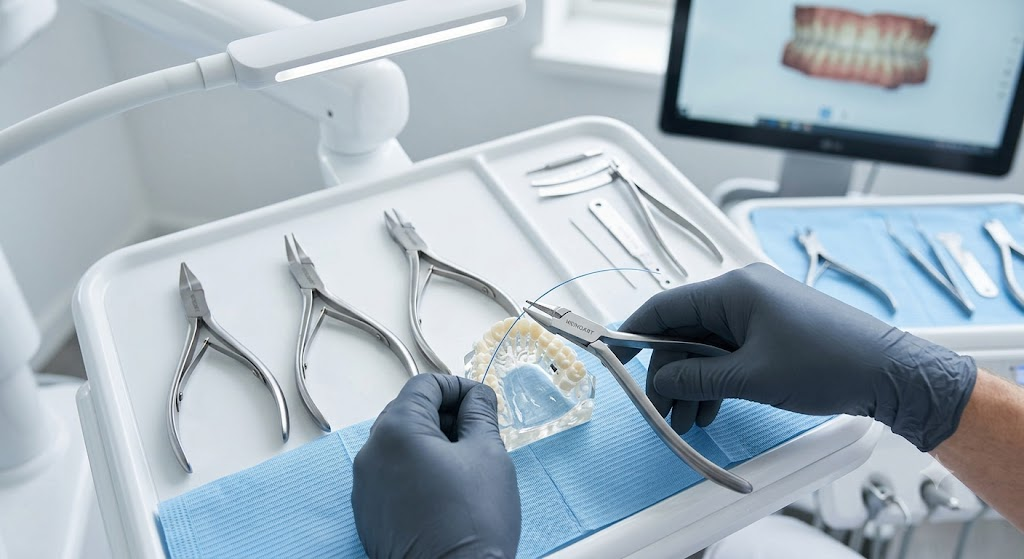
Instrument Care and Maintenance
Proper maintenance preserves precision and longevity.
Cleaning
- Rinse immediately after use.
- Remove debris thoroughly.
- Use enzymatic cleaners when necessary.
Sterilization
- Autoclave according to manufacturer recommendations.
- Dry completely before storage.
Lubrication
Occasionally lubricate the instrument joint using medical-grade instrument lubricant.
Inspection
Regularly check for:
- Tip wear
- Misalignment
- Corrosion
- Loose joints
- Damaged serrations
Common Mistakes to Avoid
Avoid:
- Using for cutting wires
- Twisting excessively hard stainless steel wires
- Dropping the instrument
- Overloading the beaks
- Improper sterilization
- Ignoring worn serrations
These mistakes reduce instrument lifespan and compromise clinical performance.
Weingart Pliers vs. Bird Beak Pliers
| Feature | Weingart Pliers | Bird Beak Pliers |
|---|---|---|
| Primary Function | Holding wires | Bending wires |
| Tip Design | Serrated | Smooth conical |
| Wire Grip | Excellent | Moderate |
| Wire Forming | Limited | Excellent |
| Archwire Placement | Excellent | Limited |
| Posterior Access | Excellent | Good |
Industries That Use Weingart Pliers
Although primarily associated with orthodontics, Weingart pliers are commonly found in:
- Orthodontic clinics
- Dental hospitals
- Teaching institutions
- Dental laboratories
- Specialist orthodontic practices
Conclusion
In modern orthodontics, remain one of the most indispensable instruments for accurate wire handling and efficient clinical procedures. Their precision-engineered design, serrated gripping tips, ergonomic construction, and versatility make them an essential tool for archwire placement, wire removal, ligature manipulation, appliance adjustments, and countless everyday orthodontic tasks.
Investing in high-quality Weingart orthodontic pliers enhances treatment accuracy, improves patient comfort, and supports long-term instrument durability. Whether used in a specialist orthodontic clinic, dental hospital, or educational institution, these pliers continue to play a vital role in delivering safe, predictable, and efficient orthodontic care.
Frequently Asked Questions (FAQs)
What are Weingart pliers used for?
They are primarily used to grip, insert, position, and remove orthodontic archwires and assist in handling ligatures, elastic chains, and orthodontic accessories.
Are Weingart pliers used for cutting wires?
No. They are designed for gripping and manipulating wires, not cutting them. Wire-cutting procedures require dedicated orthodontic cutting pliers.
Why do Weingart pliers have serrated tips?
The serrations provide a secure grip on orthodontic wires, reducing slippage and improving control during clinical procedures.
Can Weingart pliers be sterilized?
Yes. High-quality stainless steel Weingart pliers are fully autoclavable and compatible with standard dental sterilization protocols.
Are Weingart pliers suitable for posterior teeth?
Yes. Their long, angled beaks provide excellent access to molars and other hard-to-reach areas of the mouth.