
Orthodontic instruments are among the most valuable investments in any dental practice. From ligature cutters and distal end cutters to Weingart pliers and bird beak pliers, every instrument plays a critical role in delivering precise and efficient orthodontic treatment. However, even premium stainless steel instruments can lose their performance if they are not maintained properly.
Following a comprehensive orthodontic instrument maintenance guide helps extend instrument lifespan, preserve cutting efficiency, prevent corrosion, maintain patient safety, and reduce replacement costs. Proper maintenance also ensures compliance with infection control protocols and protects the long-term value of your clinical investment.
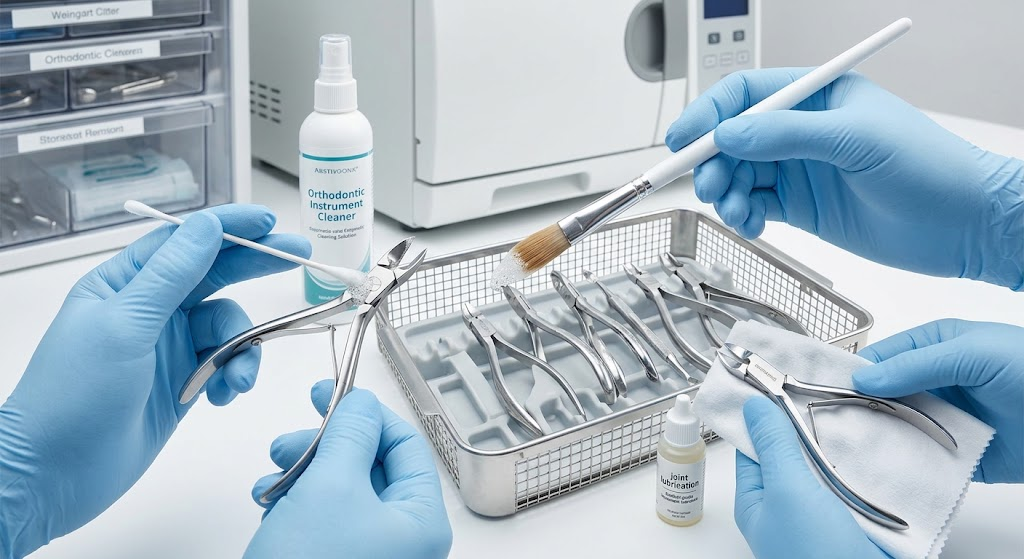
This guide covers everything dental professionals need to know about orthodontic instrument maintenance, including cleaning, sterilization, lubrication, inspection, storage, rust prevention, and best practices for maximizing instrument longevity.
Why Orthodontic Instrument Maintenance Matters
Orthodontic instruments are designed with extremely fine tips, precision hinges, and delicate cutting edges. Daily clinical use exposes them to saliva, blood, debris, disinfectants, moisture, and repeated sterilization cycles.
Without routine maintenance, instruments may develop:
- Surface corrosion
- Rust spots
- Loose box joints
- Misaligned tips
- Reduced cutting efficiency
- Stiff hinges
- Surface staining
- Premature wear
- Instrument breakage
Regular maintenance helps preserve:
- Clinical precision
- Patient safety
- Infection control standards
- Instrument durability
- Cost-effectiveness
- Professional treatment outcomes
Benefits of Proper Orthodontic Instrument Maintenance
A structured maintenance routine provides several advantages.
Longer Instrument Lifespan
Proper care significantly increases the working life of orthodontic instruments, reducing replacement frequency.
Improved Clinical Accuracy
Sharp, properly aligned instruments allow orthodontists to perform precise wire adjustments and bracket procedures.
Reduced Operating Costs
Replacing orthodontic pliers and cutters frequently can become expensive. Preventive maintenance minimizes unnecessary expenses.
Better Infection Control
Thorough cleaning and sterilization remove contaminants and reduce cross-contamination risks.
Enhanced Patient Confidence
Well-maintained instruments reflect professionalism and commitment to quality patient care.
Daily Orthodontic Instrument Cleaning Procedure
Cleaning is the foundation of instrument maintenance.
Immediately after each procedure:
Step 1: Rinse Immediately
Rinse instruments with lukewarm water to remove:
- Blood
- Saliva
- Composite residue
- Adhesive
- Cement particles
Never allow debris to dry on the instrument.
Step 2: Use Enzymatic Cleaning Solutions
Enzymatic detergents dissolve:
- Organic material
- Protein deposits
- Tissue residue
Avoid household cleaning agents because they may damage stainless steel surfaces.
Step 3: Ultrasonic Cleaning
Ultrasonic cleaners remove debris from difficult areas such as:
- Hinges
- Serrations
- Box joints
- Fine tips
Ultrasonic cleaning is considered one of the most effective methods for orthodontic instrument cleaning.
Step 4: Manual Brushing
Use a soft nylon brush to clean:
- Cutting edges
- Hinges
- Grooves
- Tips
Never use abrasive steel brushes.
Proper Sterilization Techniques
Sterilization protects both patients and clinicians.
Common sterilization methods include:
Steam Autoclaving
Steam sterilization remains the preferred method for most orthodontic stainless steel instruments.
Benefits include:
- High reliability
- Fast processing
- Excellent microbial elimination
- Safe for most orthodontic pliers
Always follow manufacturer-recommended sterilization temperatures and cycle durations.
Dry Heat Sterilization
Some specialty orthodontic instruments may tolerate dry heat sterilization.
Advantages:
- No moisture exposure
- Reduced corrosion risk
- Suitable for selected instruments
Chemical Sterilization
Chemical sterilization is generally reserved for heat-sensitive instruments.
Ensure:
- Correct immersion time
- Approved disinfectants
- Complete rinsing afterward
Dry Instruments Completely
Moisture is one of the biggest causes of corrosion.
After cleaning:
- Dry immediately
- Use lint-free towels
- Blow compressed air through joints
- Remove moisture from hinges
- Prevent water spots
Never store damp instruments.
Lubricate Instrument Hinges Regularly
Joint lubrication improves movement and reduces wear.
Use only:
- Medical-grade instrument lubricants
- Steam-permeable lubricants
Lubricate:
- Hinges
- Box joints
- Locking mechanisms
Avoid excessive lubrication, which may trap debris.
Inspect Instruments Before Every Procedure
Routine inspection helps identify early signs of damage.
Check for:
- Loose joints
- Misaligned tips
- Bent beaks
- Dull cutting edges
- Cracks
- Rust
- Surface pitting
- Corrosion
Damaged instruments should be repaired or replaced immediately.
Prevent Rust on Orthodontic Instruments
Although orthodontic instruments are made from corrosion-resistant stainless steel, rust can still develop under poor maintenance conditions.
Common Causes of Rust
- Hard water
- Chloride exposure
- Residual blood
- Improper drying
- Chemical residue
- Damaged passivation layer
Rust Prevention Tips
- Dry immediately after washing.
- Use distilled or deionized water when possible.
- Avoid prolonged soaking.
- Remove chemical residue thoroughly.
- Store instruments in a dry environment.
- Separate carbon steel from stainless steel instruments.
Store Orthodontic Instruments Correctly
Proper storage prevents accidental damage.
Recommended storage practices:
- Use sterilization cassettes.
- Store in dry cabinets.
- Avoid overcrowding.
- Protect cutting edges with silicone holders.
- Keep instruments organized by category.
- Store in low-humidity conditions.
Good storage minimizes tip damage and maintains instrument alignment.
Protect Cutting Instruments
Orthodontic cutters require additional care.
Examples include:
- Distal end cutters
- Ligature cutters
- Hard wire cutters
- Pin and ligature cutters
Maintenance recommendations:
- Never cut wires beyond the recommended hardness.
- Avoid twisting while cutting.
- Keep cutting edges protected during sterilization.
- Sharpen or replace dull cutters promptly.
Maintenance Tips for Orthodontic Pliers
Orthodontic pliers perform delicate bending and wire-forming tasks.
Routine maintenance includes:
- Cleaning serrations thoroughly
- Lubricating box joints
- Inspecting beak alignment
- Preventing tip damage
- Avoiding excessive force
Proper care maintains gripping accuracy and bending precision.
Avoid Common Maintenance Mistakes
Many orthodontic instruments become damaged due to improper handling.
Avoid:
- Leaving instruments wet overnight
- Using bleach
- Using abrasive cleaning pads
- Mixing different metals during sterilization
- Overloading ultrasonic cleaners
- Skipping lubrication
- Ignoring small rust spots
- Storing instruments while damp
Create a Preventive Maintenance Schedule
An organized maintenance program ensures consistency.
Daily
- Rinse immediately
- Clean thoroughly
- Ultrasonic cleaning
- Dry completely
- Inspect visually
Weekly
- Lubricate hinges
- Check cutting performance
- Inspect alignment
- Remove stains
Monthly
- Deep inspection
- Evaluate instrument wear
- Replace damaged instruments
- Verify sterilization equipment performance
Annually
- Professional instrument servicing
- Calibration (where applicable)
- Inventory review
- Replace worn instruments
Signs an Orthodontic Instrument Should Be Replaced
Even excellent maintenance cannot prevent normal wear forever.
Replace instruments when you notice:
- Poor cutting performance
- Excessive hinge looseness
- Bent tips
- Deep corrosion
- Broken jaws
- Permanent staining
- Surface pitting
- Misalignment
Using damaged instruments may compromise treatment quality.
Best Practices for Dental Staff
Every member of the clinical team should follow standardized maintenance procedures.
Staff training should include:
- Cleaning protocols
- Sterilization procedures
- Safe handling
- Proper storage
- Routine inspection
- Instrument lubrication
- Documentation of maintenance schedules
Consistent staff education improves both instrument longevity and patient safety.
Choosing High-Quality Orthodontic Instruments
Maintenance starts with purchasing reliable instruments.
Look for:
- Surgical-grade stainless steel
- Precision manufacturing
- Corrosion-resistant finish
- Ergonomic design
- Smooth box joints
- Quality cutting edges
- Reputable manufacturers
- Compliance with applicable medical device standards
Premium instruments generally provide better durability and lower lifetime costs.
Conclusion
A well-structured orthodontic instrument maintenance guide is essential for preserving the precision, safety, and longevity of orthodontic tools. Routine cleaning, proper sterilization, careful drying, regular lubrication, and systematic inspections help prevent corrosion, maintain cutting performance, and reduce long-term replacement costs.
By implementing consistent maintenance protocols and training the entire dental team, practices can maximize the value of their orthodontic instruments while supporting high standards of patient care. Investing time in proper instrument maintenance not only protects valuable equipment but also contributes to reliable clinical performance and long-term operational efficiency.d attention can significantly prolong the lifespan of your tools and reduce operating costs.
Frequently Asked Questions (FAQs)
How often should orthodontic instruments be cleaned?
Orthodontic instruments should be cleaned immediately after every patient procedure to prevent debris from drying and to maintain effective sterilization.
What is the best method for sterilizing orthodontic instruments?
Steam autoclaving is the preferred sterilization method for most stainless steel orthodontic instruments, provided the manufacturer’s instructions are followed.
Why do stainless steel orthodontic instruments rust?
Rust may develop due to prolonged moisture exposure, improper drying, hard water, chemical residue, or damage to the protective surface layer.
Should orthodontic pliers be lubricated?
Yes. Hinged orthodontic instruments should be lubricated regularly with medical-grade instrument lubricant to maintain smooth operation and reduce wear.
How can I extend the lifespan of orthodontic instruments?
Clean instruments immediately after use, dry them thoroughly, lubricate moving parts, inspect them regularly, sterilize correctly, and store them in a clean, dry environment.