
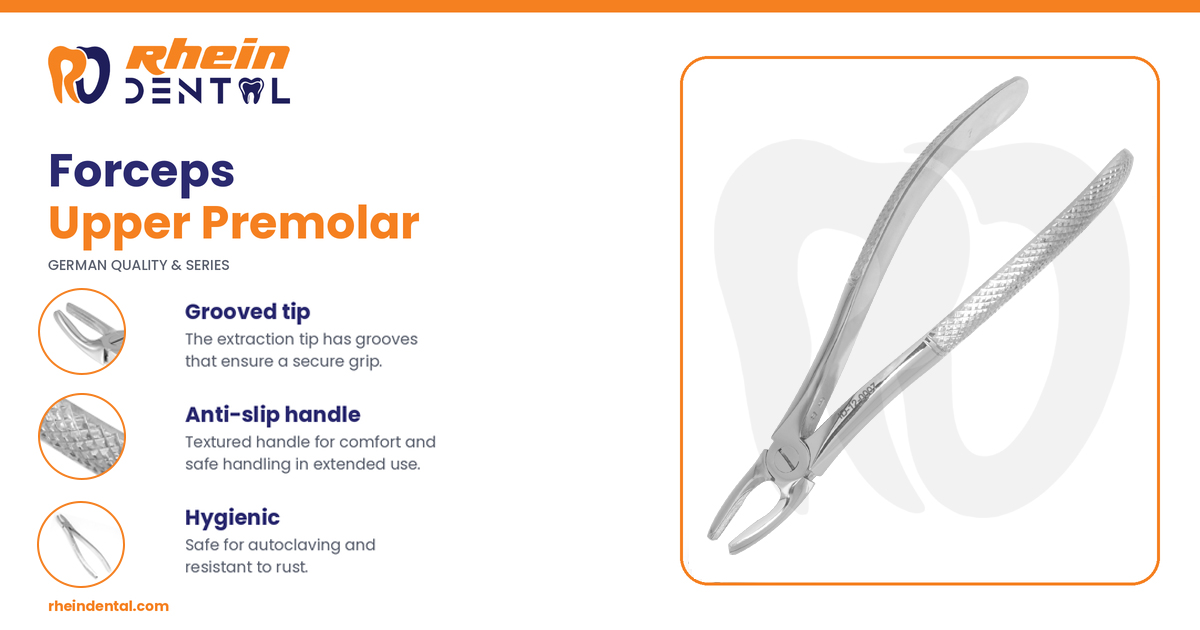
The forceps upper premolar extractions depend on is one of the most commonly stocked instruments in any dental or oral surgery tray. Upper premolars look simple, but their roots are slender, their buccal plates are thin, and a poorly matched instrument can fracture a root in seconds. This guide explains what upper premolar forceps are, […]
Tag Archives: #OrthodonticTools
Dental Instruments Blog
ISO 13485 and CE Marking in Dental Instrument Manufacturing: What These Certifications Mean for Clinical Safety

05
Jun
Jun
Introduction In modern dentistry, patient safety and clinical precision depend heavily on the quality and reliability of the instruments used during treatment. Whether performing routine examinations, surgical procedures, or complex implant placements, dental professionals rely on instruments that meet strict international quality standards. Two of the most important certifications that demonstrate a manufacturer’s commitment to […]
Dental Instruments Blog
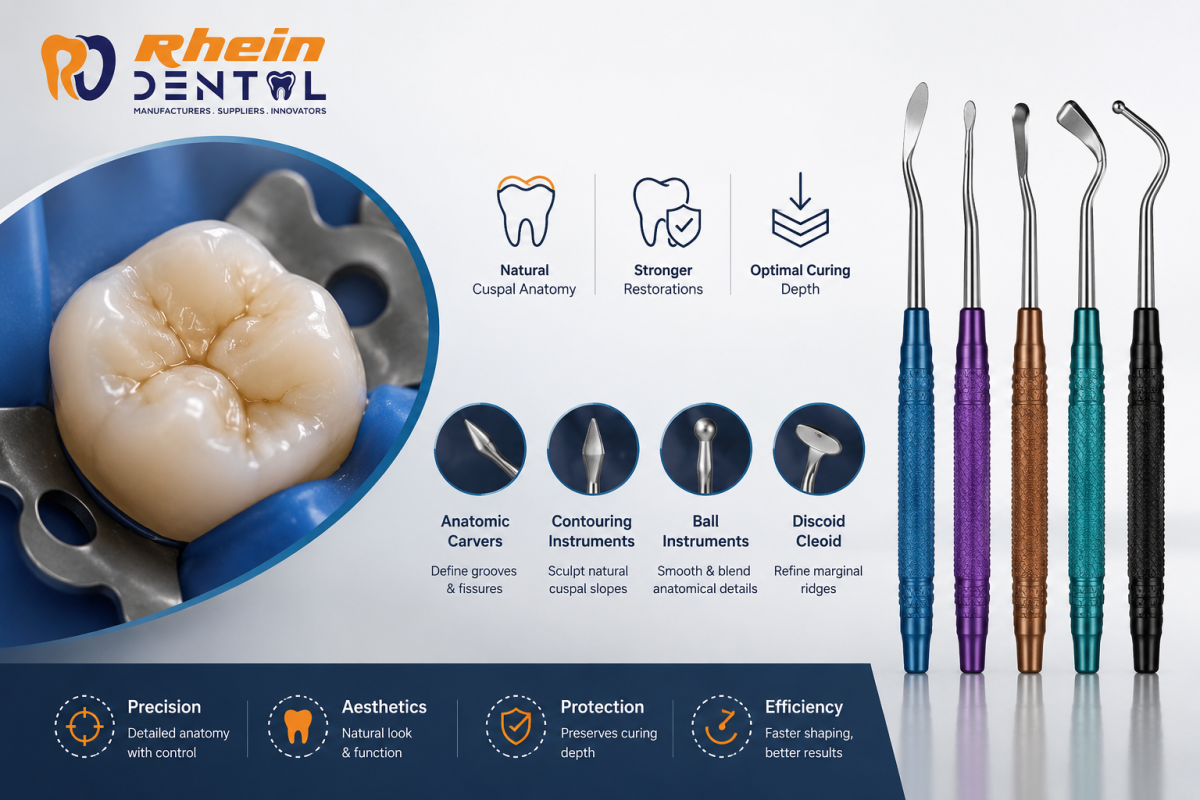
Posterior Composite Anatomy: Which Instrument Shapes Best Replicate Cuspal Morphology Without Disrupting Curing Depth
08
May
May
Achieving natural posterior tooth anatomy in composite restorations is one of the most skill-dependent tasks in restorative dentistry. The challenge is not only to replicate cuspal morphology but also to ensure adequate curing depth without compromising material properties (Posterior Composite Anatomy Instruments). If the restoration is over-contoured or poorly sculpted, it can lead to occlusal […]
Surgical Instruments Blog
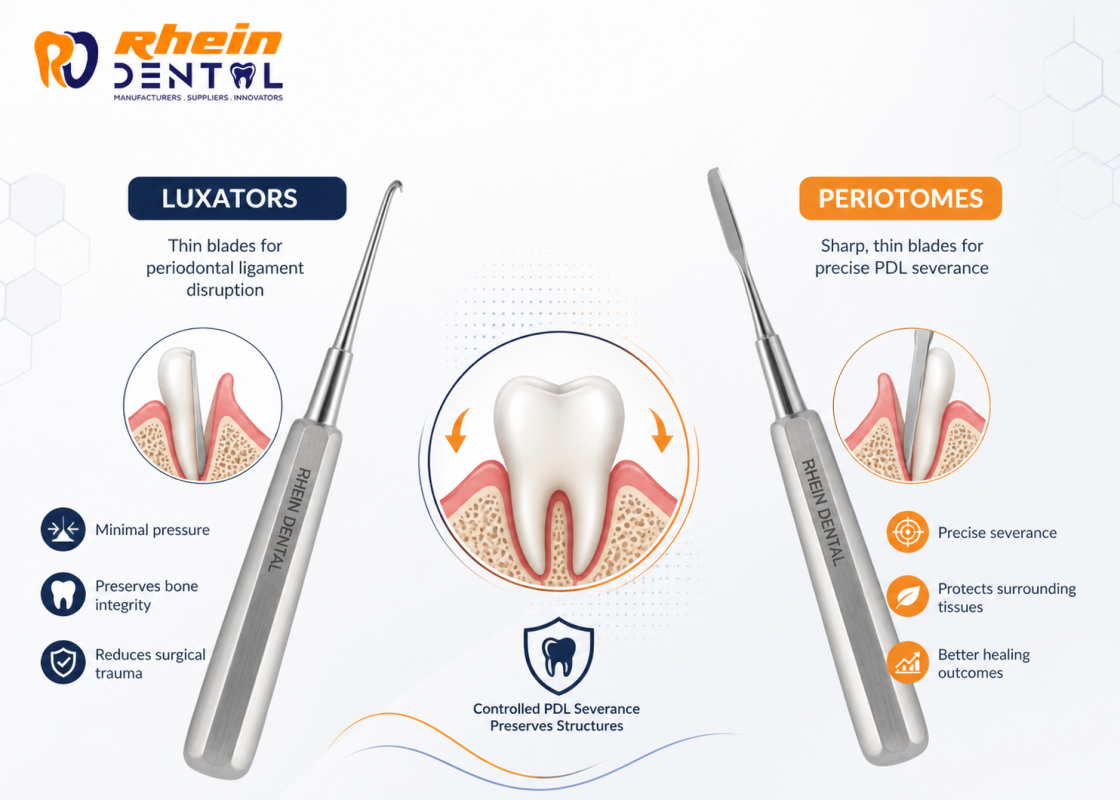
Luxators vs. Periotomes: How Thin Blades and Controlled PDL Severance Reduce Surgical Trauma
04
May
May
Modern dental extraction is no longer about force it is about precision, tissue preservation, and biomechanical control. As minimally invasive dentistry continues to evolve, instruments like luxators and periotomes have become essential for reducing surgical trauma during tooth removal (Luxators vs periotomes). Although both tools are designed to sever the periodontal ligament (PDL), their structure, […]
Dental Instruments Blog
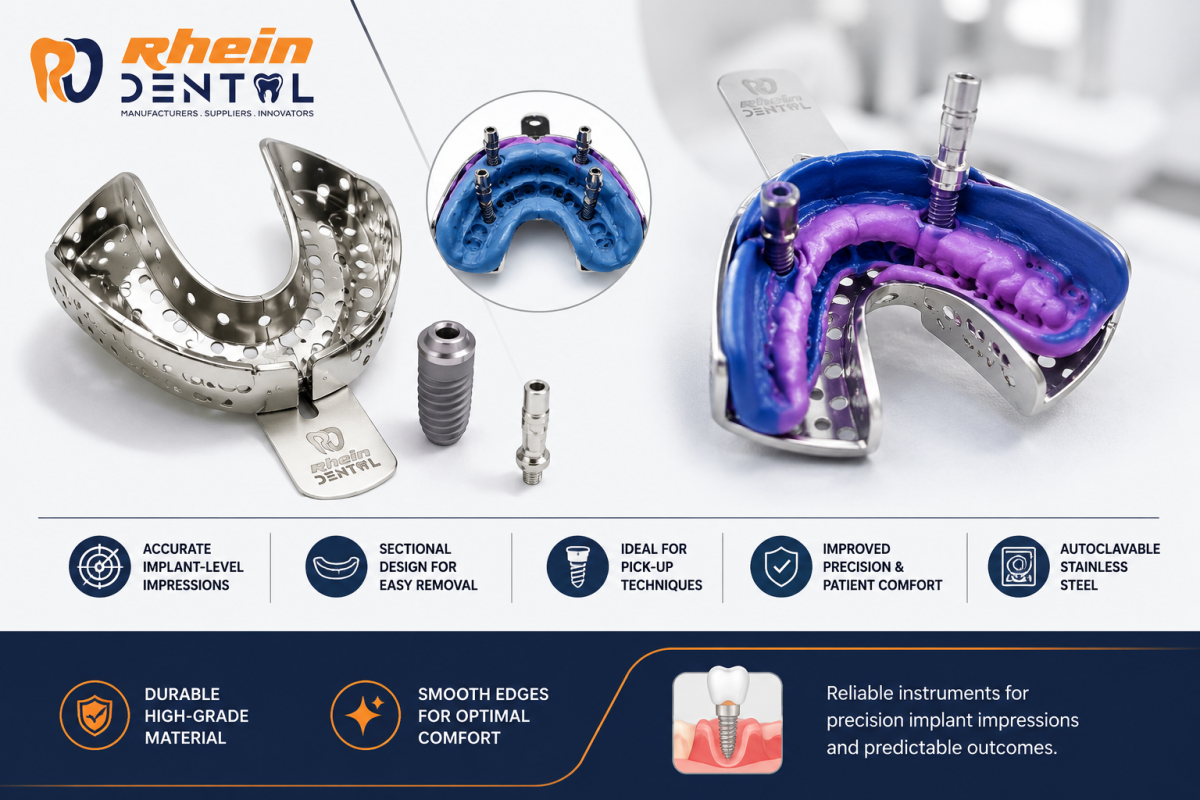
Sectional Impression Trays: Benefits in Implant-Level Impressions and Pick-Up Techniques.
22
Apr
Apr
Precision is everything in implant dentistry. When margins are tight and passive fit is critical, even small distortions in an impression can lead to costly remakes or long-term complications. That’s where sectional impression trays come in a smart, practical solution for improving accuracy, especially in complex implant cases and pick-up techniques (Suctional Impression Trays). What […]
Orthodontic Instruments Blog
Tweed Loop Pliers: Specialized Design for Consistent Closing Loop Formation.

21
Apr
Apr
Orthodontic precision often comes down to the smallest details and loop formation is one of them. When shaping closing loops for space management or adjusting archwires for controlled tooth movement, consistency becomes critical. Tweed Loop Pliers address this need by delivering predictable, repeatable results without compromising wire integrity. What Are Tweed Loop Pliers? Tweed Loop […]
Dental Instruments Blog
Autoclavable Impression Trays: Material Selection for Repeated Sterilization Without Warping.

20
Apr
Apr
In modern dental practice, infection control isn’t optional it’s foundational. Autoclaving remains the gold standard for sterilization, but not all impression trays are built to withstand repeated high-temperature cycles. Over time, inferior materials can warp, degrade, or lose structural integrity, ultimately compromising impression accuracy and clinical outcomes. So how do you choose the right autoclavable […]
Dental Instruments Blog
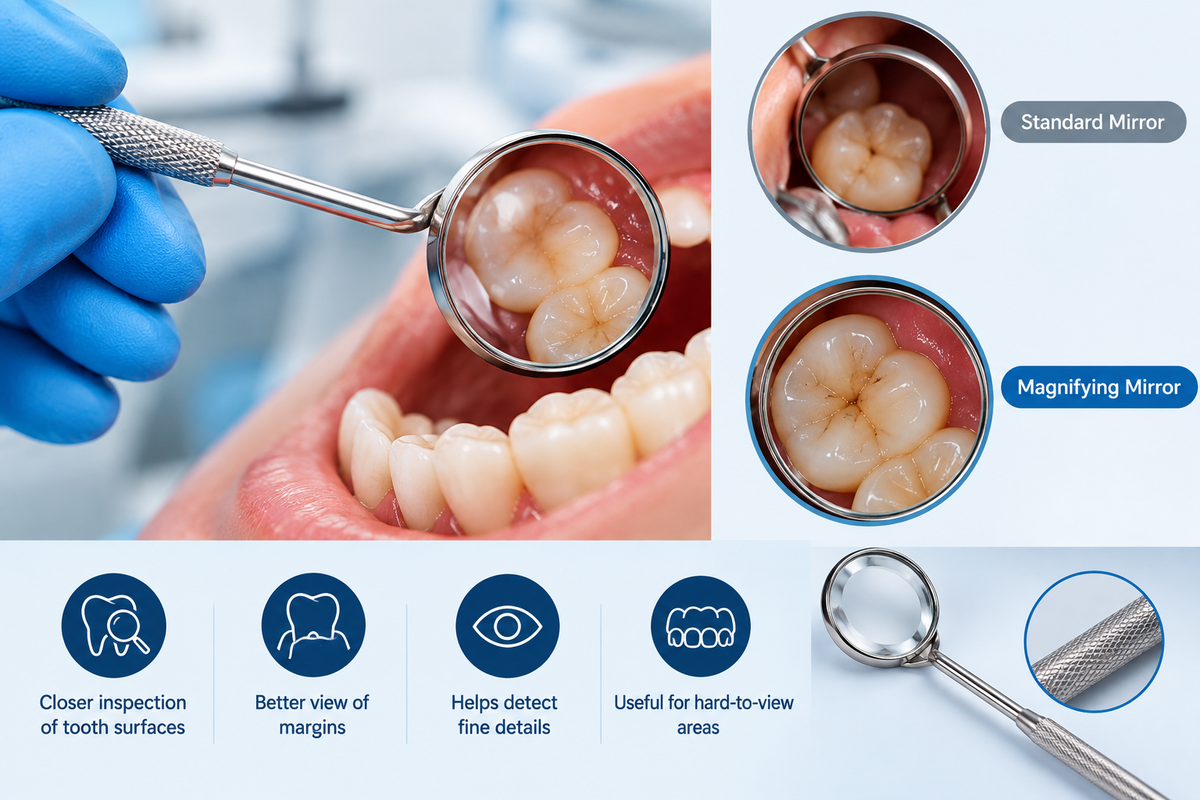
Magnifying Dental Mirrors: When to Use Enhanced Visualization Tools for Detailed Inspection
14
Apr
Apr
In modern dentistry, precision is no longer optional it’s expected. As procedures become more refined and patient expectations continue to rise, clinicians are increasingly turning to enhanced visualization tools to improve diagnostic accuracy. Among these, magnifying dental mirrors stand out as a simple yet powerful upgrade to traditional instruments. But when exactly should you use […]
Orthodontic Instruments Blog
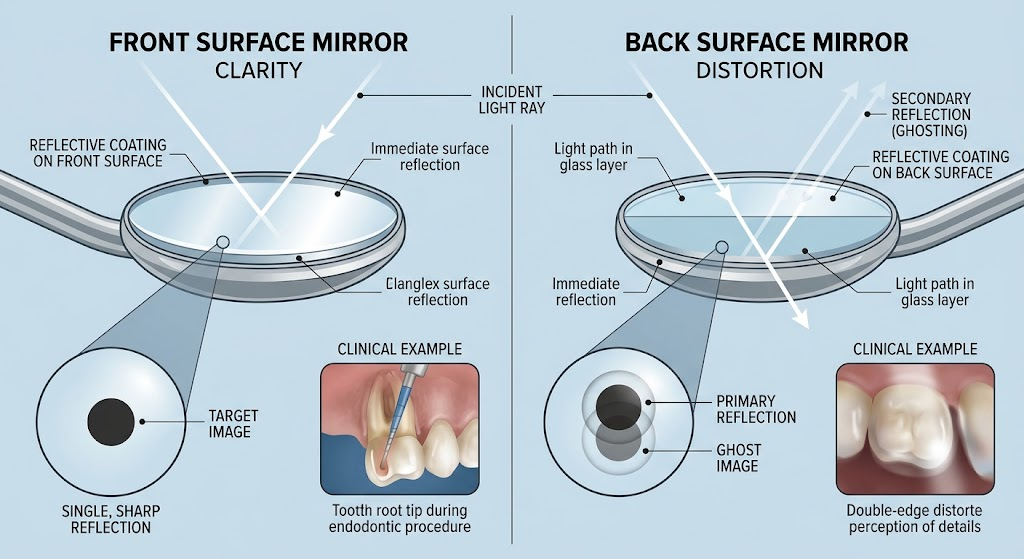
Front Surface vs. Back Surface Mirrors: Optical Clarity Differences in Clinical Use
11
Apr
Apr
Dental mirrors are essential tools for visibility, precision, and patient care. However, not all mirrors offer the same optical performance. One important distinction lies in whether the mirror uses a front surface or back surface reflective design. Understanding the difference can help dental professionals choose the right mirror for clearer clinical outcomes (Front Surface vs […]
Dental Instruments Blog
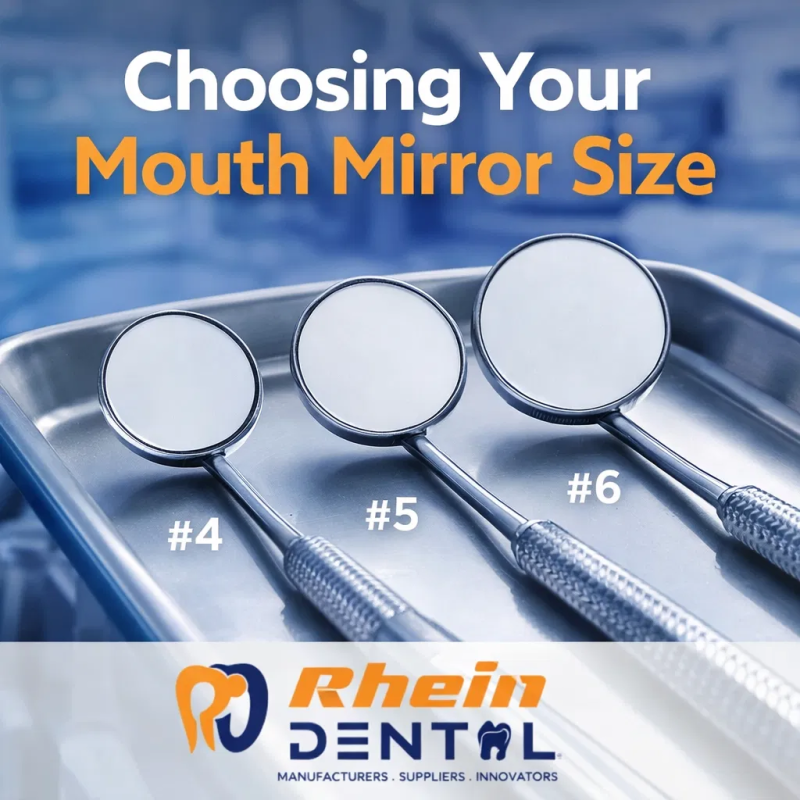
Mouth Mirror Sizes: Choosing Between #4, #5, and #6 for Different Oral Examinations.
10
Apr
Apr
A mouth mirror is one of the most frequently used tools in dentistry. It helps with indirect vision, illumination, tissue retraction, and improved access during oral examinations and procedures. However, choosing the right mirror size can make a significant difference in both patient comfort and clinical efficiency. Among the most commonly used sizes are #4, […]