
Minimally invasive pediatric dentistry is reshaping how practices treat young patients, and the equipment behind that shift matters just as much as the philosophy driving it. If you’re a practice owner, clinical director, or procurement lead trying to determine which instruments belong in a modern pediatric operatory, this guide covers the major equipment categories, what to look for, and how to build a practical buying plan.
What Is Minimally Invasive Pediatric Dentistry?
Minimally invasive pediatric dentistry is an evidence-based approach that treats dental disease in children while preserving as much healthy tooth structure as possible. Instead of relying exclusively on traditional drilling and injections, clinicians can use tools and techniques such as silver diamine fluoride (SDF), intraoral scanners, atraumatic restorative treatment (ART) kits, and soft- or hard-tissue lasers when clinically appropriate.
The objective is not to eliminate conventional dentistry completely. Rather, the goal is to use the least invasive effective option for the individual patient.
Why Minimally Invasive Equipment Is Becoming Essential
Pediatric dentistry has moved a long way from the traditional “drill and fill” model. Today, early caries detection technology, gentler restorative materials, and chairside digital tools can allow practices to intervene sooner and less invasively.
This shift is particularly important for anxious young patients and their parents. Furthermore, the equipment used in a pediatric operatory can influence both clinical efficiency and the overall patient experience.
Several factors are driving this change:
- Behavioral outcomes matter more than ever. Children who have calm, low-pain early visits may be more likely to maintain preventive dental care as they grow.
- Parents are increasingly interested in low-anxiety options. Therefore, practices that can offer appropriate minimally invasive treatments may have an advantage when discussing treatment choices with families.
- Professional bodies increasingly recognize minimally invasive approaches. The American Academy of Pediatric Dentistry (AAPD) has published clinical guidance concerning technologies and approaches such as SDF, lasers, and digital diagnostics.
- Digital workflows can reduce chair time and remakes. For example, intraoral scanning and digitally designed appliances can simplify certain impression and appliance workflows.
The Financial Case for Better Equipment
For practice owners, this is not simply a clinical upgrade. It can also become a workflow and financial consideration.
Instead of purchasing equipment reactively, practices can first identify their most common pediatric procedures and then select equipment that supports those workflows. As a result, investment decisions can become more structured and easier to justify.
Core Equipment Categories for a Minimally Invasive Pediatric Practice
Below is a breakdown of the major instrument and technology categories that modern pediatric practices can evaluate according to clinical function.
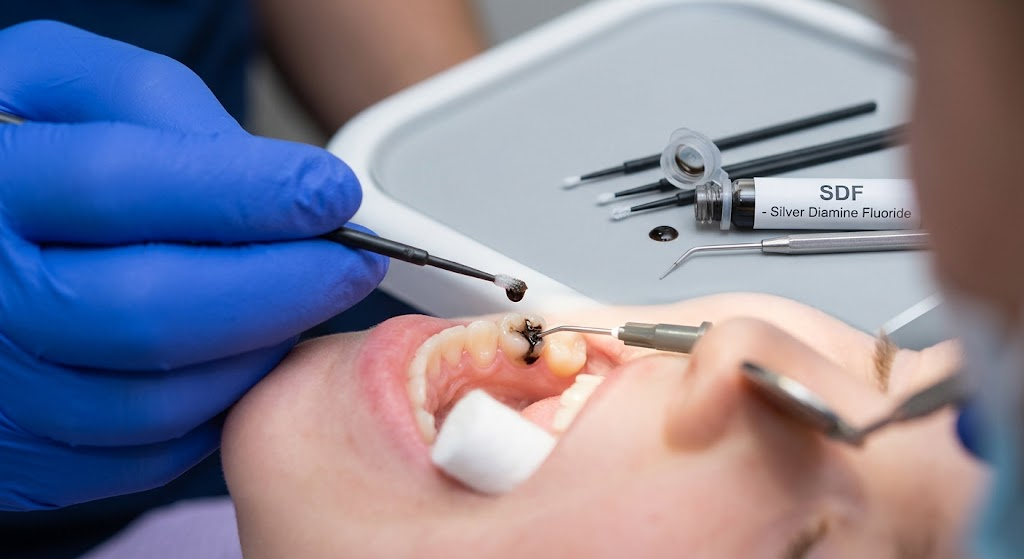
1. Silver Diamine Fluoride (SDF) Application Tools
SDF has become an important option in conservative caries management. In appropriate cases, it can help arrest caries without the drilling associated with conventional restorative treatment.
However, SDF application requires careful technique and appropriate patient selection.
What to Look for in SDF Application Kits
A useful SDF application setup may include:
- Precision micro-brush applicators for controlled application over small areas.
- Petroleum jelly or resin barrier accessories to help protect gingival tissues.
- Single-dose or unit-dose SDF packaging to support efficient application and reduce cross-contamination concerns.
- Application accessories that allow clinicians to work accurately within small pediatric treatment areas.
Important Parent Communication
One important consideration is that SDF causes permanent black staining on treated carious tooth structure. Therefore, although it can be particularly useful for certain primary teeth, posterior lesions, or children who are not ready for restorative treatment, clinicians should discuss the esthetic effect with parents and obtain appropriate informed consent.
2. Intraoral Scanners for Pediatric Patients
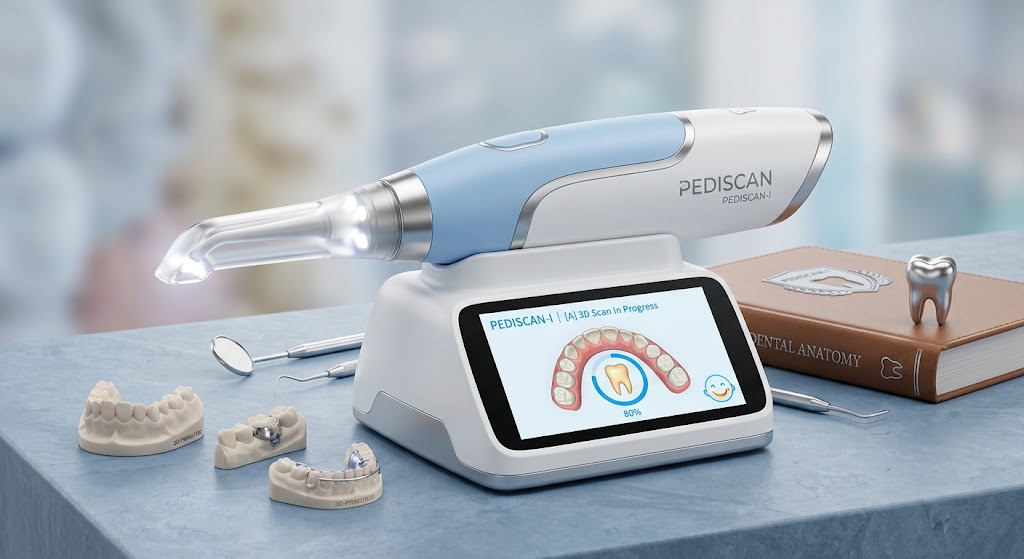
Standard intraoral scanners were not necessarily designed around the challenges of small mouths, shorter attention spans, and increased gag sensitivity. Consequently, pediatric use can place additional importance on the physical design and scanning experience.
Features That Matter in Pediatric Scanning
When evaluating an intraoral scanner for pediatric dentistry, consider:
- Smaller wand tips and lighter handpieces for smaller oral cavities and easier maneuvering around primary molars.
- Faster scan speeds and shorter capture windows, because children may have limited ability to remain still.
- Child-friendly chairside interfaces, which can sometimes turn the live scan into a useful distraction or educational tool.
- Compatibility with orthodontic and appliance design software, particularly when digital impressions are used for space maintainers, retainers, and early orthodontic appliances.
Additionally, intraoral scanners can eliminate conventional alginate impression trays in workflows where digital impressions are clinically suitable. This can be especially helpful for children who struggle with the gag reflex.
3. Laser Units for Hard and Soft Tissue Procedures
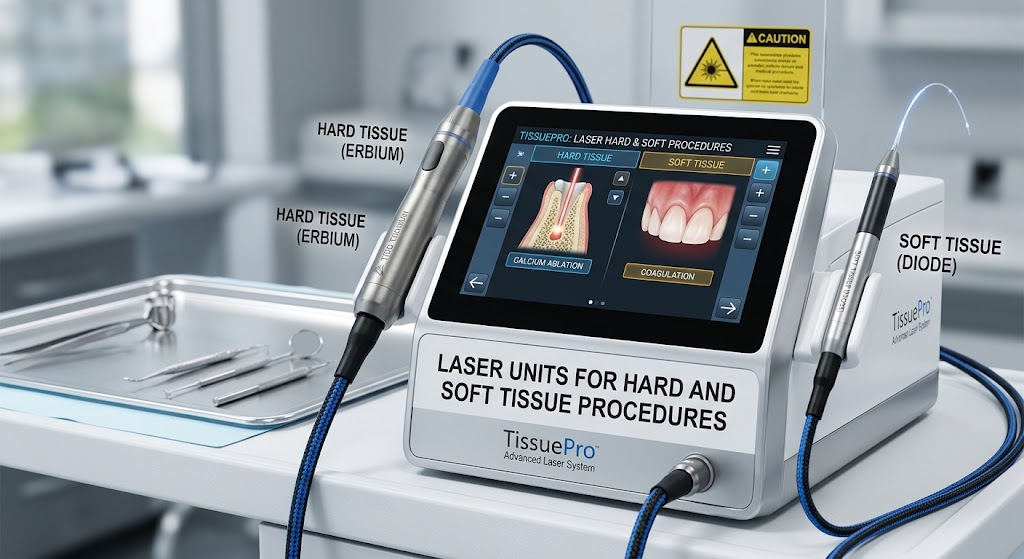
Laser dentistry can support minimally invasive treatment for selected procedures, including frenectomies, gingival recontouring, cavity preparation, and caries removal.
However, laser performance and clinical application depend heavily on the wavelength, tissue type, procedure, and operator training.
Common Pediatric Laser Applications
| Laser Type | Common Pediatric Use | Anesthesia Typically Needed? |
|---|---|---|
| Diode laser | Soft tissue procedures, frenectomy, gum reshaping | Rarely |
| Er / Er,Cr | Hard and soft tissue procedures, cavity preparation | Sometimes, particularly for deeper cavities |
| CO₂ laser | Soft tissue surgery, lesion removal | Rarely |
Before purchasing a laser, practices should therefore consider clinical indications as well as training requirements. The AAPD recognizes lasers as a beneficial adjunct in pediatric dentistry while emphasizing the importance of appropriate clinician training.
4. Atraumatic Restorative Treatment (ART) Kits
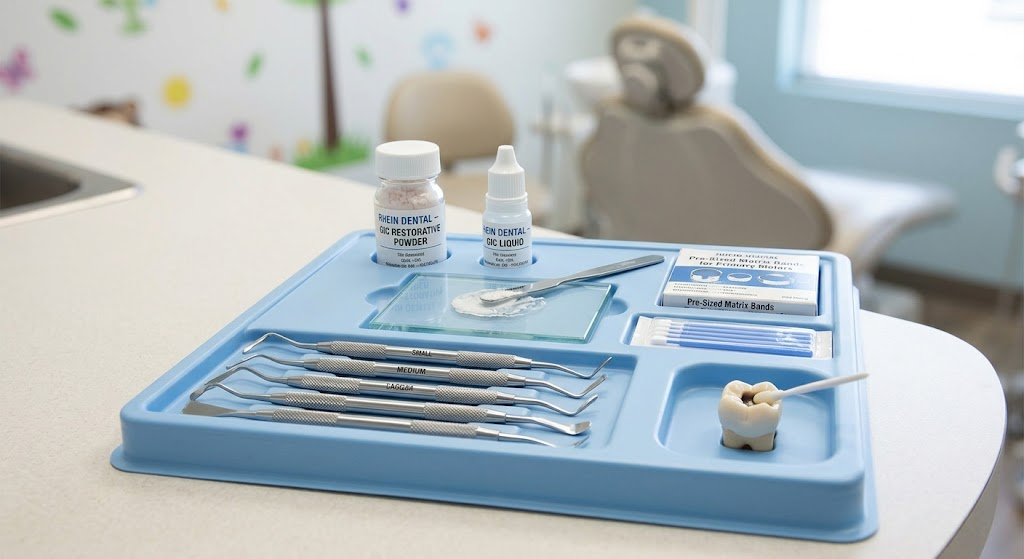
Atraumatic restorative treatment (ART) is a hand-instrument-based approach to removing caries and placing restorative material without relying on a conventional dental handpiece.
Originally developed for use in low-resource settings, ART is now also used in selected cases involving anxious or very young patients.
What an ART Kit Should Include
A well-stocked ART kit typically includes:
- Spoon excavators in pediatric-appropriate sizes
- Hand instruments for cavity preparation without a handpiece
- Glass ionomer cement (GIC), selected for its fluoride release and chemical bond to tooth structure
- Applicator instruments suited to small treatment areas
Moreover, ART can be a relatively accessible starting point for practices developing a minimally invasive pediatric protocol because it generally requires less capital investment than laser or digital scanning equipment.
5. Pediatric-Specific Instruments and Orthodontic Hardware
Although technologies such as scanners and lasers receive considerable attention, everyday pediatric dentistry still depends heavily on appropriately sized hand instruments and orthodontic components.
These may include:
- Pediatric-sized mirrors, explorers, and probes designed for smaller oral cavities
- Pediatric brackets and lighter-force archwires for early interceptive orthodontics
- Space maintainers and their placement instrument kits
- Matrix bands and sectional matrices sized for primary molars
Using appropriately sized instruments can improve access and handling. In contrast, adult-scaled instruments may create unnecessary discomfort and make clinical procedures less efficient in a pediatric mouth.
Traditional vs. Minimally Invasive Equipment
The differences between conventional and minimally invasive approaches can be considered across several areas:
| Factor | Traditional Approach | Minimally Invasive Approach |
| Caries management | Drill and fill under anesthesia | SDF, ART, laser-assisted removal |
| Impressions | Alginate trays | Digital intraoral scanning |
| Anesthesia use | Standard for many restorative procedures | Reduced or eliminated for selected procedures |
| Patient anxiety | Higher due to noise, vibration, and needles | Potentially lower with quieter, gentler approaches |
| Chair time | Longer for some procedures | Often shorter with efficient digital workflows |
| Upfront equipment cost | Lower for basic handpieces | Higher for lasers and scanners, lower for ART |
| Parent perception | Familiar but less differentiated | Can support patient education and case acceptance |
However, these comparisons should not be interpreted as meaning that minimally invasive equipment is appropriate for every clinical situation. Instead, treatment should continue to be based on the individual patient’s needs.
How to Equip Your Practice for Minimally Invasive Pediatric Care
A structured purchasing process can help practices avoid unnecessary expenditure.
Step 1: Audit Your Current Caries-Management Workflow
First, identify how many restorative cases currently require anesthesia or multiple visits. Then consider whether appropriate SDF or ART protocols could be used for selected cases.
Step 2: Start With High-Impact, Lower-Cost Equipment
For many practices, SDF application kits and ART instrument sets can provide an accessible starting point. These categories generally have a lower capital barrier while offering immediate clinical applications.
Step 3: Evaluate Pediatric Scanner Features
Next, assess intraoral scanners according to pediatric-specific requirements. Wand size, scanning speed, and patient tolerance may be more important in a pediatric setting than specifications designed primarily around adult full-arch scanning.
Step 4: Budget for Laser Training
If a laser is being considered, training should be included in the purchasing budget from the beginning. Equipment without appropriate operator training may be underused and can create avoidable clinical and operational risks.
Step 5: Standardize Instrument Sizing
Additionally, review the instruments used throughout the practice. Replacing adult-scaled hand instruments in pediatric operatories with correctly sized alternatives can improve handling and patient comfort.
Step 6: Review Supplier Reliability
Supplier reliability is another important consideration. Consumables such as SDF unit-doses, GIC, matrix bands, and scanner tips need consistent availability. Therefore, the lowest initial purchase price should not be the only factor considered.
Step 7: Reassess Your Equipment Annually
Finally, review your equipment and workflows each year. Minimally invasive dentistry continues to evolve, and newer materials, technologies, and workflows may change how practices approach pediatric treatment.
Quick Checklist Before You Buy
- Does the SDF applicator kit include suitable barrier protection accessories?
- Is the intraoral scanner wand appropriately sized for pediatric patients?
- Does the laser unit come with documented training resources?
- Are ART hand instruments available in pediatric sizes?
- Does your supplier reliably stock SDF, GIC, matrix bands, and other consumables?
- Have you budgeted for staff training alongside equipment purchases?
- Does the equipment integrate with your existing orthodontic or appliance workflow?
Pros and Cons of Investing in Minimally Invasive Equipment
Advantages
Minimally invasive equipment can provide several potential benefits:
- Reduces the need for anesthesia in selected routine cases
- Can support better patient cooperation
- May improve the overall treatment experience for children
- Can strengthen case acceptance through clearer treatment differentiation
- May reduce chair time after staff become familiar with the workflow
- Supports approaches recognized in current pediatric dental guidance
Potential Limitations
However, practices should also consider several limitations:
- Lasers and premium intraoral scanners can involve significant upfront costs.
- Staff training is particularly important for laser-assisted procedures.
- SDF’s black staining effect requires careful communication with parents.
- Consumables such as SDF unit-doses, scanner tips, and GIC create ongoing costs.
- Return on investment depends on patient volume, treatment mix, and how consistently the equipment is used.
Common Mistakes Practices Make When Upgrading Equipment
Buying a Laser Before Training Staff
One common mistake is purchasing a laser before establishing appropriate staff training. Consequently, expensive equipment may remain underused.
Choosing a Scanner Without Considering Pediatric Needs
Another mistake is selecting a scanner primarily designed around adult full-arch workflows. In pediatric dentistry, smaller wand dimensions and shorter scanning sessions may be particularly valuable.
Treating SDF as a Universal Solution
SDF can be highly useful in appropriate cases. Nevertheless, it should not be treated as a one-size-fits-all solution. Esthetic considerations, caries status, tooth type, and informed consent all matter.
Overlooking Consumable Supply Chains
A good SDF system is only practical if the required consumables can be replenished consistently. Therefore, supplier reliability should be assessed before committing to a particular workflow.
Keeping Adult-Sized Instruments in Pediatric Operatories
Finally, practices should avoid automatically stocking pediatric treatment areas with adult-scaled instruments. Correct sizing can make routine procedures more manageable for both clinician and patient.
Frequently Asked Questions
What equipment is essential for minimally invasive pediatric dentistry?
At minimum, many practices can consider SDF application kits, ART hand instruments, pediatric-sized diagnostic instruments, and access to an intraoral scanner. Laser units can be a valuable addition; however, they require a larger investment and appropriate training.
Is silver diamine fluoride safe for children?
SDF is widely used in pediatric dentistry as a non-invasive approach for arresting caries in appropriate cases. The primary esthetic consideration is the permanent black staining of treated carious tooth structure. Therefore, clinicians should discuss this effect with parents before treatment.
Do pediatric practices need a different intraoral scanner?
Not necessarily. However, pediatric workflows can benefit from scanners with smaller wand tips, faster scan speeds, and shorter capture windows. These features may make scanning more manageable for children who have limited tolerance for lengthy procedures.
How much does it cost to equip a pediatric practice for minimally invasive dentistry?
Costs vary considerably depending on the scope of the setup. ART kits and SDF application tools can provide relatively low-cost entry points. In contrast, intraoral scanners and laser units can require significantly larger investments, potentially reaching thousands or tens of thousands of dollars depending on the manufacturer and specifications.
Can minimally invasive techniques completely replace traditional drilling?
No. Minimally invasive techniques such as SDF, ART, and lasers are best considered part of a broader treatment toolkit. Deeper decay, structural damage, or certain restorative cases may still require conventional drilling and restorative procedures. Ultimately, the goal is to reduce unnecessary invasiveness where clinically appropriate rather than eliminate traditional treatment entirely.
What training is required before using laser equipment on pediatric patients?
Laser use requires procedure-specific and wavelength-specific training because techniques differ between soft-tissue and hard-tissue applications. Manufacturers commonly provide initial training with equipment purchases, while continuing education can help clinicians maintain and develop their skills.
Where can I buy pediatric-specific dental instruments and equipment?
Established dental equipment suppliers that stock pediatric-sized instruments, orthodontic hardware, and minimally invasive treatment tools can be useful purchasing partners. In addition to the initial equipment, practices should consider whether the supplier can provide consistent consumable restocking and appropriate after-sales support.