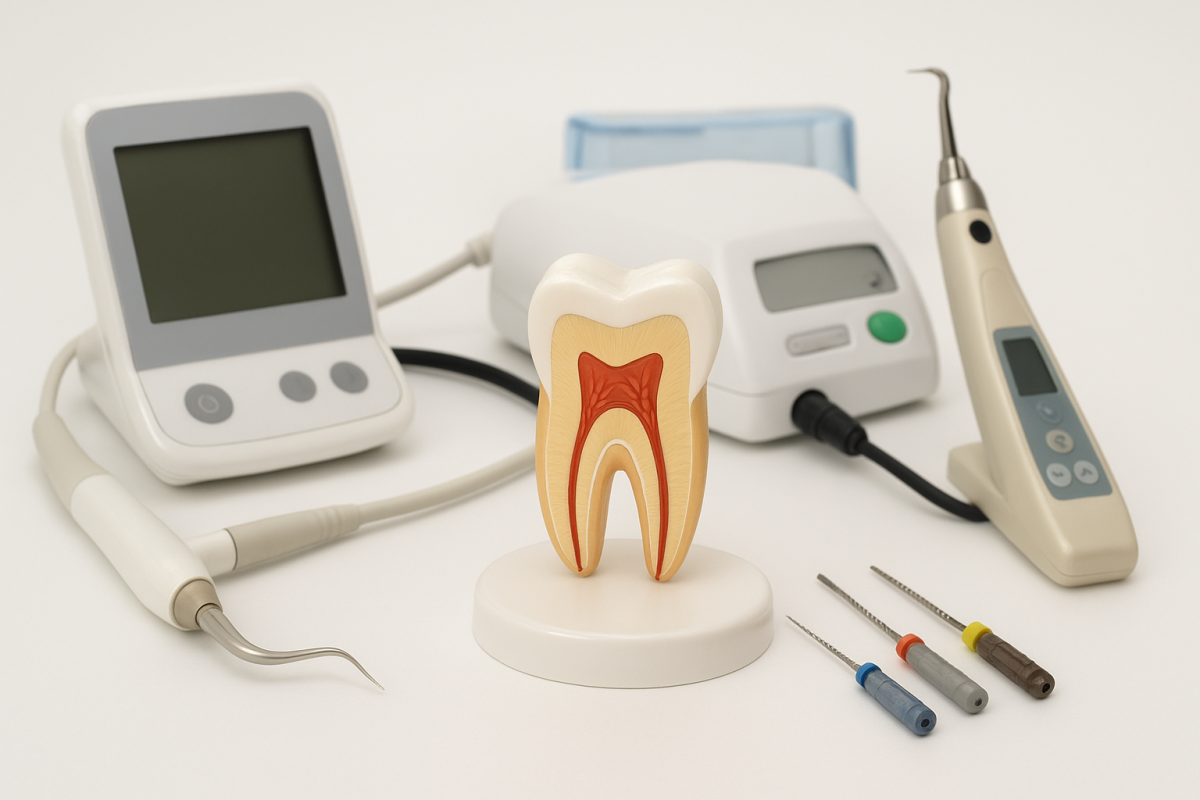
Academic Trends in Endodontic Equipment: Shaping the Future of Teaching Endodontics
Endodontics, the branch of dentistry focused on diagnosing and treating dental pulp diseases, has always evolved alongside technology (Academic Trends in Endodontic Equipment). Dental schools worldwide now integrate advanced equipment into their curriculum, transforming how students learn and preparing them for modern practice(Academic Trends in Endodontic Equipment).
The Digital Revolution in Endodontic Education
One major trend is the rise of digital technologies. Tools like CBCT (Cone Beam Computed Tomography) and high-resolution intraoral scanners give students a three-dimensional view of tooth anatomy, root canal systems, and pathology(Academic Trends in Endodontic Equipment).
These tools provide student with a three dimensional understanding of tooth anatomy, complex root canal system and pathology that was previously only observable in textbooks or rare clinical cases.
Integration of Rotary and Automated Instrumentation
Modern endodontists rely on rotary and reciprocating file systems for canal preparation. Dental schools now teach students to use these instruments early in their education. This training helps students:
- Master mechanical canal shaping techniques
- Navigate complex root canal anatomy confidently
- Reduce procedural errors like ledging or perforations
Simulation-based practice ensures students gain experience before treating real patients.
Microscopes and Magnification: The New Classroom Norm
Dental operating microscopes (DOMs) are becoming standard in teaching labs. These tools allow students to perform procedures with precision and clarity, helping them:
- Locate accessory canals and understand complex anatomy
- Maintain better posture and reduce fatigue during procedures
- Gain early experience with professional-grade equipment
Simulation and Virtual Reality (VR) in Endodontic Training
Virtual reality and haptic simulators are transforming endodontic education. VR allows students to practice access cavity preparation, canal negotiation, and obturation in a risk-free environment.
These simulators provide immediate feedback, helping students improve faster. VR also solves a common challenge: ensuring adequate clinical experience while keeping patients safe.
Eco-Friendly and Efficient Equipment
Sustainability is becoming a priority in dental education. Schools now adopt reusable instruments, low-waste obturation systems, and energy-efficient motors. These practices train students to provide high-quality care while minimizing environmental impact.
Implications for the Future of Endodontic Education
Integrating advanced equipment in education offers clear benefits:
- Better learning outcomes: Students achieve higher competency levels before clinical practice
- Technological adaptability: Graduates can adopt new innovations easily
- Safer treatments: Early exposure reduces errors during patient care
As technology evolves, dental programs must keep pace. Digital tools, modern instrumentation, and simulation-based training are shaping a generation of skilled, confident, and adaptable endodontists.
Conclusion
The future of teaching endodontics goes beyond textbooks and extracted teeth. Schools now focus on digital, precision-driven, and simulation-based education, preparing students for the challenges of modern dental practice. Tomorrow’s endodontists will enter the field better equipped to deliver advanced care with confidence.