
In modern dentistry and oral surgery, minimally invasive techniques are no longer optional they’re expected. Reduced trauma, faster healing, and improved patient comfort all depend on one critical factor: instrument selection. Among the most commonly debated tools for flap elevation are periosteal elevators and Molt curettes. While they may appear similar at first glance, their design, function, and clinical applications differ significantly.
Understanding when and why to use each can elevate both surgical precision and outcomes.
Understanding the Basics
Periosteal Elevators
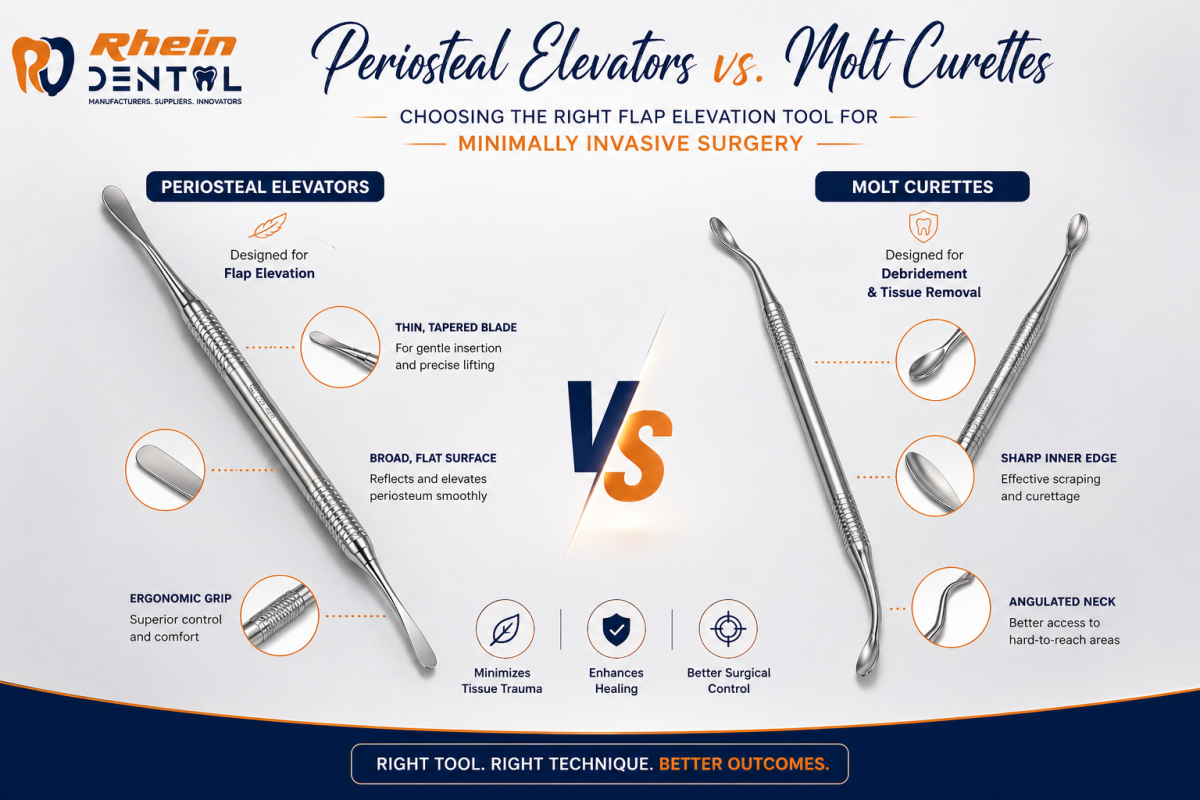
Periosteal elevators are specifically designed to separate the periosteum from the underlying bone. They typically feature:
- A sharp or semi-sharp working end for precise dissection
- A broad, flat surface to reflect soft tissue cleanly
- A double-ended design (e.g., Molt No. 9 style) for versatility
Their primary role is atraumatic flap elevation, making them essential in procedures such as extractions, implant placement, and periodontal surgeries.
Molt Curettes
Molt curettes, while sometimes confused with periosteal elevators due to overlapping names, are fundamentally different. They are designed for:
- Debridement and curettage of extraction sockets
- Removal of granulation tissue, debris, or infected material
- Light scraping rather than controlled tissue reflection
They feature:
- A spoon-shaped working end
- A sharper inner edge for scraping
- Less emphasis on broad tissue lifting
Key Differences That Matter in Surgery
1. Functionality
- Periosteal Elevators: Designed for flap reflection
- Molt Curettes: Designed for tissue removal and cleaning
Using a curette for flap elevation can lead to uneven reflection and tissue trauma, while using an elevator for curettage is simply inefficient.
2. Precision and Control
- Elevators provide controlled, smooth lifting of soft tissue
- Curettes offer localized scraping, not ideal for maintaining flap integrity
For minimally invasive procedures, control is everything, and periosteal elevators excel here.
3. Tissue Trauma
- Elevators minimize trauma by distributing force evenly
- Curettes can cause micro-tears if used improperly for elevation
Less trauma directly translates to faster healing and reduced post-operative discomfort.
4. Clinical Applications
Choose a Periosteal Elevator when:
- Raising mucoperiosteal flaps
- Performing implant surgery
- Conducting surgical extractions
- Working in aesthetic zones where tissue preservation is critical
Choose a Molt Curette when:
- Cleaning extraction sockets
- Removing infected or necrotic tissue
- Performing minor debridement procedures
Why the Right Choice Matters in Minimally Invasive Surgery
Minimally invasive dentistry is built on three principles:
- Precision
- Preservation
- Predictability
Using the wrong instrument compromises all three.
A periosteal elevator allows clinicians to:
- Maintain clean incision margins
- Preserve blood supply to the flap
- Reduce post-operative swelling and pain
On the other hand, Molt curettes play a supporting role, ensuring the surgical site is clean and free of debris—but they are not substitutes for flap elevation tools.
Common Mistake to Avoid
A frequent mistake in practice is using a curette for flap reflection due to convenience or instrument availability. This often results in:
- Irregular flaps
- Increased bleeding
- Delayed healing
Investing in the correct instrument is not just about efficiency—it’s about clinical outcomes and patient satisfaction.
Final Thoughts
Periosteal elevators and Molt curettes are both indispensable—but for very different reasons. Think of them not as interchangeable tools, but as complementary instruments within a surgical workflow.
- Use periosteal elevators for precision and atraumatic flap elevation
- Use Molt curettes for effective site debridement and cleaning
Making the right choice ensures that your minimally invasive approach truly remains minimally invasive—for both the tissue and the patient.