
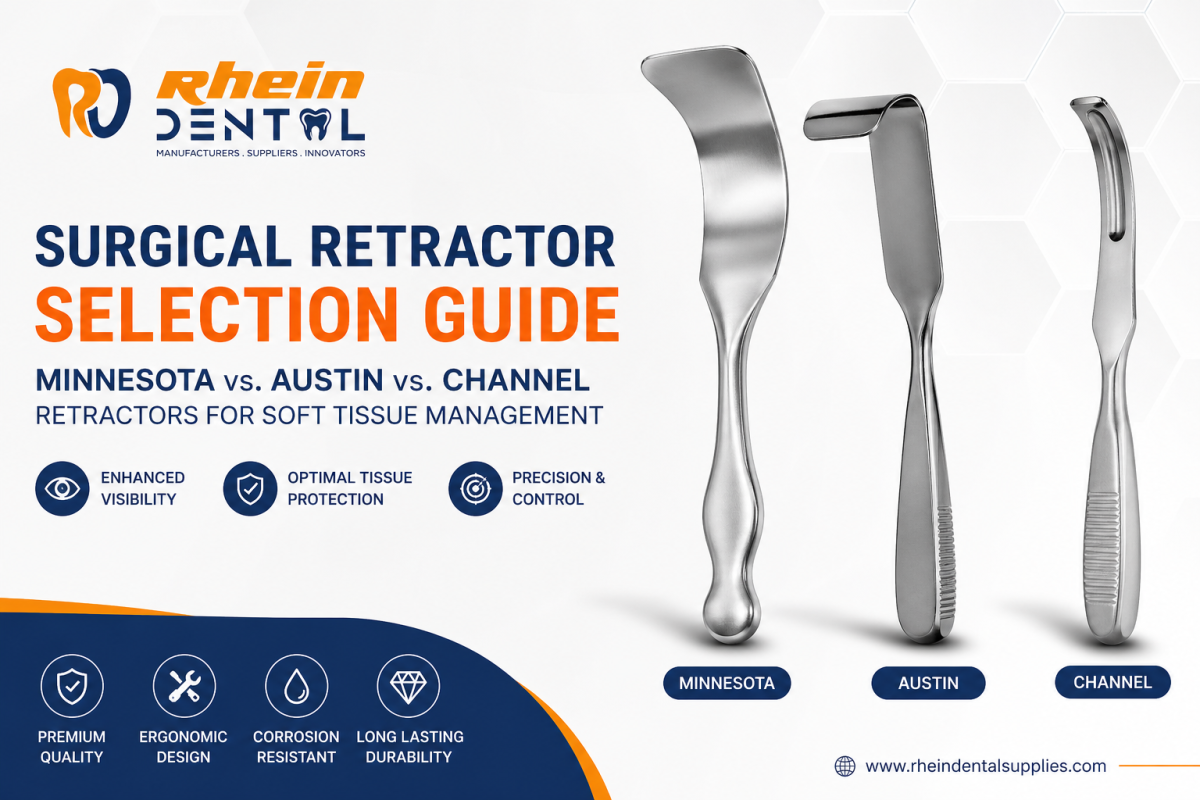
Effective soft tissue management is at the heart of successful surgical outcomes. Whether performing routine extractions or complex oral procedures, choosing the right retractor ensures clear visibility, protects delicate tissues, and improves efficiency. Among the most commonly used options are Minnesota, Austin, and Channel retractors—each designed with specific clinical applications in mind (Surgical retractor selection guide).
This guide breaks down their differences, advantages, and ideal use cases to help you make the right selection.
Why Retractor Selection Matters
A well-chosen retractor does more than just hold tissue aside. It:
- Enhances surgical visibility
- Minimizes tissue trauma
- Improves operator ergonomics
- Reduces procedure time
- Supports better patient outcomes
Using the wrong retractor, on the other hand, can lead to unnecessary strain, compromised access, or even tissue damage.
Minnesota Retractor
Overview
The Minnesota retractor is one of the most widely used instruments in oral surgery. It features a broad, curved blade with a gentle contour, designed for effective cheek and flap retraction (Surgical retractor selection guide).
Key Features
- Wide, smooth blade for atraumatic retraction
- Angled handle for better access and control
- Typically double-ended or single broad blade design
Best Use Cases
- Third molar (wisdom tooth) extractions
- Flap surgeries
- General cheek and mucoperiosteal retraction
Advantages
- Excellent visibility in posterior regions
- Comfortable for both patient and operator
- Reduces pressure points on soft tissue
Limitations
- May be bulky for smaller oral cavities
- Less precise in confined surgical areas
Austin Retractor
Overview
The Austin retractor is more compact and features a right-angled blade, making it ideal for controlled retraction in smaller or more delicate areas.
Key Features
- L-shaped or right-angle blade
- Slim profile for precision work
- Ergonomic handle for stability
Best Use Cases
- Anterior oral procedures
- Periodontal surgeries
- Pediatric or small-mouth patients
Advantages
- Greater precision and control
- Ideal for confined spaces
- Minimizes unnecessary tissue stretching
Limitations
- Limited coverage compared to Minnesota
- Not ideal for large flap retraction
Channel Retractors
Overview
Channel retractors are designed with a grooved or channeled blade, allowing them to guide and protect soft tissue while maintaining a clear surgical field.
Key Features
- Deep channel or groove along the blade
- Strong, rigid structure
- Often used in more advanced or specialized procedures
Best Use Cases
- Implant surgeries
- Bone grafting procedures
- Situations requiring stable and secure retraction
Advantages
- Provides superior tissue control
- Helps maintain consistent positioning
- Protects adjacent structures effectively
Limitations
- Less versatile for general procedures
- Requires experience for optimal handling
Minnesota vs. Austin vs. Channel: Quick Comparison
| Feature | Minnesota Retractor | Austin Retractor | Channel Retractor |
|---|---|---|---|
| Size & Coverage | Large, broad | Small, precise | Medium to large, structured |
| Best For | General & posterior access | Anterior & precision work | Advanced surgical procedures |
| Tissue Control | Moderate | High precision | Very high stability |
| Ease of Use | Easy | Easy to moderate | Moderate to advanced |
How to Choose the Right Retractor
When selecting a retractor, consider the following:
1. Surgical Area
- Posterior and large flaps → Minnesota
- Anterior or confined spaces → Austin
- Deep or complex procedures → Channel
2. Tissue Sensitivity
- Delicate tissues benefit from slimmer, more precise retractors
3. Operator Comfort
- Ergonomics matter—choose a design that reduces hand fatigue
4. Procedure Complexity
- Routine procedures require versatility
- Advanced surgeries demand stability and control
Final Thoughts
There is no one-size-fits-all solution when it comes to surgical retractors. The Minnesota, Austin, and Channel retractors each serve a distinct purpose in soft tissue management. Understanding their design and application allows clinicians to work more efficiently while ensuring patient safety and comfort.
For optimal results, many practitioners keep all three types readily available—selecting the right tool based on the specific clinical scenario.