
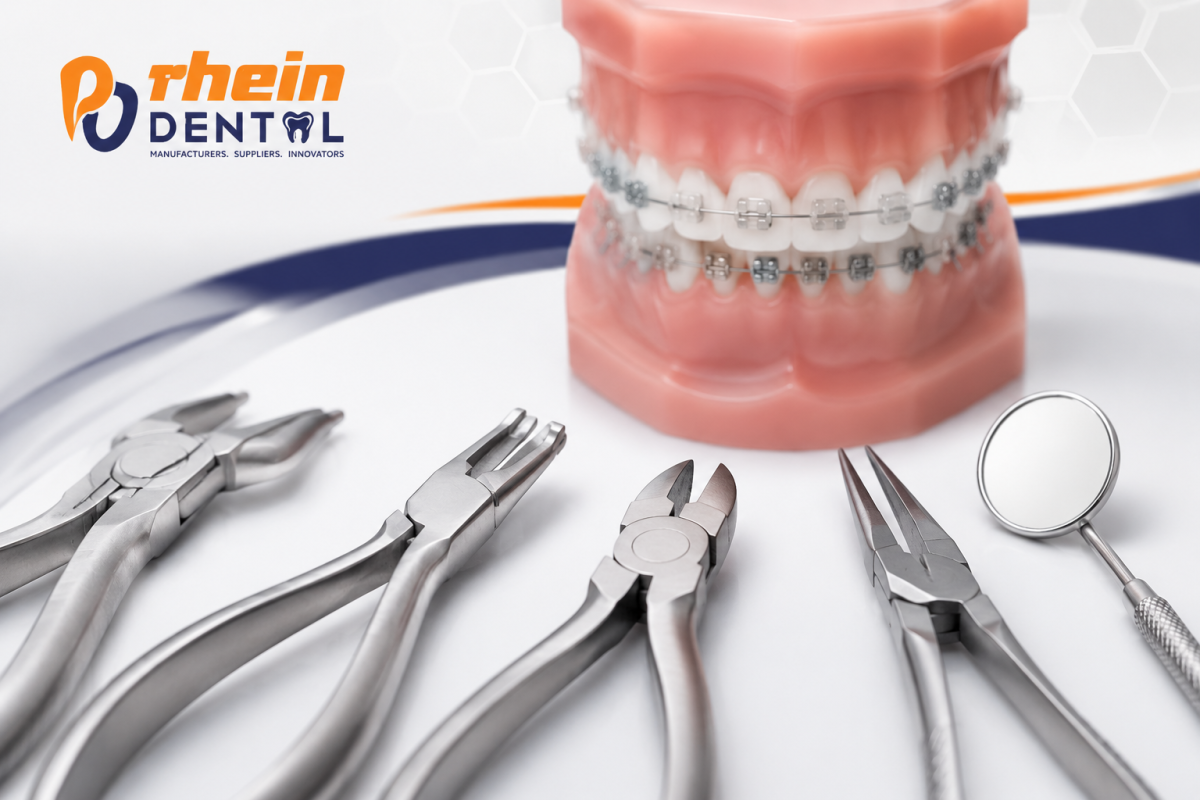
Orthodontic treatment does not end when teeth reach their ideal alignment. The debonding phase—where brackets are safely removed from the tooth surface—is equally critical. Improper debonding techniques or unsuitable instruments can lead to enamel cracks, bracket fracture, patient discomfort, and adhesive residue complications (Debonding Pliers for Orthodontics).
To minimize these risks, orthodontists rely on specialized debonding pliers designed to apply controlled force profiles for different bracket materials. Since ceramic and metal brackets behave differently under stress, selecting the correct debonding instrument is essential for preserving enamel integrity and ensuring safe bracket removal (Debonding Pliers for Orthodontics).
Why Debonding Requires Precision
Bracket removal may appear straightforward, but the process involves carefully separating the bracket base from adhesive without damaging the enamel surface underneath (Debonding Pliers for Orthodontics).
During debonding, excessive or improperly directed force can cause:
- Enamel fractures
- Microcracks
- Bracket shattering
- Patient discomfort
- Residual adhesive complications
The mechanical properties of ceramic and metal brackets differ significantly, which means each requires a distinct force application strategy.
Understanding the Difference Between Ceramic and Metal Brackets
Metal Brackets
Metal brackets are generally made from stainless steel and possess greater ductility and flexibility. They can tolerate deformation during removal, making debonding comparatively safer and more forgiving.
Characteristics include:
- Higher fracture resistance
- Greater flexibility
- Controlled bracket deformation
- Lower risk of enamel damage
Ceramic Brackets
Ceramic brackets are more aesthetic but significantly more brittle. Their rigid structure makes them prone to sudden fracture under excessive pressure.
Characteristics include:
- Brittle material composition
- Limited flexibility
- Higher enamel stress transmission
- Increased fracture risk during removal
Because ceramic brackets transfer more stress directly to the enamel surface, clinicians must use highly controlled debonding techniques.
The Role of Debonding Pliers
Debonding pliers are orthodontic instruments specifically designed to remove brackets while minimizing stress on enamel and surrounding structures.
These pliers help clinicians:
- Apply controlled force
- Direct stress away from enamel
- Improve bracket grip
- Reduce patient discomfort
- Prevent bracket fragmentation
Different plier designs are optimized for either metal or ceramic brackets based on their unique mechanical behavior.
Force Profiles in Metal Bracket Removal
Controlled Squeezing and Peeling Action
For metal brackets, debonding pliers typically apply a squeezing or peeling force at the bracket wings or base. Since metal brackets can deform slightly, the force helps weaken the adhesive bond gradually.
This controlled deformation:
- Reduces sudden stress transfer
- Allows progressive adhesive failure
- Minimizes enamel trauma
- Improves removal predictability
Advantages of Metal Bracket Debonding
Because stainless steel brackets are more resilient, clinicians can safely use moderate compressive force without significant risk of bracket fracture.
Benefits include:
- Faster bracket removal
- Lower incidence of enamel cracks
- Reduced instrument slippage
- Improved clinical efficiency
Force Profiles in Ceramic Bracket Removal
Importance of Shear-Controlled Force
Ceramic brackets require a more delicate approach. Instead of compressive crushing force, debonding pliers for ceramic brackets are designed to apply controlled shear or tensile stress.
This approach:
- Reduces stress concentration on enamel
- Minimizes ceramic fragmentation
- Encourages adhesive failure at the bracket interface
- Improves patient safety
Avoiding Enamel Fracture
Excessive squeezing pressure on ceramic brackets can transfer stress directly to the tooth surface. Specialized ceramic debonding pliers reduce this risk by distributing force more evenly.
Key design features often include:
- Fine-tipped gripping surfaces
- Precision force application
- Torque-controlled mechanics
- Anti-slip engagement
These features help clinicians maintain predictable control during bracket removal.
Instrument Design and Clinical Safety
Modern debonding pliers are engineered with ergonomics and precision in mind. Instrument quality plays a major role in minimizing complications during orthodontic finishing procedures.
Important design considerations include:
- Balanced force distribution
- Non-slip grip surfaces
- Fine working tips
- Corrosion-resistant materials
- Comfortable ergonomic handles
High-quality pliers improve tactile sensitivity, allowing clinicians to better feel adhesive separation during removal.
Patient Comfort During Debonding
Patients often feel anxious about bracket removal, especially with ceramic systems that may produce audible cracking sounds during debonding.
Properly designed pliers help reduce:
- Excessive pressure sensation
- Tooth sensitivity
- Soft tissue trauma
- Anxiety during removal
Controlled force application creates a smoother and more comfortable patient experience.
Adhesive Removal After Debonding
Bracket removal is only one part of the debonding process. Residual adhesive must also be carefully eliminated without damaging enamel.
After bracket removal, clinicians typically:
- Use finishing burs or polishers
- Remove remaining adhesive conservatively
- Polish enamel surfaces
- Inspect for microcracks or damage
Safe debonding instruments reduce adhesive remnants and simplify the finishing stage.
Choosing the Right Debonding Pliers
When selecting debonding instruments, orthodontists should evaluate:
- Compatibility with bracket type
- Precision tip design
- Ergonomic handling
- Instrument durability
- Sterilization resistance
Using the wrong plier design for ceramic or metal brackets can increase the likelihood of enamel trauma and bracket fracture.
The Future of Orthodontic Debonding
As orthodontic materials continue to evolve, debonding instruments are also becoming more advanced. Improved instrument engineering now focuses on:
- Enhanced force control
- Better tactile feedback
- Reduced patient discomfort
- Minimally invasive debonding techniques
These advancements support safer orthodontic finishing procedures while preserving long-term enamel health.
Conclusion
Debonding is one of the most delicate phases of orthodontic treatment, requiring careful force management and specialized instrumentation. Ceramic and metal brackets respond differently to stress, making bracket-specific debonding pliers essential for safe and efficient removal.
By applying controlled force profiles that minimize stress on enamel, modern debonding pliers help clinicians prevent fractures, reduce patient discomfort, and achieve cleaner finishing outcomes. Investing in high-quality orthodontic debonding instruments ultimately supports safer procedures, better clinical precision, and improved patient satisfaction.