

Overview
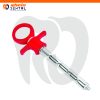
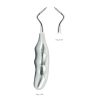
Barry Root Elevators Fig.320 helps clinicians loosen and lift retained root fragments and apices before forceps extraction. Its slim, angled tip reaches into the periodontal ligament space with precision, while the ergonomic handle keeps a steady grip through repeated procedures.
As a result, general dentists, oral surgeons, and periodontists use this elevator design as a routine step in the extraction sequence.
Specifications
| Attribute | Detail |
|---|---|
| Length | Approx. 17.5 cm (6.9 in) standard length for this elevator class |
| Material | Surgical stainless steel |
| Handle type | Ergonomic, contoured grip handle |
| Blade type/angle | Fine, tapered elevator tip; angled for root fragment and apex elevation |
| Finish | Satin surgical finish |
| Sterilization method | Autoclavable |
| Reusable/Disposable | Reusable |
| Country of manufacture | Pakistan |
| Certification | CE, ISO, FDA |
Clinical Applications of Barry Root Elevators Fig.320
- Luxation and removal of retained root fragments prior to forceps extraction
- Elevation of fractured root apices following coronal breakage
- Periodontal ligament severance during single- and multi-rooted tooth extractions
- Removal of residual root tips in partially erupted or impacted teeth
- Support elevation during surgical extraction of ankylosed roots
Key Benefits of Barry Root Elevators Fig.320
- Tip design: This elevator’s fine, tapered tip of Barry Root Elevators Fig.320 gives clinicians access to narrow interproximal and root-canal-adjacent spaces. Common alternative elevators, however, use broader, blunter tips that struggle with fine fragment removal.
- Handle ergonomics: The contoured handle reduces hand fatigue across multi-extraction cases. Typical alternatives, by contrast, rely on round or straight handles that carry a higher slip risk under pressure.
- Steel grade: Most common alternatives use generic stainless steel without a disclosed grade.
- Autoclave durability: Cycle life on typical alternatives, meanwhile, often goes unverified.
- Certifications: The manufacturer holds CE, ISO, and FDA compliance for this instrument, a level of regulatory coverage that budget alternatives don’t always disclose.
Ideal For
General dentistry practices performing routine extractions, oral and maxillofacial surgery departments, periodontal clinics, outpatient extraction suites, and dental school teaching clinics.
Frequently Asked Questions
Yes clinicians can autoclave and reuse it repeatedly.
It’s reusable. Clinicians reprocess it between uses following standard sterile instrument protocols, rather than discarding it after one use.
Fig. 320 denotes a specific tip angle and size within the Barry elevator series. Different fig numbers, therefore, offer different tip geometries suited to different root and access situations.




Reviews
There are no reviews yet.