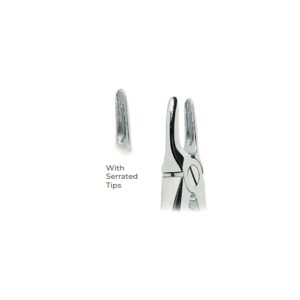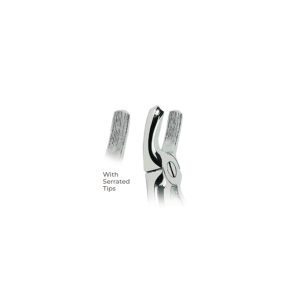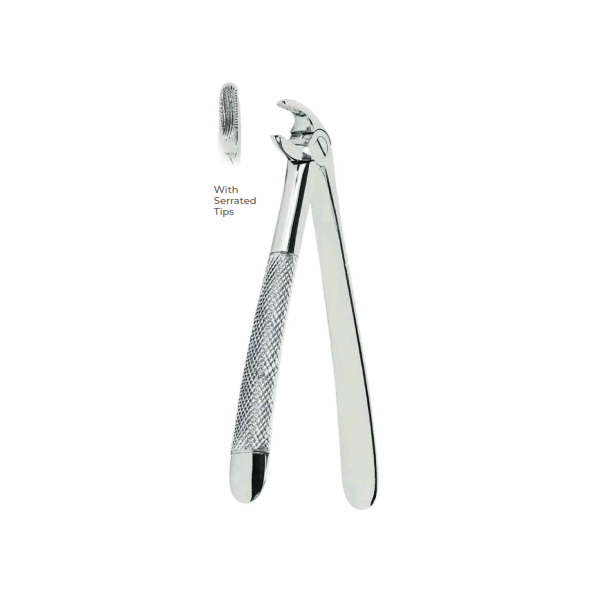
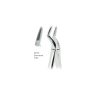
Extracting Forceps for Children With serrated tips for Lower premolars Fig.13S
The Extracting Forceps for Children With serrated tips for Lower premolars Fig.13S provide a secure grip and effective control, making the procedure smoother and safer for young patients.
First and foremost, the serrated tips enhance grip, preventing the tooth from slipping during extraction.
Because children’s teeth are smaller and more fragile, this feature helps maintain accuracy and reduces the risk of unnecessary trauma.
Furthermore, these forceps allow for precise handling, ensuring a less invasive experience for the child.
In addition, Fig.13S forceps are specifically designed for lower premolars, which require a secure and controlled extraction technique.
Since these teeth have strong roots, using the right tool significantly improves efficiency.
Moreover, the ergonomic handle design provides dentists with a comfortable grip, reducing hand fatigue during procedures.
Another important advantage of these forceps is their high-quality stainless steel construction, ensuring long-term durability and resistance to corrosion.
As a result, dental professionals can rely on these forceps for consistent performance over time.
Additionally, the lightweight structure allows for greater ease of use, making extractions more efficient.
Furthermore, these forceps help reduce trauma during extractions.
Since many children feel anxious about dental procedures, a quick and precise extraction can enhance their overall experience.
Therefore, using forceps that offer both security and efficiency is essential in pediatric dentistry.
Additionally, the ease of sterilization ensures high hygiene standards.
Since infection control is critical, thoroughly sanitizing instruments helps maintain a safe clinical environment.
In conclusion, pediatric extracting forceps (Fig.13S) with serrated tips are essential for lower premolar extractions.
Their secure grip, precision, and durability make them a valuable tool for ensuring smooth and safe dental procedures for children.