
Orthodontic instruments play a vital role in modern orthodontic treatment, enabling clinicians to perform precise procedures such as wire bending, bracket placement, ligature adjustment, and archwire cutting. Every instrument must deliver exceptional accuracy, durability, and reliability to ensure consistent clinical performance.
Behind every high-quality orthodontic instrument lies a sophisticated manufacturing process that combines advanced engineering, skilled craftsmanship, premium materials, and rigorous quality control. From selecting medical-grade stainless steel to precision machining and final inspection, each stage contributes to the instrument’s long-term performance and patient safety.
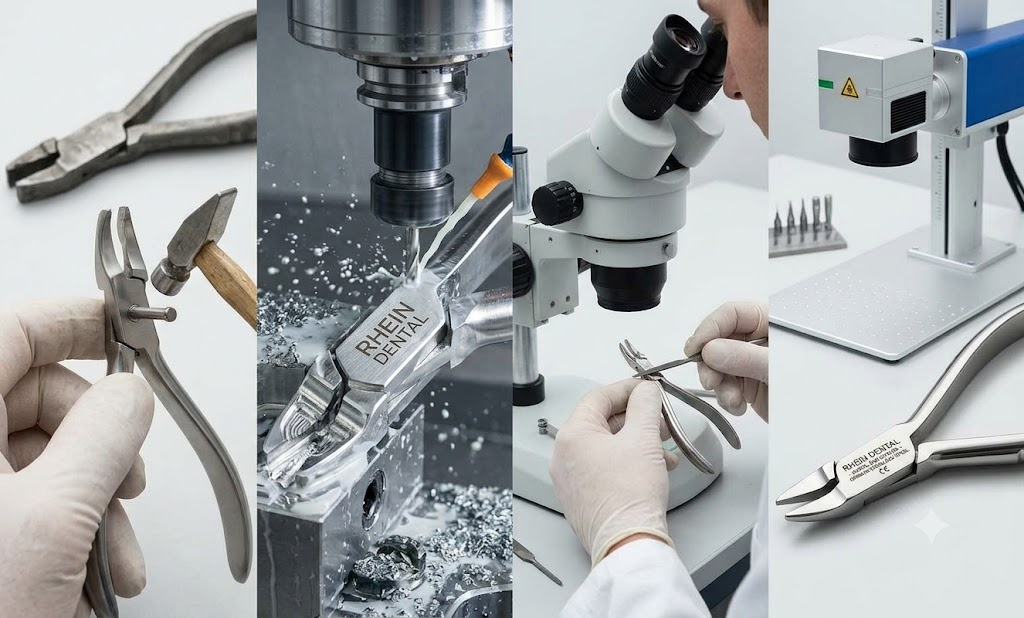
In this comprehensive guide, we explore how orthodontic instruments are made, explain each manufacturing step, and highlight the quality standards that define premium orthodontic instruments.
Why Manufacturing Quality Matters
Orthodontic instruments undergo repeated clinical use, frequent sterilization, and constant mechanical stress. Poor manufacturing can result in jaw misalignment, reduced cutting efficiency, corrosion, and premature wear.
High-quality manufacturing provides several important benefits:
- Superior precision
- Long-lasting durability
- Smooth instrument operation
- Excellent corrosion resistance
- Reliable clinical performance
- Safe and effective patient care
Manufacturers that follow internationally recognized quality standards help ensure consistent instrument quality and dependable results.
Step 1: Selecting Premium Raw Materials
The manufacturing process begins with selecting high-quality raw materials.
Most premium orthodontic instruments use medical-grade stainless steel because it offers:
- Excellent corrosion resistance
- High mechanical strength
- Outstanding durability
- Superior wear resistance
- Compatibility with repeated steam sterilization
The quality of the steel directly influences the instrument’s longevity, cutting performance, and resistance to rust.
Step 2: Precision Engineering and Design
Before production begins, engineers develop detailed instrument designs using advanced computer-aided design (CAD) software.
This stage determines:
- Instrument dimensions
- Jaw geometry
- Handle ergonomics
- Joint construction
- Cutting edge configuration
- Functional balance
Accurate engineering ensures every instrument performs consistently throughout its service life.
Step 3: Precision Forging
Forging forms the basic shape of the instrument.
During this process, manufacturers heat stainless steel to controlled temperatures and shape it using specialized forging equipment.
Precision forging offers several advantages:
- Increased material strength
- Improved structural integrity
- Better grain alignment
- Enhanced durability
- Reduced internal defects
Forged instruments generally provide greater strength than cast alternatives.
Step 4: CNC Machining for Precision
After forging, manufacturers use Computer Numerical Control (CNC) machining to achieve precise dimensions.
CNC technology ensures:
- Accurate jaw alignment
- Consistent tolerances
- Smooth surfaces
- Repeatable production quality
- High manufacturing precision
Modern CNC equipment enables manufacturers to produce orthodontic instruments with exceptional consistency.
Step 5: Heat Treatment
Heat treatment strengthens the stainless steel and improves mechanical properties.
This controlled process increases:
- Hardness
- Wear resistance
- Edge retention
- Structural stability
- Fatigue resistance
Proper heat treatment ensures orthodontic instruments maintain their performance during years of clinical use.
Step 6: Grinding and Shaping
Skilled technicians carefully grind each instrument to achieve its final working geometry.
Grinding creates:
- Precise cutting edges
- Fine instrument tips
- Smooth jaw surfaces
- Accurate wire-bending profiles
- Proper blade alignment
Precision grinding significantly influences the instrument’s clinical performance.
Step 7: Joint Assembly
Many orthodontic pliers feature precision box joints.
During assembly, technicians carefully align:
- Instrument halves
- Pivot joints
- Jaw surfaces
- Handle movement
Proper joint assembly ensures:
- Smooth opening and closing
- Consistent gripping pressure
- Accurate jaw alignment
- Long service life
Step 8: Surface Finishing and Polishing
After machining, instruments undergo multiple polishing stages.
Polishing provides several benefits:
- Smooth instrument surfaces
- Enhanced corrosion resistance
- Easier cleaning
- Improved appearance
- Reduced bacterial adhesion
Premium polishing also improves the overall user experience.
Step 9: Passivation
Passivation is a chemical treatment that strengthens the natural protective oxide layer on stainless steel.
This process improves:
- Corrosion resistance
- Rust prevention
- Surface cleanliness
- Long-term durability
Passivation is an important step for reusable surgical and orthodontic instruments.
Step 10: Laser Marking
Manufacturers permanently mark instruments using precision laser engraving.
Typical markings include:
- Manufacturer name
- Product code
- Batch number
- Material identification
- Regulatory information
Laser marking provides clear identification without affecting instrument performance.
Step 11: Quality Inspection
Comprehensive quality control ensures every instrument meets manufacturing specifications.
Inspectors evaluate:
Jaw Alignment
Accurate alignment ensures precise gripping and cutting.
Cutting Performance
Cutting instruments undergo functional testing.
Joint Movement
Technicians verify smooth movement without excessive looseness.
Surface Finish
Inspectors check for scratches, defects, and polishing quality.
Dimensional Accuracy
Precision measuring equipment verifies manufacturing tolerances.
Only instruments that pass inspection proceed to packaging.
Step 12: Cleaning and Packaging
Before shipment, manufacturers thoroughly clean every instrument to remove manufacturing residues.
Packaging protects instruments during transportation while maintaining product integrity until use.
Many manufacturers package instruments individually to minimize handling damage.
International Quality Standards
Leading orthodontic instrument manufacturers follow internationally recognized quality systems to ensure consistent product quality.
Common standards include:
- ISO 13485 Quality Management System
- CE certification (where applicable)
- Good Manufacturing Practices (GMP)
- Medical device regulatory requirements
Compliance with recognized standards demonstrates a manufacturer’s commitment to quality and patient safety.
How Manufacturers Ensure Consistency
Consistency requires more than advanced machinery.
Manufacturers combine:
- Skilled technicians
- Precision engineering
- Controlled manufacturing processes
- Modern inspection equipment
- Continuous quality monitoring
- Documented production procedures
This systematic approach minimizes variation between production batches.
Common Orthodontic Instruments Manufactured
Modern manufacturing facilities produce a wide range of orthodontic instruments, including:
- Bird Beak Pliers
- Weingart Pliers
- Distal End Cutters
- Hard Wire Cutters
- Ligature Cutters
- Mathieu Pliers
- Band Removing Pliers
- Three-Prong Pliers
- Utility Pliers
- Bracket Positioning Instruments
- Ligature Directors
- Bite Sticks
Each instrument requires specialized machining and finishing techniques based on its intended clinical application.
Factors That Influence Instrument Quality
Several factors determine the overall quality of orthodontic instruments:
Material Selection
Premium stainless steel improves durability and corrosion resistance.
Manufacturing Precision
Accurate machining ensures reliable clinical performance.
Heat Treatment
Proper hardening enhances strength and wear resistance.
Surface Finishing
Smooth finishes improve cleaning and corrosion resistance.
Quality Control
Thorough inspections reduce manufacturing defects.
Why Dental Professionals Choose Premium Manufacturers
High-quality orthodontic instruments provide measurable advantages:
- Consistent precision
- Reliable cutting performance
- Excellent ergonomics
- Long service life
- Better corrosion resistance
- Smooth instrument operation
- Lower replacement frequency
- Improved clinical efficiency
Investing in well-manufactured instruments supports both patient care and long-term practice value.
Conclusion
Manufacturing orthodontic instruments requires a combination of advanced technology, precision engineering, premium materials, and rigorous quality control. From selecting medical-grade stainless steel and precision forging to CNC machining, heat treatment, polishing, passivation, and final inspection, every stage contributes to the instrument’s durability, accuracy, and clinical reliability.
Choosing instruments manufactured under internationally recognized quality standards helps orthodontists achieve consistent treatment outcomes while maximizing instrument longevity. High-quality orthodontic instruments not only enhance clinical efficiency but also support patient safety and long-term practice success.
Frequently Asked Questions
Heat treatment increases hardness, wear resistance, and structural stability, helping instruments maintain their performance over extended clinical use.
Most premium orthodontic instruments use medical-grade stainless steel because it offers excellent corrosion resistance, durability, and compatibility with repeated autoclave sterilization.
Passivation is a chemical treatment that strengthens the protective oxide layer on stainless steel, improving corrosion resistance and extending instrument life.
Manufacturers inspect jaw alignment, cutting performance, joint movement, dimensional accuracy, and surface finish before approving instruments for packaging.
Quality control ensures every orthodontic instrument meets strict manufacturing standards, delivers consistent performance, and supports safe patient care.