
Orthodontic treatment has evolved dramatically over the past few decades, driven by advances in digital dentistry, biomechanics, and instrument manufacturing. Despite these innovations, one principle remains unchanged: high-quality orthodontic instruments are essential for achieving predictable, efficient, and safe treatment outcomes(German orthodontic tools).
Among all manufacturing standards worldwide, German engineering has earned an exceptional reputation for producing orthodontic tools that combine precision, durability, ergonomic comfort, and consistent clinical performance. Whether placing brackets, bending wires, removing adhesive, or adjusting appliances, orthodontists across the globe trust German orthodontic tools because they deliver outstanding reliability treatment after treatment.
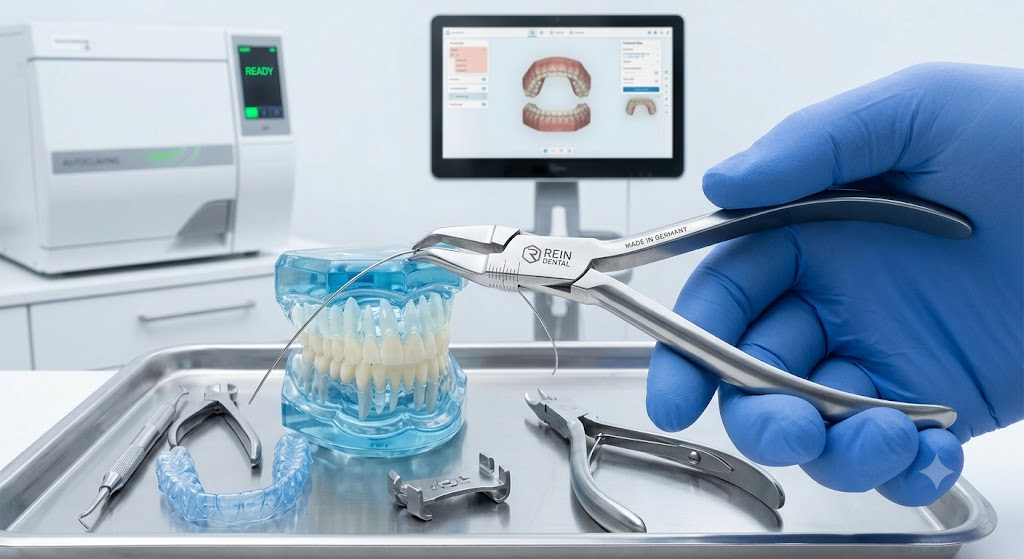
In this guide, we’ll explore why German engineering is considered the benchmark in orthodontics, the manufacturing techniques behind these instruments, and how choosing premium orthodontic tools can improve efficiency, patient comfort, and long-term practice profitability (German orthodontic tools).
Why German Engineering Is Highly Respected in Dentistry
Germany has long been recognized as one of the world’s leading manufacturers of precision medical devices. Its engineering philosophy focuses on:
- Precision manufacturing
- Strict quality control
- Advanced metallurgy
- Long product lifespan
- Exceptional reliability
- Continuous innovation
These principles have shaped the production of German orthodontic instruments, making them preferred by orthodontists, dental schools, universities, and specialist clinics worldwide.
Unlike lower-quality alternatives, German-engineered instruments are manufactured with microscopic accuracy, ensuring every component performs consistently throughout thousands of clinical procedures (German orthodontic tools).
What Makes German Orthodontic Tools Different?
Exceptional Precision
Orthodontics requires movements measured in fractions of a millimeter.
Tiny inaccuracies in an instrument can affect:
- Wire bending
- Bracket placement
- Torque application
- Archwire adjustments
- Finishing procedures
German orthodontic tools are manufactured using high-precision machining techniques that maintain extremely tight dimensional tolerances.
This level of precision allows clinicians to:
- Perform accurate wire adjustments
- Reduce treatment errors
- Improve bracket positioning
- Enhance treatment efficiency
- Deliver more predictable results
Premium Stainless Steel Construction
One defining characteristic of German orthodontic tools is the use of premium surgical-grade stainless steel.
High-quality steel offers several advantages:
- Superior corrosion resistance
- Long-lasting sharpness
- High tensile strength
- Better resistance to wear
- Improved sterilization compatibility
Premium materials ensure instruments continue performing optimally even after hundreds of autoclave cycles.
Superior Ergonomic Design
Orthodontists spend hours performing repetitive hand movements.
Poorly designed instruments contribute to:
- Hand fatigue
- Wrist strain
- Reduced precision
- Occupational injuries
German engineering places significant emphasis on ergonomics.
Features commonly include:
- Lightweight construction
- Balanced weight distribution
- Comfortable grip surfaces
- Spring-loaded handles
- Smooth hinge movement
These improvements reduce operator fatigue while increasing procedural accuracy.
Precision Manufacturing Techniques
German orthodontic instrument manufacturers invest heavily in advanced production technologies.
These include:
CNC Precision Machining
Computer-controlled machining ensures:
- Uniform dimensions
- Consistent quality
- Accurate jaw alignment
- Perfect cutting edges
Each instrument meets strict manufacturing specifications.
Laser Measurement Systems
Laser inspection verifies:
- Jaw symmetry
- Cutting edge accuracy
- Tip alignment
- Surface finish
- Dimensional tolerances
This quality assurance minimizes manufacturing defects.
Advanced Heat Treatment
Heat treatment strengthens orthodontic instruments by improving:
- Hardness
- Wear resistance
- Elasticity
- Cutting performance
Proper heat treatment prevents premature instrument failure.
Hand Finishing
Although automation is important, many premium German instruments still undergo skilled hand finishing.
This process improves:
- Surface smoothness
- Joint movement
- Instrument balance
- Precision fit
- Clinical feel
Benefits of German Orthodontic Tools
Increased Clinical Accuracy
Accurate instruments produce more precise treatment mechanics.
Benefits include:
- Better bracket placement
- Improved wire adaptation
- Reduced adjustments
- Shorter chair time
- More predictable tooth movement
Greater Durability
Quality orthodontic instruments are designed for years of clinical use.
Advantages include:
- Less frequent replacement
- Reduced maintenance costs
- Consistent performance
- Better return on investment
While premium instruments may have a higher initial cost, their longer lifespan often makes them more economical.
Better Patient Comfort
Well-manufactured orthodontic tools improve patient experience by allowing smoother procedures.
Patients benefit from:
- Less tissue trauma
- Reduced discomfort
- Faster appointments
- Improved treatment efficiency
Consistent Instrument Performance
Consistency is essential in orthodontics.
German-engineered tools maintain:
- Cutting efficiency
- Tip alignment
- Spring tension
- Jaw precision
Even after repeated sterilization cycles.
Common German Orthodontic Instruments
Several orthodontic instruments are commonly associated with German engineering standards.
Bird Beak Pliers
Used for:
- Loop formation
- Wire bending
- Appliance adjustments
- Retainer fabrication
Precision tips ensure accurate bends without damaging wires.
Distal End Cutters
Essential for:
- Cutting archwires
- Holding cut wire ends
- Preventing wire aspiration
Premium cutters maintain sharpness significantly longer.
Weingart Pliers
Ideal for:
- Archwire placement
- Ligature adjustments
- Wire positioning
Smooth jaws minimize wire damage.
Mathieu Needle Holders
Frequently used for:
- Elastic ligatures
- Ligature placement
- Orthodontic auxiliaries
Reliable locking mechanisms improve efficiency.
Bracket Removing Pliers
Designed to safely remove brackets while minimizing enamel damage.
High-quality jaws ensure controlled force application.
Adhesive Removing Instruments
Used after debonding procedures to:
- Remove bonding resin
- Polish enamel
- Prepare teeth for retention
How German Engineering Supports Infection Control
High-quality orthodontic tools are designed with sterilization in mind.
German instruments typically feature:
- Seamless construction
- Corrosion-resistant steel
- Smooth polished surfaces
- Precision joints
- Easy cleaning
These characteristics reduce contamination risks while extending instrument lifespan.
German Orthodontic Tools and Digital Dentistry
Modern orthodontics increasingly integrates:
- Digital scanners
- CAD/CAM appliances
- Clear aligners
- 3D printed models
- Digital treatment planning
Even with digital workflows, manual instruments remain essential.
German engineering ensures clinicians maintain precision during:
- Appliance delivery
- Wire adjustments
- Finishing procedures
- Debonding
- Retention appointments
Why Orthodontists Prefer German Orthodontic Instruments
Orthodontic specialists consistently value:
- Excellent craftsmanship
- Long-term reliability
- Precision mechanics
- Comfortable handling
- Consistent clinical outcomes
These qualities contribute to better workflow efficiency and improved patient satisfaction.
Choosing High-Quality German Orthodontic Tools
When selecting orthodontic instruments, consider:
Material Quality
Choose surgical-grade stainless steel for maximum durability.
Precision Manufacturing
Look for finely aligned tips and accurate cutting edges.
Ergonomics
Comfortable instruments reduce fatigue during long procedures.
Sterilization Compatibility
Ensure instruments tolerate repeated autoclaving without corrosion.
Manufacturer Reputation
Purchase instruments from manufacturers known for consistent quality standards.
Maintaining German Orthodontic Instruments
Proper maintenance protects your investment.
Recommended practices include:
- Clean immediately after use.
- Use pH-neutral instrument detergents.
- Lubricate hinged instruments regularly.
- Dry instruments completely before storage.
- Inspect cutting edges periodically.
- Replace damaged instruments promptly.
- Follow validated sterilization protocols.
Routine maintenance preserves precision and extends service life.
Sustainability Through Long-Lasting Instruments
High-quality orthodontic tools contribute to environmental sustainability.
Durable instruments reduce:
- Medical waste
- Manufacturing demand
- Replacement frequency
- Long-term operating costs
Investing in premium reusable instruments supports both economic and environmental goals.
Conclusion
German engineering has become synonymous with excellence in orthodontics because it combines precision manufacturing, advanced materials, ergonomic design, and uncompromising quality control. These qualities translate into more accurate treatments, improved clinician comfort, enhanced patient experiences, and instruments that deliver reliable performance year after year.
For orthodontists seeking dependable tools that support modern clinical workflows, German orthodontic tools remain one of the best investments available. By choosing precision-engineered instruments and maintaining them properly, dental professionals can improve efficiency, extend instrument lifespan, and provide consistently high standards of patient care.
Frequently Asked Questions
German orthodontic tools are known for their precision engineering, premium stainless steel, excellent ergonomics, and long-lasting durability, providing consistent clinical performance.
Yes. Although they often cost more initially, their durability, reliability, and reduced replacement frequency offer excellent long-term value.
Most are manufactured from high-quality surgical-grade stainless steel that provides corrosion resistance, strength, and compatibility with repeated sterilization.
Yes. Premium German-engineered instruments are designed to tolerate repeated autoclave cycles while maintaining precision and structural integrity.
Yes. Premium German-engineered instruments are designed to tolerate repeated autoclave cycles while maintaining precision and structural integrity.