
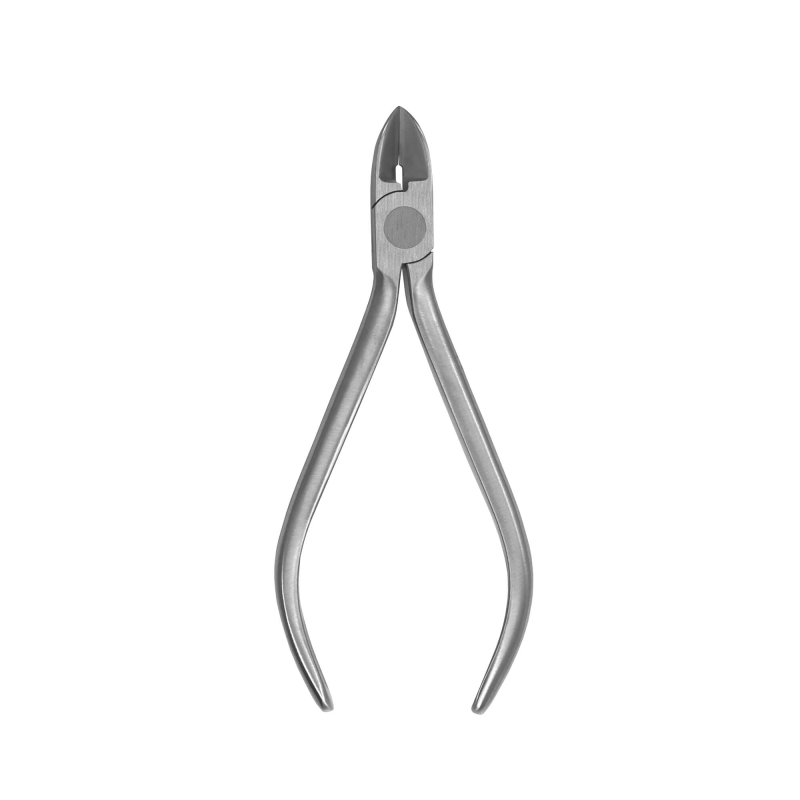
In orthodontic and dental procedures, precision is not just about effectiveness—it is also about patient safety and comfort. One instrument that plays a quiet but critical role in achieving both is the pin and ligature cutter. Designed specifically for cutting fine wires used in braces and orthodontic appliances, this tool ensures clean results without leaving behind hazardous sharp ends.
At the heart of its performance lies a simple but powerful engineering principle: the flush-cut design.
What Are Pin and Ligature Cutters?
Pin and ligature cutters are specialized dental instruments used to trim soft ligature wires, pins, and small orthodontic components. These wires are commonly used to hold archwires in place during orthodontic treatment.
Unlike general wire cutters, these instruments are engineered for precision cutting in tight intraoral spaces, where accuracy and safety are equally important.
Why Flush-Cut Design Matters
The most important feature of modern pin and ligature cutters is the flush-cut mechanism. This design ensures that the wire is cut cleanly against the surface, leaving no protruding or sharp edges.
Here’s why this matters in clinical practice:
- Patient safety: Sharp wire ends can injure soft tissues such as cheeks, lips, and gums.
- Comfort: Smooth finishes reduce irritation and soreness during orthodontic treatment.
- Reduced emergency visits: Fewer cases of wire poking or appliance discomfort.
- Professional precision: Enhances the overall quality of orthodontic work.
A flush-cut is not just a design preference—it is a clinical necessity in modern orthodontics.
How the Flush-Cut Mechanism Works
The cutting edges of these instruments are engineered with precise alignment and hardened steel tips. When the wire is cut, both blades meet in a way that shears the material cleanly rather than crushing or bending it.
This ensures:
- No jagged wire projections
- Minimal distortion of adjacent components
- A smooth finish even in tight spaces
Some advanced models also feature angled heads, allowing better access to posterior regions of the mouth.
Key Features of High-Quality Pin and Ligature Cutters
When selecting a cutter for orthodontic use, several design elements determine performance and durability:
- High-grade stainless steel construction for corrosion resistance
- Sharp, precision-ground cutting edges for consistent performance
- Ergonomic handle design for reduced hand fatigue
- Spring mechanism for smooth opening and closing action
- Compact head design for improved intraoral access
These features ensure both efficiency for the practitioner and safety for the patient.
Clinical Importance in Orthodontics
Orthodontic treatment often involves long-term appliance wear. Even a small protruding wire can lead to:
- Ulceration of oral tissues
- Pain and discomfort during chewing or speaking
- Interrupted treatment compliance
By using a properly designed pin and ligature cutter, clinicians can eliminate these risks immediately during adjustment appointments.
This makes the instrument an essential part of routine orthodontic setups, not just an optional tool.
Maintenance for Long-Term Performance
Like all precision instruments, pin and ligature cutters require proper care to maintain their effectiveness:
- Clean and sterilize after every use
- Avoid cutting hard wires beyond instrument capacity
- Regularly inspect cutting edges for wear or misalignment
- Apply instrument lubricant to maintain smooth action
- Store in a dry, protected environment
Proper maintenance ensures consistent flush-cut performance over time.
Final Thoughts
Pin and ligature cutters may seem like small tools in a large orthodontic toolkit, but their impact is significant. The flush-cut design directly contributes to patient safety, treatment comfort, and clinical efficiency.
In modern dental practice, where precision and patient experience go hand in hand, this instrument remains a silent but essential partner in delivering high-quality orthodontic care.