
In today’s fast-paced orthodontic practice, reducing chair time has become one of the most effective ways to improve patient satisfaction, increase daily appointments, and maximize practice profitability. Every minute saved during an orthodontic procedure allows clinicians to treat more patients while maintaining exceptional standards of care.
The key to achieving this efficiency lies in selecting the right orthodontic instruments. Modern efficient orthodontic tools are designed to simplify procedures, minimize hand fatigue, improve precision, and reduce unnecessary instrument changes.
Whether you’re installing braces, changing archwires, placing attachments, or performing finishing procedures, using advanced orthodontic instruments can significantly streamline your workflow.
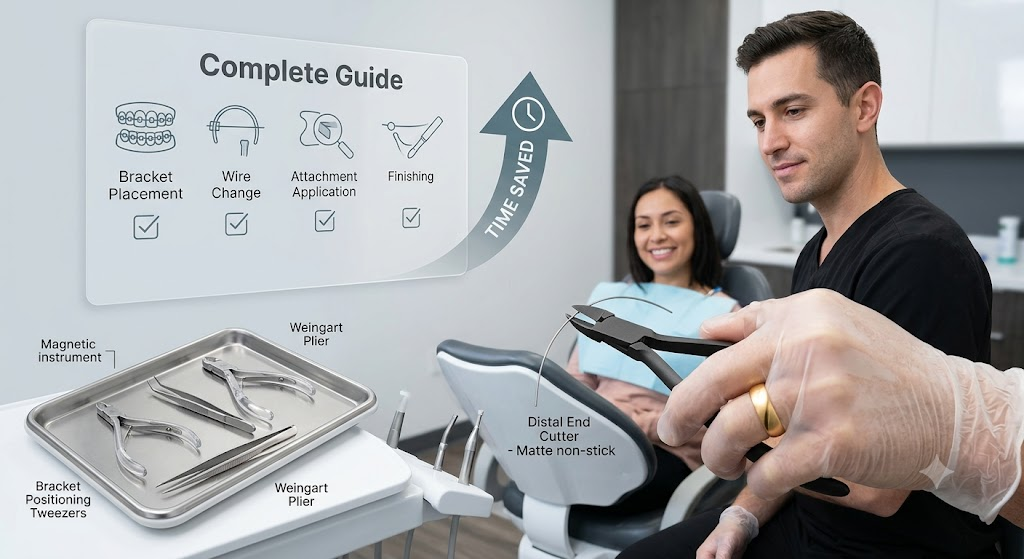
In this comprehensive guide, we’ll explore practical strategies, essential tools, and best practices for reducing chair time while maintaining clinical excellence.
Why Chair Time Matters in Orthodontics
Chair time directly impacts several critical aspects of an orthodontic practice:
- Increased patient capacity
- Improved patient experience
- Reduced clinician fatigue
- Higher treatment efficiency
- Better appointment scheduling
- Increased revenue per clinical day
Patients increasingly appreciate shorter appointments without compromising treatment quality. Efficient procedures also help reduce anxiety, especially for children and first-time orthodontic patients.
What Are Efficient Orthodontic Tools?
Efficient orthodontic tools are specially engineered instruments that help clinicians perform orthodontic procedures faster, more accurately, and with less physical effort.
These tools are designed with:
- Ergonomic handles
- Precision-crafted working tips
- High-grade surgical stainless steel
- Non-slip grip surfaces
- Lightweight construction
- Long-lasting sharp cutting edges
Modern orthodontic instruments enable clinicians to complete procedures with fewer movements and greater consistency.
Benefits of Using Efficient Orthodontic Tools
1. Faster Clinical Procedures
Quality orthodontic instruments reduce the number of repetitive movements required during treatment.
Examples include:
- Faster wire cutting
- Easier bracket placement
- Quick elastic removal
- Efficient ligature installation
Less procedural time means more productive clinical hours.
2. Improved Precision
Precision instruments reduce the likelihood of repositioning brackets or adjusting wires multiple times.
Benefits include:
- Better bracket positioning
- Accurate wire bending
- Cleaner wire cuts
- Improved finishing results
This reduces corrective appointments and improves treatment efficiency.
3. Enhanced Patient Comfort
Long appointments often increase patient discomfort.
Efficient tools help by:
- Shortening treatment duration
- Reducing pressure during procedures
- Minimizing unnecessary adjustments
- Providing smoother instrument handling
Patients appreciate quicker visits with less discomfort.
4. Reduced Clinician Fatigue
Orthodontists perform thousands of repetitive hand movements every week.
Ergonomically designed orthodontic pliers reduce:
- Wrist strain
- Finger fatigue
- Hand discomfort
- Muscle tension
This improves productivity throughout the day.
Essential Efficient Orthodontic Tools
Distal End Cutters
Distal end cutters safely trim excess archwire while securely holding the cut wire.
Advantages include:
- Prevents wire aspiration
- Saves procedural time
- Improves patient safety
- Reduces cleanup
Ligature Cutters
Sharp ligature cutters quickly remove ligature wires without damaging surrounding components.
Key benefits:
- Precise cutting
- Less patient discomfort
- Reduced procedure time
Weingart Pliers
Weingart pliers are among the most versatile orthodontic instruments.
Applications include:
- Archwire placement
- Wire adjustment
- Ligature manipulation
- Appliance positioning
A high-quality pair improves speed during nearly every orthodontic appointment.
Mathieu Needle Holders
These instruments simplify elastic ligature placement.
Benefits include:
- Faster elastic insertion
- Better grip
- Reduced slipping
- Increased operator control
Bird Beak Pliers
Bird beak pliers are ideal for wire bending and appliance adjustments.
Their dual-tip design allows clinicians to create consistent bends with fewer attempts.
Bracket Positioning Tweezers
Bracket positioning tweezers improve placement accuracy and reduce repositioning.
Advantages:
- Secure bracket handling
- Precise positioning
- Faster bonding procedures
Non-Stick Orthodontic Pliers
Modern non-stick coated orthodontic pliers prevent bonding materials from adhering to instrument surfaces.
Benefits include:
- Faster cleanup
- Reduced adhesive buildup
- Improved efficiency
- Better handling of composite materials
Tips for Reducing Chair Time During Orthodontic Procedures
Standardize Instrument Setups
Organize instrument trays consistently for every procedure.
Benefits include:
- Less searching
- Faster instrument changes
- Improved assistant coordination
Standardization significantly improves workflow.
Invest in High-Quality Instruments
Premium orthodontic instruments maintain:
- Sharper cutting edges
- Better alignment
- Consistent precision
- Longer service life
Low-quality tools often require repeated adjustments that increase chair time.
Use Multi-Functional Instruments
Whenever possible, select instruments that perform multiple functions.
Examples include:
- Combination utility pliers
- Multi-purpose orthodontic pliers
- Universal bracket removal instruments
Fewer instrument changes mean faster appointments.
Keep Instruments Properly Maintained
Dull or damaged instruments slow every procedure.
Routine maintenance should include:
- Cleaning after every use
- Proper sterilization
- Lubrication of hinges
- Regular sharpening or replacement
Well-maintained tools perform consistently.
Train the Entire Clinical Team
Efficiency depends on teamwork.
Dental assistants should understand:
- Instrument sequencing
- Procedure preparation
- Sterilization workflow
- Chairside assistance techniques
A synchronized team dramatically reduces appointment times.
Utilize Color-Coded Instrument Systems
Color coding allows staff to identify instruments instantly.
Benefits include:
- Faster tray setup
- Reduced errors
- Improved organization
Digital Workflow Further Reduces Chair Time
Modern orthodontic practices increasingly combine efficient instruments with digital technologies.
Examples include:
- Digital intraoral scanners
- CAD/CAM appliance fabrication
- Digital treatment planning
- 3D printed orthodontic models
Digital workflows reduce impression time while improving treatment accuracy.
Common Causes of Increased Chair Time
Avoid these common workflow inefficiencies:
- Using dull cutters
- Poor instrument organization
- Frequent instrument replacement during procedures
- Inefficient appointment planning
- Inadequate assistant training
- Low-quality orthodontic instruments
Addressing these issues often results in immediate improvements.
Choosing the Right Orthodontic Instrument Manufacturer
When selecting orthodontic instruments, consider manufacturers offering:
- Medical-grade stainless steel
- Precision engineering
- Ergonomic design
- CE-certified manufacturing
- Consistent quality control
- Reliable after-sales support
High-quality instruments provide better long-term value than lower-cost alternatives.
Best Practices for Maximizing Orthodontic Efficiency
To consistently reduce chair time:
- Prepare instrument trays before appointments.
- Use ergonomic orthodontic pliers.
- Replace worn instruments promptly.
- Organize workflows for every procedure.
- Invest in premium cutting instruments.
- Incorporate digital orthodontic technologies.
- Train staff regularly.
- Maintain a preventive instrument maintenance schedule.
Conclusion
Reducing chair time is not simply about working faster—it is about working smarter. By investing in efficient orthodontic tools, implementing standardized workflows, maintaining instruments properly, and training the entire clinical team, practices can significantly improve productivity without sacrificing treatment quality.
From distal end cutters and Weingart pliers to non-stick orthodontic instruments and digital orthodontic workflows, every improvement contributes to a smoother, faster, and more comfortable patient experience. As orthodontics continues to evolve, adopting modern, high-quality instruments will remain one of the most effective ways to optimize clinical efficiency, enhance patient satisfaction, and support long-term practice.
Frequently Asked Questions:
Efficient orthodontic tools improve precision, reduce repetitive movements, minimize instrument changes, and streamline procedures, allowing clinicians to complete treatments more quickly.
Distal end cutters, Weingart pliers, bracket positioning tweezers, ligature cutters, and non-stick orthodontic pliers are among the most time-saving orthodontic instruments.
Ergonomic instruments reduce hand fatigue, improve control, enhance precision, and allow clinicians to maintain consistent performance during long clinical sessions.
Yes. Faster appointments, greater comfort, and fewer treatment delays contribute to a better overall patient experience.
Instruments should be cleaned and sterilized after every use, inspected regularly, lubricated when required, and replaced or serviced if cutting edges become dull or alignment is compromised.