Top Export Markets for Endodontic Instruments: Global Trends in Exporting Endodontic Tools
The global dental industry has witnessed remarkable growth in recent years, drive by rising oral health awareness, technological advancements and increasing advancement for high quality dental care (Export markets for endodontic instruments). With in this sector endodontics instruments including files, reamers, handpieces, and apex locators _ have become essential tools for modern dentistry. For manufacturers and exporters, understanding the top global markets is critical for strategic growth and maximizing growth potential (Export markets for endodontic instruments).
Why Exporting Endodontic Instruments is a Growth Opportunity
Endodontics focuses on treating dental pulp and root canal therapy, which are core procedures in dental care. The demand for precise durable instruments is rising due to:
Increasing Prevalence of dental diseases globally
Growth dental tourism in regions like Asia and Middle East
Adoption of advanced technologies in root canal therapy
Rising disposable income and access to private dental care
Exporting the endodontic instruments not only opens new revenue streams but also position companies in high demand and tech driven markets.
Top Global Markets for Endodontic Instruments
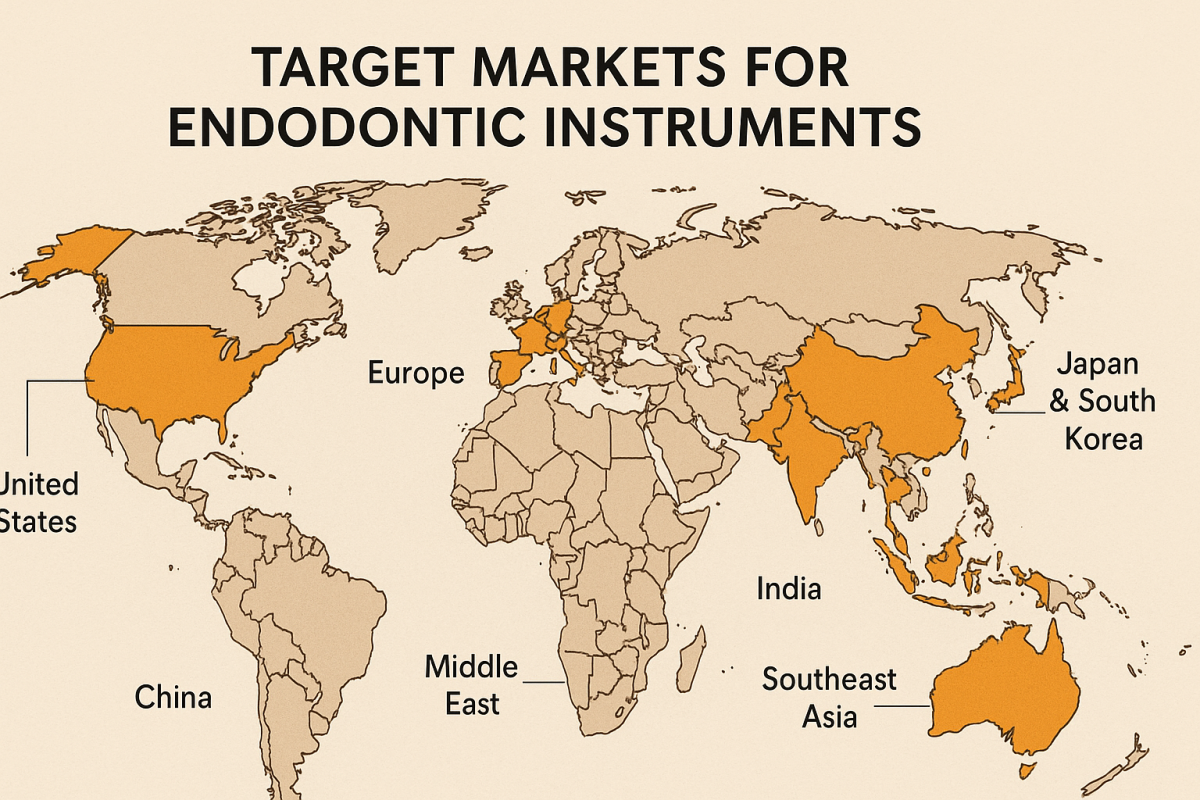
Based on recent market research, the following countries and regions dominate the import of endodontic tools:
1. United States
The US is the largest single market for dental instruments worldwide. Key drivers include:
- High prevalence of dental clinics and specialists
- Strong regulatory standards driving demand for high-quality tools
- Preference for advanced rotary and electronic instruments
Manufacturers exporting to the US often need FDA approval and compliance with ISO standards.
2. European Union
Countries like Germany, France, and the UK are major importers due to:
- Established dental care infrastructure
- Focus on high-precision instruments
- Willingness to invest in premium dental tools
Exporters targeting Europe should prioritize CE marking and rigorous quality certifications.
3. China
China has rapidly emerged as both a manufacturer and importer of dental tools:
- Expanding dental clinics and urban oral care programs
- Rising middle-class population with higher dental service usage
- Government initiatives supporting dental healthcare infrastructure
Exporters benefit from competitive pricing strategies and localized partnerships.
4. Japan and South Korea
These technologically advanced countries favor high-end, precision endodontic instruments. Key trends include:
- Growing use of rotary and automated systems
- Preference for instruments with advanced ergonomics and biocompatible materials
5. Middle East (UAE, Saudi Arabia)
- Fast-growing dental tourism and private healthcare sector
- Strong demand for imported, high-quality endodontic tools
- Regulatory requirements are moderate compared to Europe and the US
6. India and Southeast Asia
- Rapidly developing dental infrastructure
- Increasing awareness of dental care among the urban population
- Cost-sensitive markets, creating opportunities for mid-range, durable instruments
Trends Driving Export Growth in Endodontic Instruments
- Shift to Rotary and NiTi Systems
Manual files are increasingly being replaced by nickel-titanium rotary systems, offering faster and more precise procedures. - Technological Integration
Instruments with integrated apex locators, smart torque control, and ergonomic designs are in high demand in developed markets. - Rising Dental Tourism
Countries like UAE, Thailand, and India attract patients from neighboring regions, boosting imports of high-quality endodontic tools. - Regulatory Compliance as a Selling Point
Markets such as the EU and the US value certifications like ISO 13485, CE marking, and FDA approval, giving compliant exporters a competitive advantage.
Key Recommendations for Exporters
- Understand Local Regulations: Certification and quality standards vary by country. Compliance ensures smoother market entry.
- Focus on Premium Features: Advanced rotary files, apex locators, and ergonomically designed instruments sell well in high-end markets.
- Leverage Partnerships: Collaborate with local distributors or dental chains to establish credibility and market reach.
- Adapt Pricing Strategy: Balance quality with affordability, especially in cost-sensitive emerging markets.
- Invest in Marketing & Education: Demonstrating instrument effectiveness through workshops, webinars, and dental exhibitions builds trust.
Conclusion
The export potential for endodontics instruments is robust, with high demand across North America , Europe and rapidly growing Asian markets. Understanding market preferences, regulatory standards and technological trends is essential for manufacturers and exporters aiming to succeed globally. By aligning production quality, innovation and strategic market entry, dental instrument exporters can maximize growth and establish a strong presence in the global endodontics sector.