
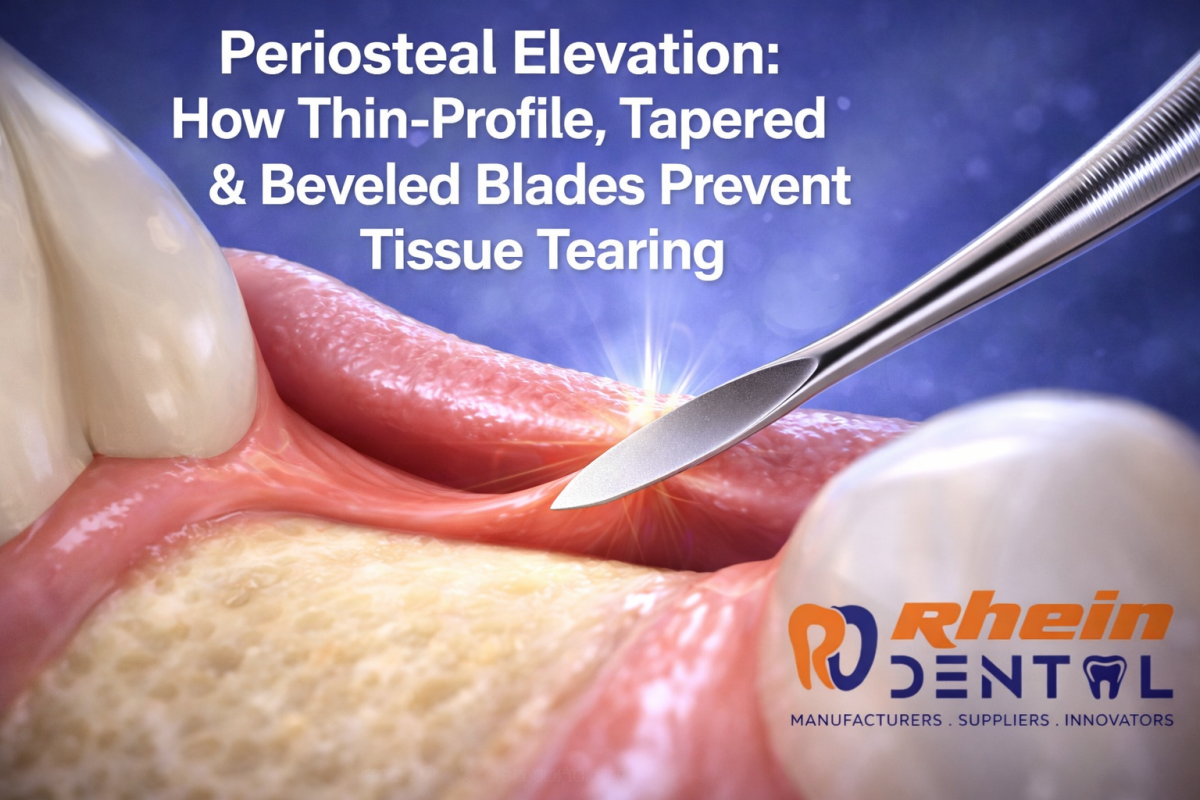
Periosteal Elevation: How Thin-Profile, Tapered & Beveled Blades Prevent Tissue Tearing
Introduction
Periosteal elevation is one of the most foundational steps in oral and maxillofacial surgery. The periosteum is thin, firmly attached, and unforgiving — a poorly designed blade can tear the flap, compromise blood supply, and trigger complications throughout the entire procedure. At the center of successful elevation is one overlooked variable: blade thickness.
Understanding the Periosteum: What You Are Elevating
Structure and Composition
The periosteum consists of an outer fibrous layer of collagen and fibroblasts and an inner cambium layer rich in osteoprogenitor cells. It is anchored to cortical bone through Sharpey’s fibers — making it firmly resistant to elevation.
Why It Tears
When a thick blade is introduced at the bone-periosteum interface, it wedges rather than glides, generating shear stress across periosteal fibers. When stress exceeds the tissue’s tensile threshold, tearing occurs — leading to flap dehiscence, impaired healing, and increased infection risk.
The Role of Blade Thickness in Periosteal Elevation
Thick Blades: The Problem
A thick blade acts as a wedge, displacing tissue laterally and forcing the surgeon to apply greater pressure — compounding stress and increasing tear risk. It also reduces tactile feedback, making it harder to sense tissue resistance in real time.
Thin-Profile Blades: The Solution
A thin-profile blade enters the tissue plane with minimal displacement, gliding along the cortical surface rather than forcing through it. It also improves tactile transmission, allowing surgeons to detect subtle changes in bone topography and modulate force accordingly.
Blade Geometry: Taper, Bevel, and Edge Profile
Tapered Blade Design
A tapered blade gradually reduces in thickness toward the working tip, allowing gentle initiation of elevation in the tightest tissue zones while the broader base provides rigidity for controlled force application.
Beveled-Edge Design
The bevel angles the blade’s leading edge so it slides under the periosteum rather than cutting into it. A 30–45 degree bevel is optimal for most applications, directing force parallel to bone and lifting tissue cleanly from the cortical surface.
Working Tip Profile
A narrowly tapered, slightly rounded tip offers the best balance — precise enough to initiate elevation in confined spaces, atraumatic enough to advance without snagging periosteal fibers.
Blade Thickness Across Different Anatomical Zones
Anterior Maxilla
Thin cortical bone and a delicate tissue biotype demand the thinnest blade profiles with maximum taper and a fine working tip.
Posterior Mandible
Denser bone tolerates a moderately thin, rigid blade that balances penetration efficiency with structural stability.
Palatal Tissue
Densely adherent palatal periosteum requires a thin but firmly rigid blade used with short, controlled strokes rather than broad sweeping motions.
Crestal and Interdental Areas
Sub-millimeter spaces demand micro-thin blade profiles with the finest tip geometry to avoid disrupting adjacent tissue attachment.
Clinical Technique: Maximizing Blade Design Advantages
Correct Entry Angulation
Enter the periosteal interface at 15–30 degrees relative to the cortical plane, aligning the bevel with the bone surface to maintain a protective, parallel force vector.
Short, Controlled Strokes
Short, deliberate strokes release tissue incrementally, allowing the surgeon to monitor resistance before stress accumulates to a tearing threshold.
Working With Tissue Resistance
When tissue resists, redirect to a less adherent adjacent zone, initiate elevation there, and work back — rather than increasing force at the resistant site.
Instrument Selection: Matching Blade Thickness to Clinical Need
- Ultra-thin, tapered blades — anterior maxilla, interdental, thin-biotype cases
- Moderately thin, rigid blades — posterior and mandibular elevation
- Fine-tip, narrow-profile blades — crestal and sub-marginal access
- Broader, thin-profile blades — large flap reflection in grafting procedures
Key Takeaways
- Thinner blade profiles glide; thicker profiles wedge — thinness is tissue protection.
- Tapered geometry enables gentle initiation followed by controlled advancement.
- A 30–45 degree beveled edge redirects force parallel to bone, lifting rather than tearing.
- Blade selection should be matched to the anatomical zone, not defaulted across all cases.
- Technique amplifies design — correct angulation and short strokes maximize blade benefits.
Conclusion
A torn flap compromises wound closure, threatens graft survival, and extends healing timelines. Thin-profile, tapered, beveled-edge blades are not design preferences — they are evidence-informed solutions to one of surgery’s most consistent soft tissue challenges. For surgeons committed to flap integrity, blade thickness deserves the same careful consideration as any other clinical variable.