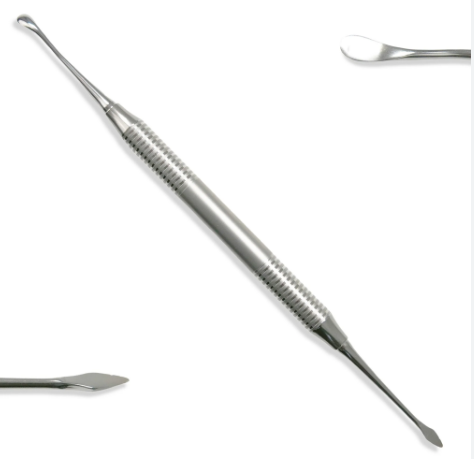
Periosteal Elevator: Maintaining Beveled Edges, Blade, and Handle for Trauma-Free Retraction
Introduction
The periosteal elevator is one of the most critical yet overlooked instruments in oral surgery. Its role — lifting and retracting the periosteum without tearing delicate tissue — depends entirely on its condition. Proper maintenance of its beveled edges, blade contours, and handle integrity is not just about instrument longevity; it is a direct patient safety concern (Periosteal Elevator Maintenance).
Understanding the Periosteal Elevator: A Structural Overview
The Beveled Edge is the working end, angled and sharpened for smooth insertion between the periosteum and bone. A dull bevel forces excess pressure, risking tissue tears and increased bleeding.
The Blade Contour refers to the curvature engineered to follow natural bone anatomy. Bending or flattening of the blade makes retraction imprecise and cumbersome.
The Handle provides balance, grip, and tactile feedback. Cracks, corrosion, or loosened joints compromise surgical control and create infection risks.
Why Maintenance Is Often Neglected
In busy clinical settings, instruments are sterilized and reused without critical assessment. Bevel dulling is gradual and not always visually obvious — it silently worsens outcomes until the instrument fails mid-procedure.
Preserving the Beveled Edge
Sharpen using Arkansas stones or ceramic rods, maintaining the original bevel angle (45–70°) with smooth, consistent strokes. Assess edges every five to ten uses and always before major procedures. After sharpening, inspect under magnification and use a cotton ball to test sharpness before returning the instrument to service (Periosteal Elevator Maintenance).
Maintaining Blade Contours
Avoiding Physical Distortion starts with proper storage. Use instrument cassettes with designated slots to prevent collision with harder instruments.
Sterilization Practices matter too — never exceed manufacturer-recommended temperatures, as excessive heat warps metal temper.
Inspection Under Magnification should be done periodically. View the blade in profile against light. Minor deformations may be corrected by a repair service; significantly warped blades should be retired.
Ensuring Handle Integrity
Surface Inspection before every sterilization cycle is essential. Look for cracks, corrosion, or chemical degradation. Stainless steel handles can develop pitting from chloride-containing solutions.
Tightening Joints and Connections eliminates micro-movement that reduces tactile feedback and risks instrument slippage.
Ergonomic Assessment — if knurled grip texture has worn smooth, replace the instrument. A slippery handle increases hand fatigue and reduces clinical control.
The Role of Sterilization in Instrument Longevity
Steam autoclaving is the gold standard. Always remove all organic debris before sterilizing — residue baked onto instruments accelerates corrosion. Ultrasonic cleaners are ideal for pre-sterilization cleaning. When using chemical sterilants, follow manufacturer dilution ratios and exposure times strictly to avoid surface degradation.
Establishing a Maintenance Protocol
Daily: Inspect for visible damage and clean thoroughly with ultrasonic cleaning followed by rinsing.
Weekly: Assess and touch up beveled edges using a sharpening stone and loupe magnification.
Monthly: Comprehensive structural review of all periosteal elevators — contours, handles, and joints. Document and retire compromised instruments.
Annually: Full inventory audit. Retire heavily worn instruments and evaluate whether current tools meet procedural demands.
When to Retire a Periosteal Elevator
Retire the instrument when the bevel can no longer be restored to functional sharpness, when blade contour is significantly altered, when the handle shows irreversible damage, or when repeated repairs have compromised dimensional accuracy. Holding onto a failing instrument is a false economy — the cost of complications far exceeds the cost of replacement.
Conclusion
A sharp bevel, true blade contour, and intact handle are not optional features — they are the foundation of trauma-free tissue retraction. A structured maintenance protocol protects both instruments and patients, reflecting the standard of care every surgical practice should uphold.