
In modern dentistry, clear visibility is essential for accurate diagnosis and efficient treatment. Dental mirrors are among the most frequently used instruments, and their performance directly affects clinical precision. One of the most significant advancements in mirror technology is rhodium coating — a premium reflective surface that offers superior clarity, durability, and resistance to fogging and scratches.
What Is a Rhodium-Coated Dental Mirror?
A rhodium-coated dental mirror features a thin layer of rhodium, a rare precious metal, applied to the mirror surface. Rhodium is highly reflective, corrosion-resistant, and extremely hard, making it ideal for dental instruments that undergo constant sterilization and repeated daily use.
Unlike standard mirrors that may have reflective backing behind the glass, rhodium-coated mirrors often provide front-surface reflection. This reduces image distortion and creates a sharper view inside the oral cavity.
How Rhodium Coating Prevents Fogging
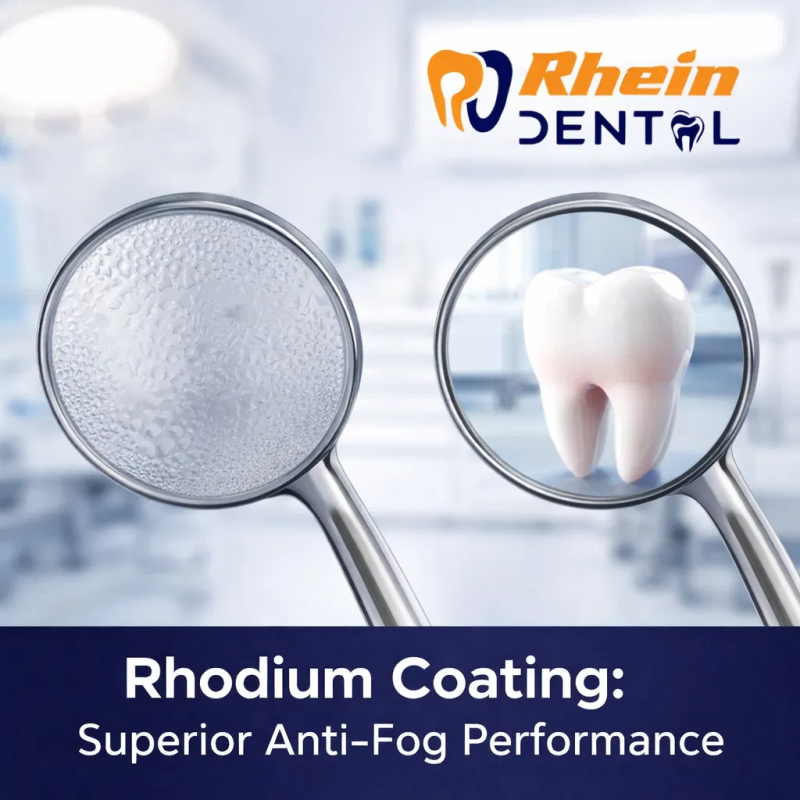
Fogging is a common issue during dental procedures due to temperature differences between the patient’s mouth and the mirror surface. Rhodium-coated mirrors help reduce fogging in several ways:
1. Better Heat Conductivity
Rhodium-coated surfaces adapt more quickly to temperature changes, helping reduce condensation buildup.
2. Smooth Surface Finish
The ultra-smooth coating minimizes the tiny surface irregularities where moisture droplets form.
3. Improved Moisture Resistance
Premium coatings are less likely to trap water particles, which helps maintain a clearer reflection during longer procedures.
As a result, clinicians spend less time wiping the mirror and more time focusing on treatment.
Why Rhodium-Coated Mirrors Resist Scratching
Dental mirrors are regularly exposed to:
- Instrument trays
- Sterilization cycles
- Cleaning chemicals
- Frequent handling
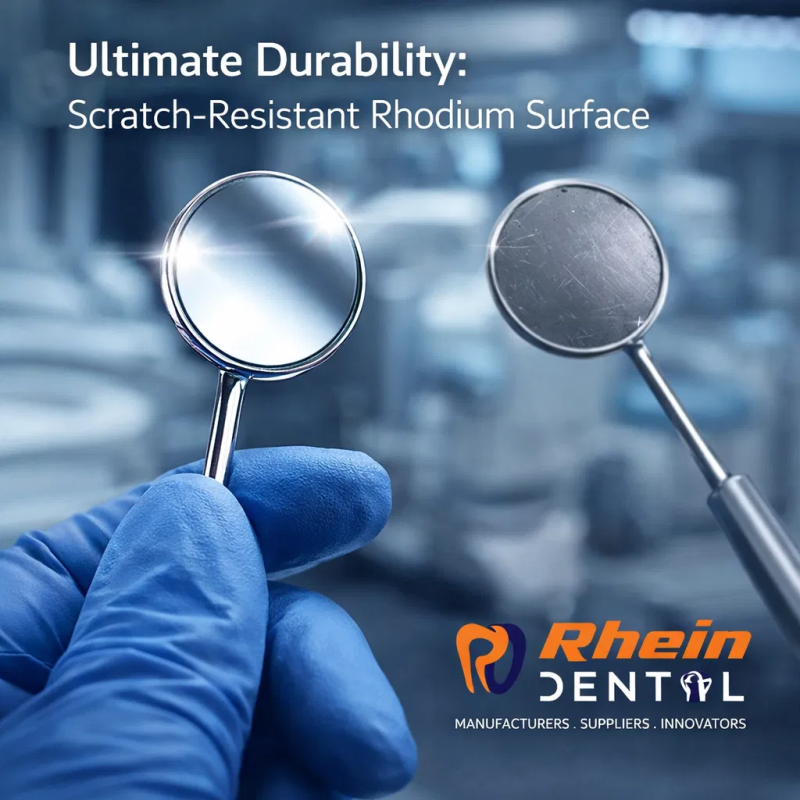
Standard mirrors can develop micro-scratches over time, which reduce reflectivity and create visual distortion. Rhodium coating solves this problem because:
1. Exceptional Surface Hardness
Rhodium is harder than many conventional reflective materials, making it more resistant to abrasions.
2. Long-Term Reflective Performance
The coating maintains brightness and clarity even after repeated use.
3. Reduced Wear from Sterilization
Autoclaving and chemical disinfection can degrade low-quality mirrors, but rhodium-coated mirrors are designed to withstand these harsh conditions.
Key Benefits of Rhodium-Coated Mirrors
Using rhodium-coated dental mirrors offers several practical advantages:
- Crystal-clear reflection with minimal distortion
- Better visibility in hard-to-reach areas
- Reduced fogging during procedures
- Improved scratch resistance
- Longer service life
- Better infection control due to smooth, easy-to-clean surfaces
Are Rhodium-Coated Mirrors Worth the Investment?
Although rhodium-coated mirrors may cost more upfront, they provide better value over time. Their durability means fewer replacements, while improved visibility can enhance both treatment accuracy and patient comfort.
For dental professionals who prioritize reliability and performance, rhodium-coated mirrors are a smart long-term investment.
Final Thoughts
Rhodium-coated dental mirrors are more than just a premium option — they are a practical upgrade for any modern practice. By reducing fogging, resisting scratches, and delivering sharper reflections, they support better clinical outcomes and a more efficient workflow.
Investing in quality mirror technology helps ensure that every procedure is performed with confidence and precision.