
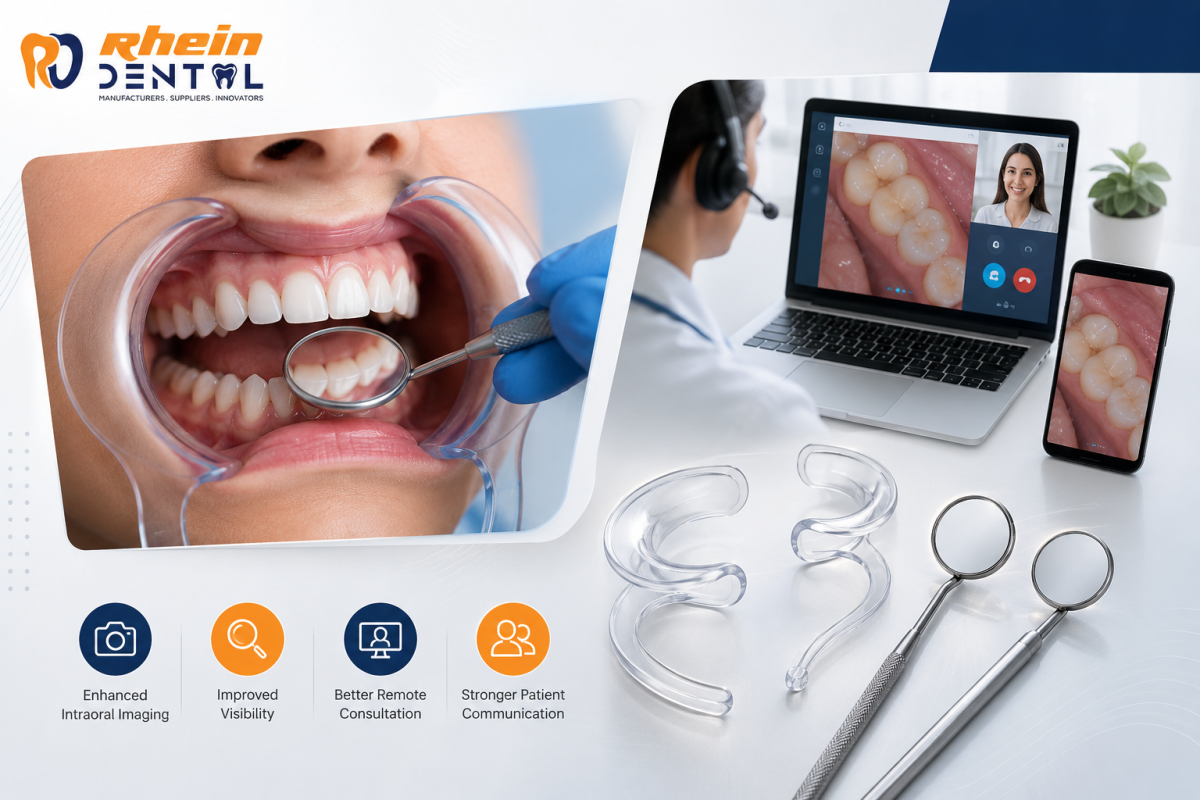
Modern dentistry increasingly depends on accurate visual documentation. From treatment planning to patient education, high-quality intraoral images have become essential in everyday clinical practice. As teledentistry continues to grow, dental professionals also require reliable tools that improve image clarity, visibility, and diagnostic communication.
Among the most important instruments used during intraoral photography are cheek retractors and mouth mirrors. These simple yet highly effective tools help clinicians capture detailed images of teeth, gingiva, occlusal surfaces, and posterior regions with greater precision and consistency.
When used correctly, cheek retractors and dental mirrors enhance visibility, reduce soft tissue obstruction, and support better clinical documentation for consultations, case presentations, orthodontic assessments, cosmetic dentistry, and remote diagnosis.
Why Intraoral Photography Matters in Modern Dentistry
Intraoral photography is no longer limited to cosmetic case documentation. It now plays a central role in:
- Diagnostic evaluation
- Treatment planning
- Orthodontic monitoring
- Restorative case analysis
- Patient communication
- Insurance documentation
- Clinical training
- Laboratory communication
- Remote dental consultations
Clear intraoral images allow clinicians to track treatment progress accurately while improving communication between dentists, specialists, laboratories, and patients.
In teledentistry, where clinicians rely heavily on digital visuals, image quality becomes even more critical.
The Clinical Importance of Cheek Retractors
Improving Field Visibility
Cheek retractors are designed to gently pull soft tissues away from the teeth and gingiva. This creates an unobstructed working and photographic field.
Without retractors, lips and cheeks can block important anatomical structures, making accurate photography difficult.
By exposing the full dentition, retractors help clinicians capture:
- Buccal views
- Frontal occlusion
- Lateral occlusion
- Gingival margins
- Orthodontic alignment
- Restorative details
Enhancing Image Consistency
Standardized photography is essential for treatment comparison and documentation. Cheek retractors help maintain consistent positioning across multiple appointments.
This consistency is especially important in:
- Orthodontic progress photography
- Smile design cases
- Implant documentation
- Cosmetic dentistry records
Uniform images improve before-and-after comparisons and create more professional clinical records.
Supporting Patient Comfort During Photography
Modern cheek retractors are designed with smooth edges and flexible materials that improve patient comfort during longer photographic sessions.
Comfortable retraction minimizes patient movement, allowing clinicians to capture sharper images more efficiently.
The Clinical Role of Mouth Mirrors in Intraoral Photography
Accessing Difficult-to-View Areas
Direct photography cannot always capture posterior teeth, lingual surfaces, or occlusal anatomy effectively. Mouth mirrors solve this limitation by reflecting hidden intraoral structures into the camera’s field of view.
Dental mirrors are commonly used to photograph:
- Maxillary occlusal surfaces
- Mandibular occlusion
- Posterior restorations
- Lingual tooth surfaces
- Distal molar regions
This allows clinicians to document areas that would otherwise remain inaccessible.
Improving Diagnostic Visualization
High-quality mouth mirrors provide clear, distortion-free reflections that improve photographic accuracy.
Rhodium-coated mirrors are particularly valued because they offer:
- Superior reflectivity
- Reduced image distortion
- Enhanced brightness
- Scratch resistance
- Better long-term clarity
These characteristics are especially beneficial in digital photography, where reflection quality directly affects image sharpness.
Reducing Fogging During Photography
Fogging is a common challenge during intraoral imaging. Premium dental mirrors often include anti-fog properties or thermal stability that minimizes condensation during use.
Reduced fogging improves workflow efficiency and decreases the need for repeated image capture.
The Role of These Instruments in Teledentistry
Enabling Remote Diagnosis
Teledentistry depends heavily on visual information. Clear intraoral images help clinicians remotely assess:
- Carious lesions
- Gingival inflammation
- Orthodontic alignment
- Fractured restorations
- Soft tissue abnormalities
- Post-operative healing
Cheek retractors and mirrors significantly improve image quality, making remote evaluations more reliable.
Improving Communication Between Specialists
In multidisciplinary cases, clinicians often share photographic records with:
- Orthodontists
- Oral surgeons
- Prosthodontists
- Periodontists
- Dental laboratories
High-quality images improve interdisciplinary communication and reduce misunderstandings during treatment planning.
Enhancing Patient Education
Patients better understand their oral conditions when clinicians use clear intraoral photographs during consultations.
Detailed images captured with retractors and mirrors allow dentists to visually explain:
- Decay progression
- Gingival recession
- Occlusal wear
- Alignment issues
- Restoration defects
This often improves patient acceptance of recommended treatments.
Key Features to Look for in Photography Instruments
Ideal Cheek Retractor Characteristics
High-quality cheek retractors should offer:
- Smooth patient-friendly edges
- Adequate flexibility
- Clear visibility
- Sterilization compatibility
- Durable medical-grade materials
Different sizes may also be necessary for adult and pediatric patients.
Ideal Mouth Mirror Characteristics
For intraoral photography, clinicians generally prefer mirrors with:
- High reflectivity
- Rhodium coating
- Scratch resistance
- Anti-fog performance
- Distortion-free surfaces
- Ergonomic handling
Larger photographic mirrors are often used for occlusal imaging because they provide wider reflective coverage.
Infection Control Considerations
Since intraoral photography instruments contact oral tissues directly, proper sterilization is essential.
Clinics should follow strict protocols for:
- Cleaning
- Disinfection
- Sterilization
- Storage
Autoclavable cheek retractors and high-quality stainless-steel mirror systems help maintain infection control standards while ensuring long-term instrument durability.
The Growing Future of Digital Dental Imaging
As digital workflows continue to evolve, intraoral photography will become even more integrated into routine dentistry.
Artificial intelligence, remote consultations, cloud-based case sharing, and digital treatment planning all depend on clear, accurate clinical images.
Cheek retractors and mouth mirrors remain foundational tools that support these advancements by improving visibility, documentation quality, and diagnostic precision.
Conclusion
Cheek retractors and mouth mirrors play a critical clinical role in modern intraoral photography and teledentistry. These instruments improve visibility, enhance image consistency, and allow clinicians to capture detailed views of otherwise inaccessible oral structures.
From orthodontic monitoring to remote diagnosis, their contribution extends far beyond simple photographic assistance. High-quality retractors and reflective mirrors help dental professionals achieve better documentation, improved communication, and more reliable clinical outcomes.
As digital dentistry continues to expand, these essential instruments will remain indispensable in creating accurate, professional, and diagnostically valuable intraoral images.