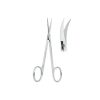
Why Curved Iris Scissors Suit Fine Soft-Tissue Work
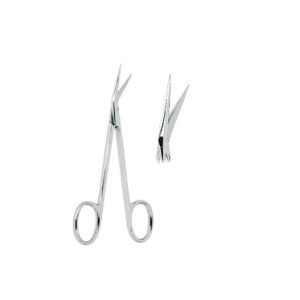
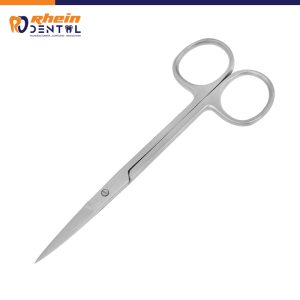
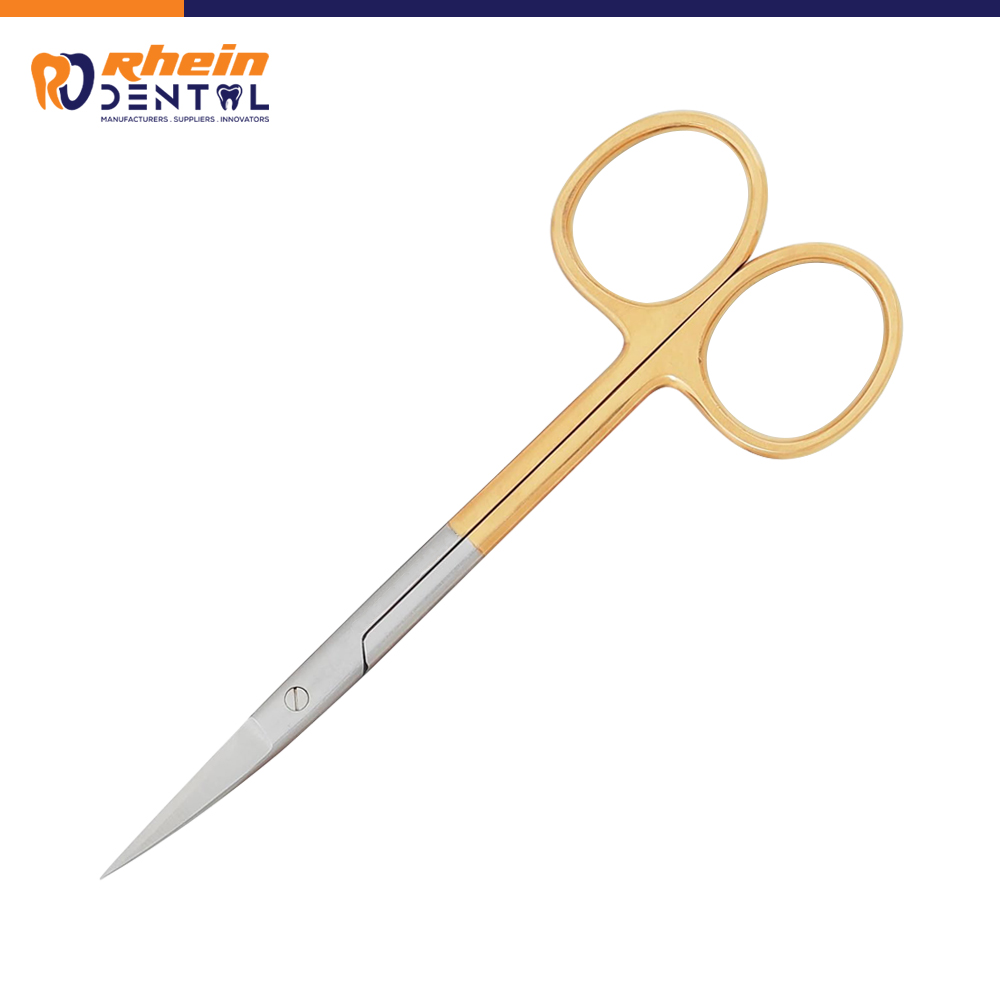
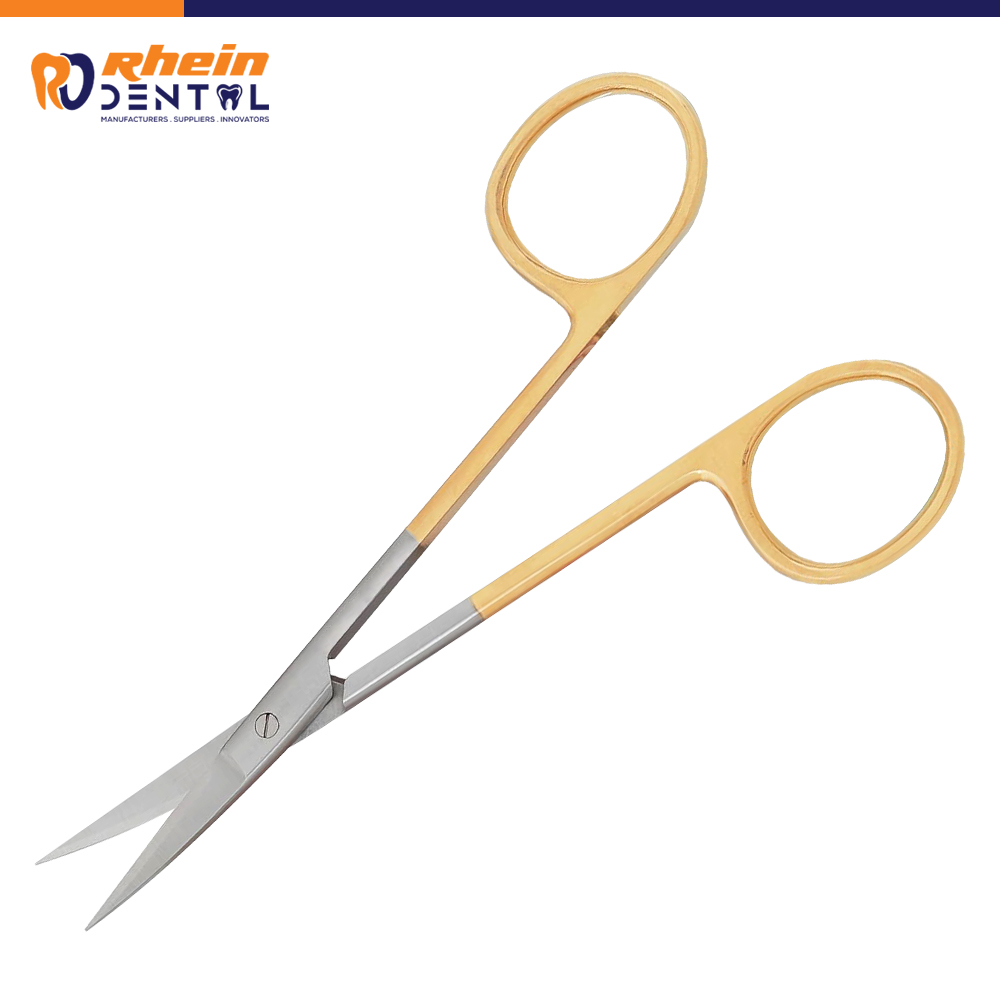
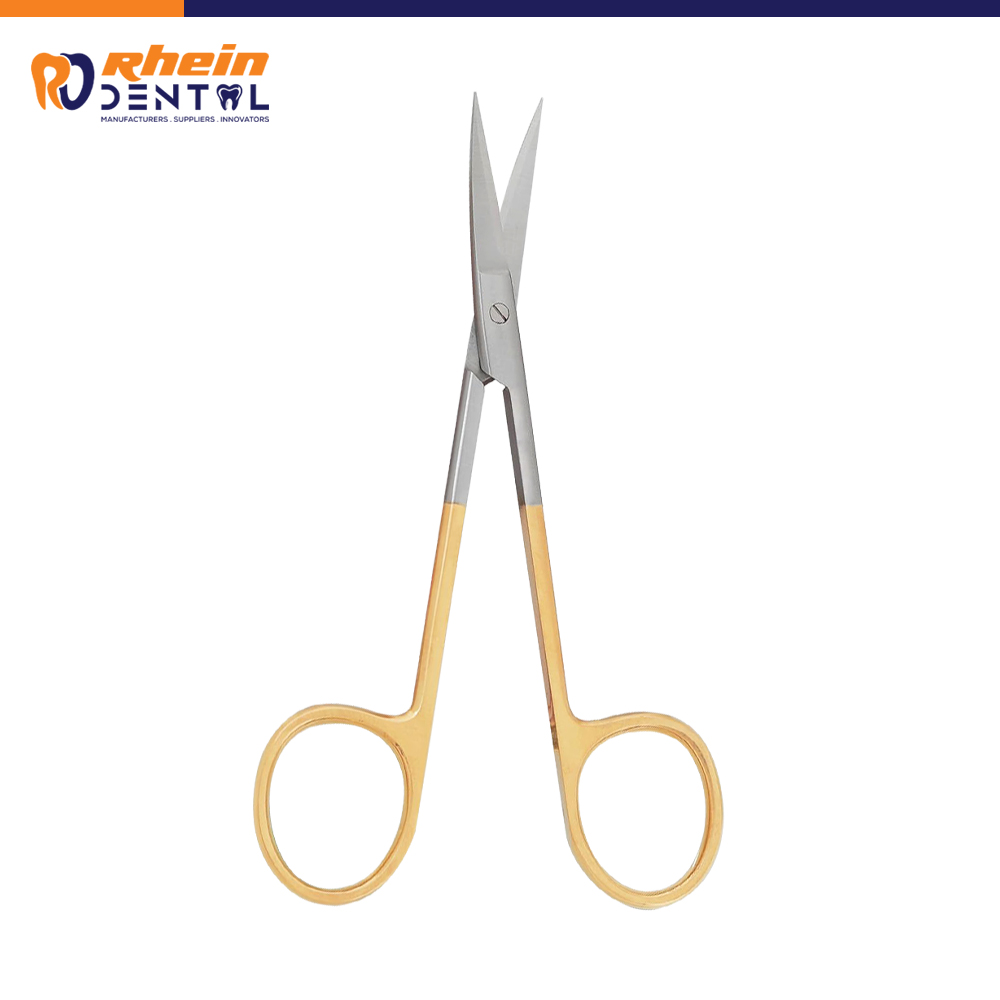
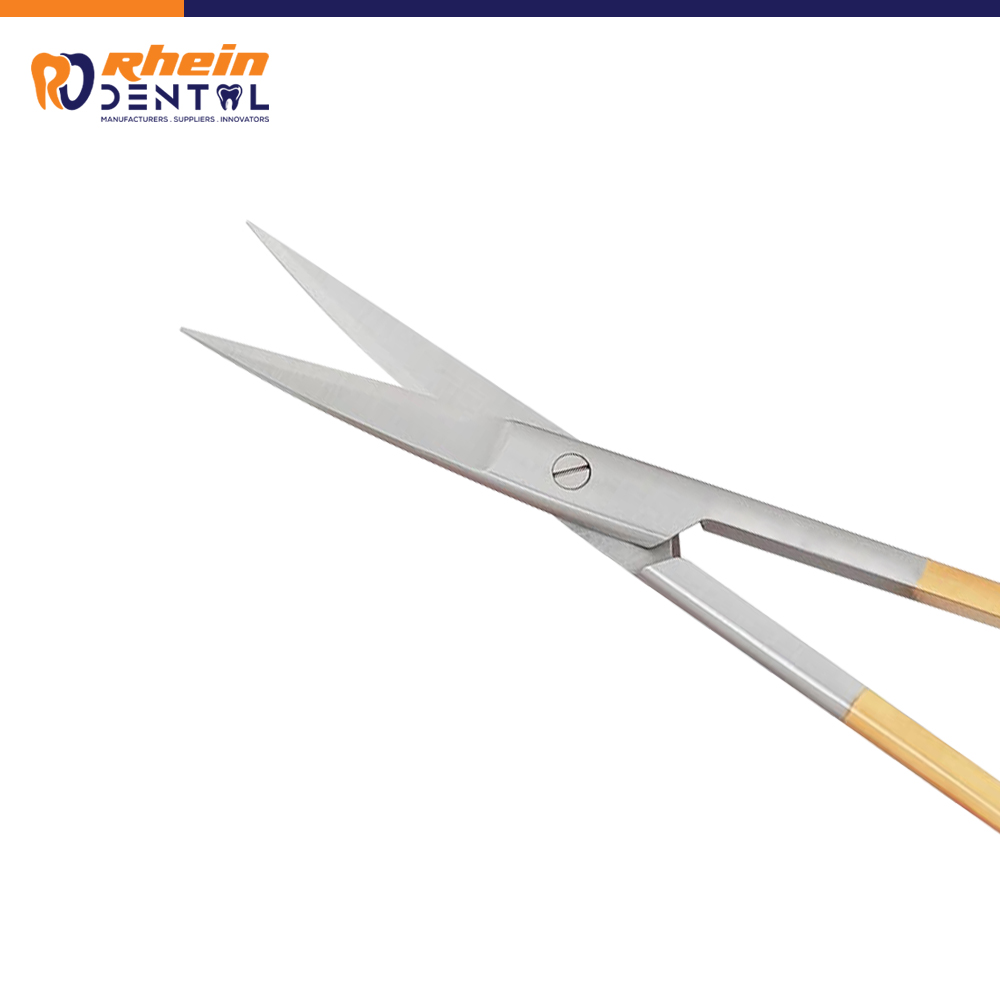
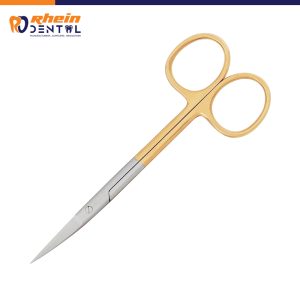
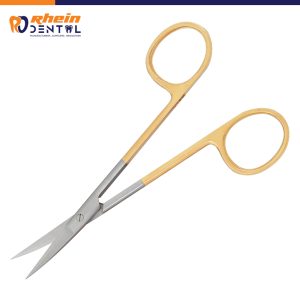
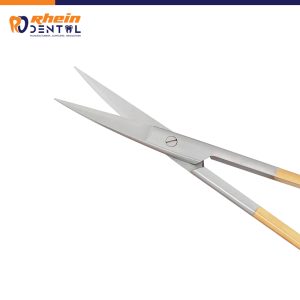
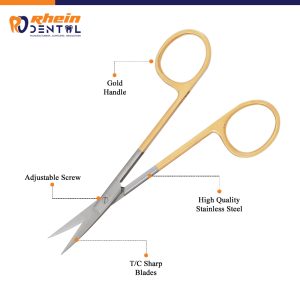
Curved iris scissors give surgeons a controlled cut in tight spaces, because the curved blades follow tissue contours and keep the tips in view. Moreover, we fitted this model with tungsten carbide (T/C) sharp blades, so the edge stays keen through repeated cuts. As a result, you trim gingiva and cut sutures cleanly.
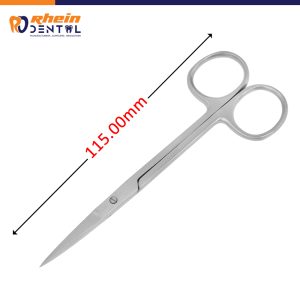
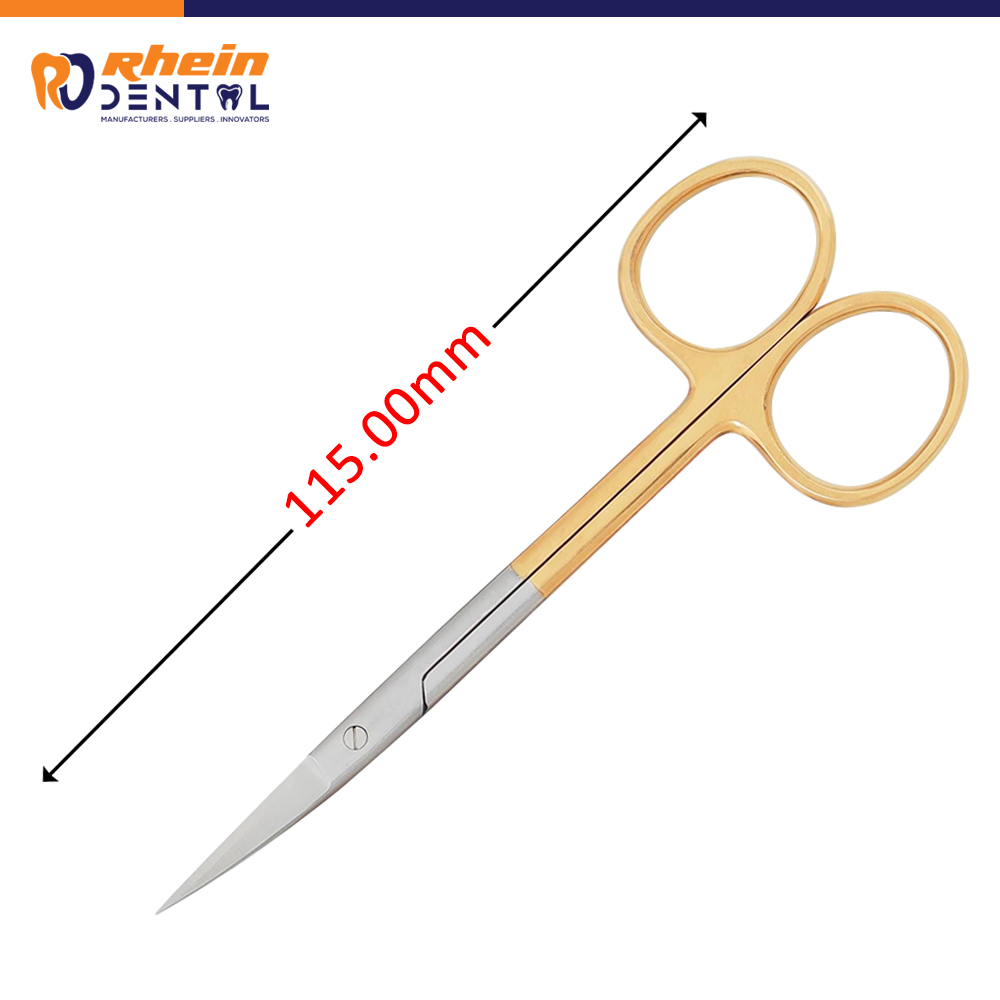
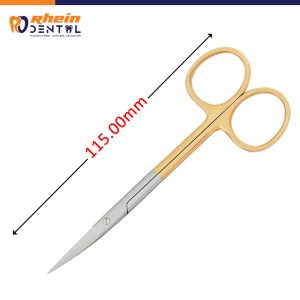
Dentists, periodontists, and oral surgeons rely on this pattern, since the 11.5 cm body reaches the posterior regions while the ring handles keep your fingers clear. Therefore, you work with a steady grip, and you spot the carbide-tipped pair in a crowded tray at a glance.
Specifications
| Attribute | Detail |
|---|---|
| Length | 115 mm (11.5 cm / 4.5 in) |
| Material | Stainless steel |
| Pattern | Iris scissors, curved |
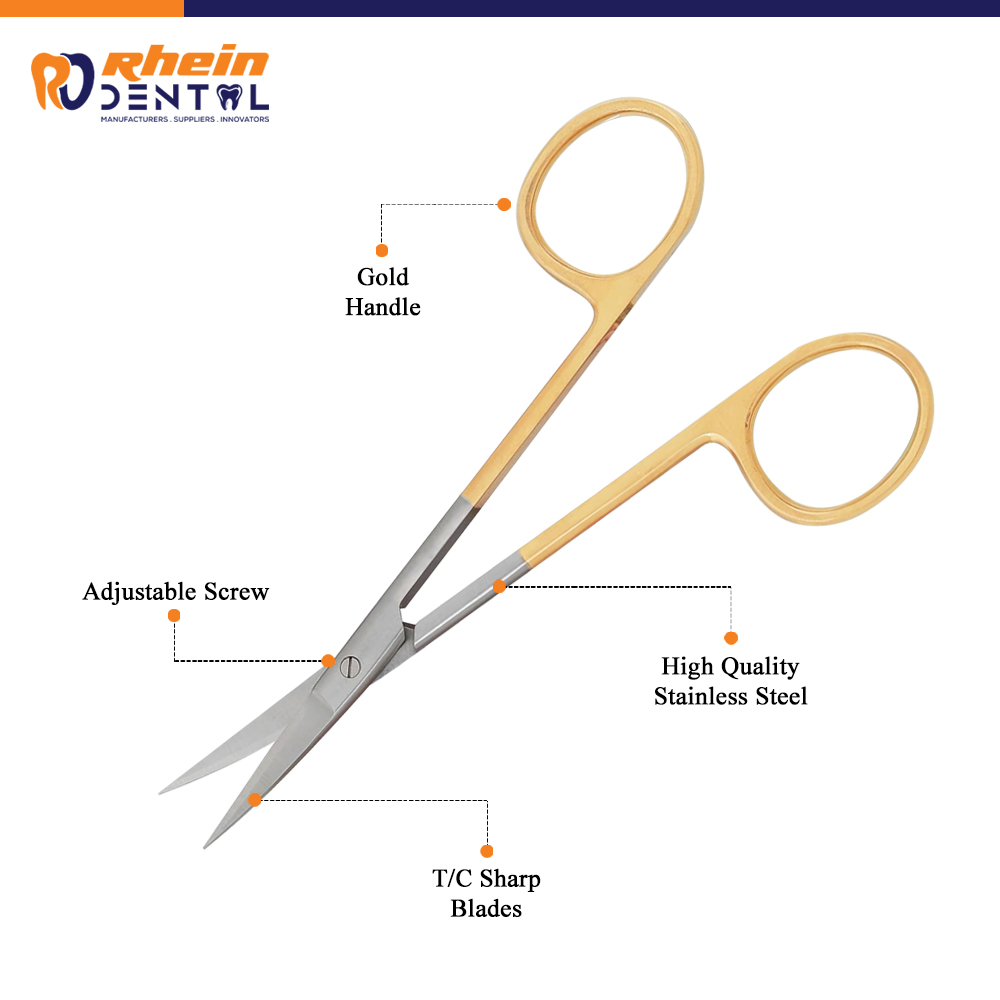
| Blade Type | Tungsten carbide (T/C) sharp blades |
| Tip Style | Sharp |
| Joint | Adjustable screw joint |
| Handle | Finger-ring handles, no spring, no ratchet lock |
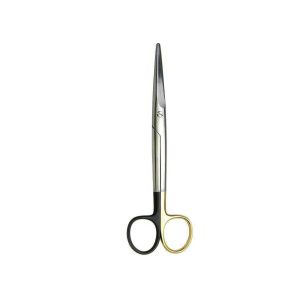
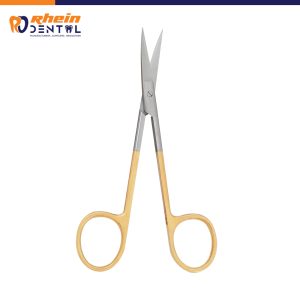
| Finish | Gold-finish handles, satin blades |
| Sterilization Method | Steam autoclave |
| Reusable/Disposable | Reusable |
| Country of Manufacture | Pakistan |
| Certification | ISO/CE Certified |
What Are Curved Iris Scissors Used For? Clinical Applications
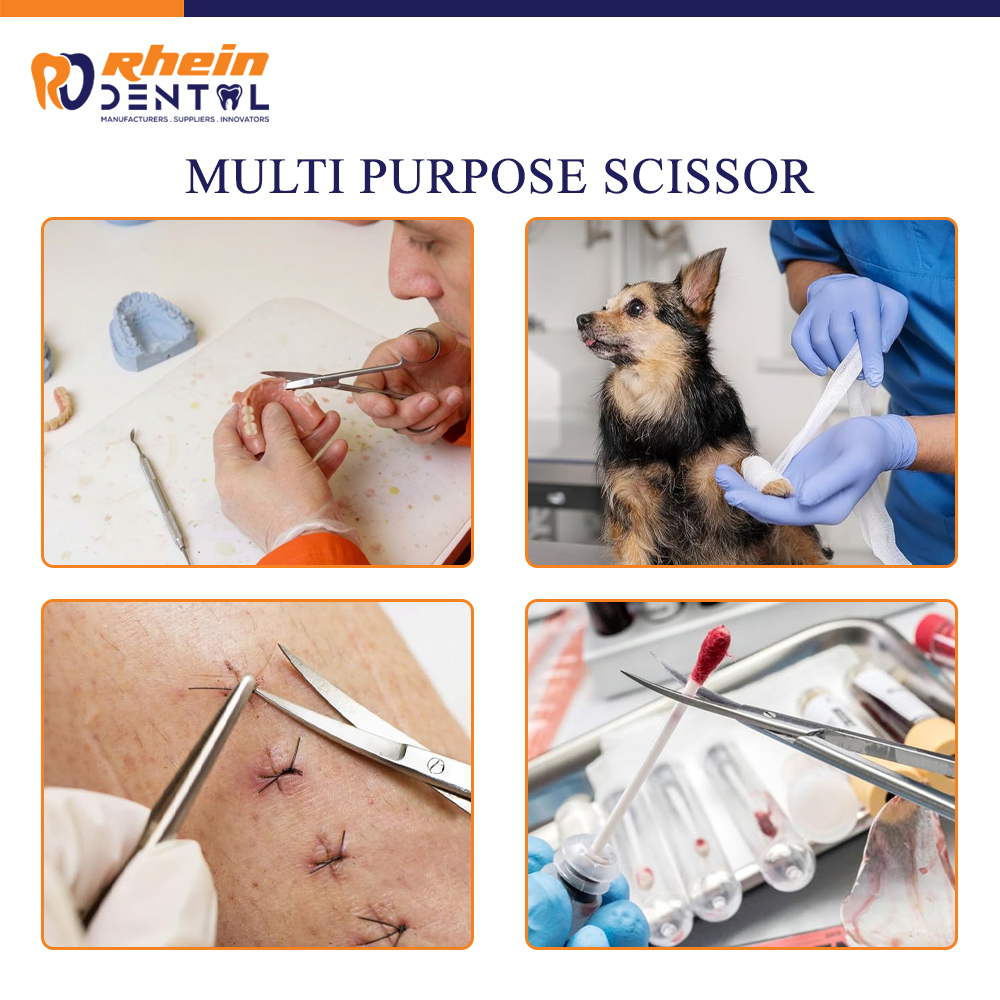
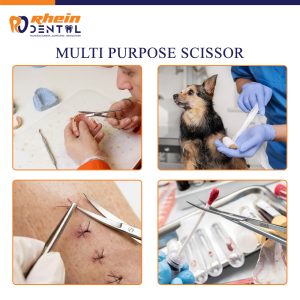
Curved iris scissors cut fine soft tissue and sutures where the blades must follow a contour. Their uses include:
- Trimming gingival margins and flap edges during periodontal surgery
- Shaping free gingival graft tissue before suturing
- Releasing a tight frenum during a frenectomy
- Dissecting and undermining mucosa at extraction and implant sites
- Cutting sutures at closure and at follow-up removal
Iris Scissors Straight vs Curved: How to Choose
Iris scissors come in both shapes, so you choose by the cut you need.
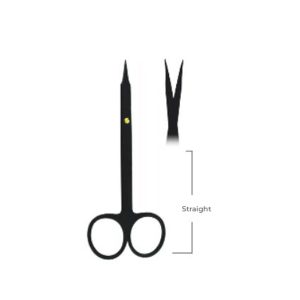
- Straight: these suit flat, line-of-sight cuts such as trimming sutures and dressings.
- Curved: these follow gingival margins and concave tissue, and they keep your hand out of your line of sight.
Most surgical sets carry iris scissors curved and straight, because each pattern reaches cuts the other cannot make cleanly.
Key Benefits / Real Differentiators
- Tungsten carbide blades: the carbide edge stays sharp through repeated cuts and autoclave cycles, so you resharpen less often than with plain stainless blades.
- 115 mm length: the 4.5 in body fits a pen grip and reaches the posterior sextants.
- Adjustable screw joint: you tighten the pivot to restore blade tension, which extends the instrument’s working life.
- Gold ring handles: they mark the carbide-tipped pair in the tray, so your team reaches for the right scissors first.
Ideal For
- Periodontists performing graft and flap surgery
- Oral and maxillofacial surgeons handling soft-tissue dissection
- Implant clinics that suture at every placement
- Dental colleges that teach soft-tissue handling
- Distributors building matched curved and straight iris sets
FREQUENTLY ASKED questions
Both versions exist. Iris scissors come straight or curved, and this model is the curved version. However, the straight version works better for flat, line-of-sight cuts.
TC stands for tungsten carbide, which is the cutting-edge material in the blades. As a result, the edge stays sharp longer than on a standard stainless pair, though you pay more upfront.
You clean them, dry them fully, place them in a pouch or cassette, and run a steam autoclave cycle. Moreover, a dry pivot wears more slowly.
This pair has sharp tips for fine, clean cuts. Blunt-tipped curved iris scissors also exist for safer dissection. Therefore, tell us which tip you need when you inquire.
This model uses finger-ring handles with an adjustable screw joint, not spring handles. Spring-handle versions exist as a different style. Contact us to check availability.