
The global orthodontic industry continues to expand as demand for braces, clear aligners, and specialized orthodontic treatments grows across developed and emerging markets. Consequently, the need for shipping orthodontic instruments internationally has increased significantly, making efficient orthodontic instrument export a critical part of the global dental supply chain.
Whether you’re an orthodontic instrument manufacturer, distributor, dental supplier, or procurement manager, understanding international shipping regulations, documentation, sterilization standards, and packaging requirements is essential. Proper export procedures protect product quality, ensure regulatory compliance, and improve customer satisfaction.
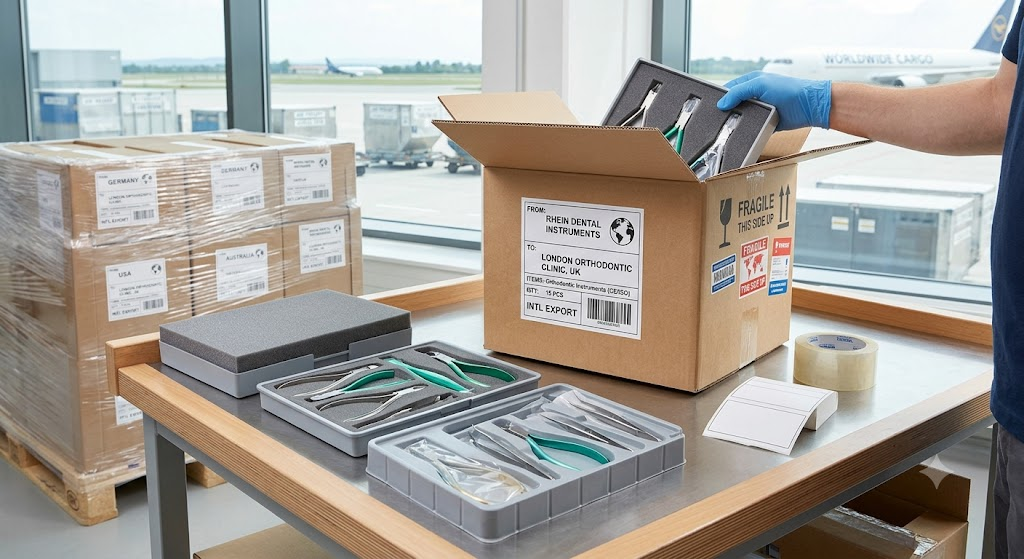
This comprehensive guide explains every stage of international orthodontic instrument shipping while helping buyers and exporters make informed decisions.
Why International Orthodontic Instrument Export Is Growing
The dental industry has become increasingly globalized. Clinics no longer rely solely on local suppliers because international manufacturers often provide higher-quality instruments at competitive prices.
Major importing regions include:
- United Kingdom
- Germany
- France
- Italy
- Spain
- United States
- Canada
- Australia
- Middle East
- Southeast Asia
As orthodontic practices expand, demand rises for premium reusable stainless steel instruments manufactured according to international quality standards.
Commonly exported products include:
- Distal End Cutters
- Ligature Cutters
- Weingart Pliers
- Mathieu Pliers
- Bird Beak Pliers
- Jarabak Pliers
- Adams Pliers
- Band Removing Pliers
- Bracket Positioning Tweezers
- Band Pushers
- Ligature Directors
- Utility Pliers
- Arch Forming Pliers
- Elastic Placement Instruments
- Orthodontic Instrument Kits
Understanding International Orthodontic Instrument Shipping
International shipping involves much more than simply packaging instruments.
Exporters must ensure:
- Product quality
- Sterility protection
- Regulatory compliance
- Customs documentation
- Correct tariff classification
- Safe transportation
- On-time delivery
A professional export process minimizes delays, customs inspections, damaged products, and unexpected costs.
Choosing the Right Packaging for Orthodontic Instruments
Packaging is one of the most important aspects of shipping orthodontic instruments internationally.
High-quality packaging protects delicate tips, cutting edges, and precision joints during transportation.
Recommended packaging includes:
Individual Protection
Each instrument should be protected using:
- Poly sleeves
- Medical-grade pouches
- Bubble wrapping
- Tip protectors
- Silicone edge guards
This prevents scratches and preserves alignment.
Secondary Packaging
Multiple instruments should be organized using:
- Foam inserts
- Plastic trays
- Instrument cassettes
- Dividers
- Shock-resistant boxes
Proper organization prevents instruments from colliding during transit.
Outer Export Cartons
Export cartons should provide protection against:
- Moisture
- Dust
- Compression
- Vibration
- Impact
Strong corrugated cartons reduce shipping damage during long-distance transportation.
Material Requirements for International Export
Premium orthodontic instruments are typically manufactured using:
- German stainless steel
- Medical-grade stainless steel
- Surgical stainless steel
- Corrosion-resistant alloys
High-quality materials resist:
- Rust
- Corrosion
- Staining
- Repeated sterilization cycles
International buyers increasingly request instruments manufactured using premium stainless steel because of their durability and long service life.
Regulatory Requirements for Orthodontic Instrument Export
Every importing country has specific regulations.
Exporters should understand destination requirements before shipping.
Common certifications include:
CE Certification
Many European buyers require CE-certified orthodontic instruments.
CE certification demonstrates compliance with applicable European medical device regulations.
ISO 13485
ISO 13485 certification indicates that the manufacturer follows internationally recognized quality management systems for medical devices.
FDA Requirements
For shipments entering the United States, certain products may require FDA registration or listing depending on classification.
Understanding destination-specific requirements prevents customs delays.
Essential Export Documentation
International shipments require accurate documentation.
Typical documents include:
- Commercial Invoice
- Packing List
- Certificate of Origin
- Air Waybill
- Bill of Lading
- Export Declaration
- CE Documentation (when applicable)
- Product Catalog
- Product Specifications
- HS Code Documentation
Accurate paperwork speeds customs clearance and reduces shipment delays.
Selecting the Best Shipping Method
The best shipping method depends on urgency, shipment size, and budget.
Air Freight
Best for:
- Small shipments
- Urgent deliveries
- High-value instruments
Advantages include:
- Fast delivery
- Lower inventory costs
- Reduced transit time
Sea Freight
Ideal for:
- Bulk orders
- Large distributors
- OEM shipments
Benefits include:
- Lower shipping costs
- Suitable for large volumes
- Better for containerized exports
Courier Services
Express couriers are excellent for:
- Samples
- Replacement instruments
- Small commercial orders
Popular courier providers include DHL, UPS, FedEx, and TNT.
Customs Clearance Tips
Customs clearance is one of the most important stages of orthodontic instrument export.
To avoid delays:
- Use correct HS codes.
- Provide accurate product descriptions.
- Include complete documentation.
- Declare shipment value honestly.
- Ensure labels match invoices.
- Verify destination import regulations before dispatch.
These practices significantly reduce customs-related issues.
Labeling Requirements
Professional export labels should include:
- Product name
- Item code
- Quantity
- Manufacturer details
- Country of origin
- Batch number
- Material information
- Sterilization status (if applicable)
Clear labeling improves warehouse management and customs inspection efficiency.
Maintaining Instrument Quality During Transit
Long international journeys expose instruments to:
- Humidity
- Temperature fluctuations
- Vibration
- Handling stress
To maintain product integrity:
- Use moisture-resistant packaging.
- Add desiccant packs where appropriate.
- Protect cutting edges with guards.
- Secure moving parts.
- Inspect packaging before dispatch.
Proper packaging reduces warranty claims and customer complaints.
Common Challenges in International Dental Instrument Shipping
Exporters frequently encounter:
Customs Delays
Incomplete documentation can delay shipments.
Preparation is the best solution.
Packaging Damage
Weak packaging increases the risk of damaged instruments.
Investing in premium export packaging protects both products and reputation.
Incorrect Product Classification
Using the wrong HS code may lead to customs issues or additional duties.
Always verify classifications before shipping.
Regulatory Compliance
Different countries have unique import requirements.
Staying informed ensures smoother international trade.
Best Practices for Orthodontic Instrument Export
Successful exporters consistently follow proven practices.
Maintain International Certifications
Quality certifications increase buyer confidence and simplify regulatory approvals.
Invest in Premium Packaging
Strong packaging minimizes transit damage and reinforces your brand’s reputation.
Conduct Final Quality Inspections
Inspect every instrument before shipment for finish, alignment, and functionality.
Partner with Reliable Freight Forwarders
Experienced logistics partners help reduce delays and manage customs documentation efficiently.
Track Every Shipment
Providing tracking information improves transparency and enhances customer satisfaction.
Industries That Import Orthodontic Instruments
International orthodontic instruments are widely purchased by:
- Orthodontic clinics
- Dental hospitals
- Universities
- Dental schools
- Government healthcare organizations
- Medical distributors
- Private dental chains
- OEM dental brands
- Procurement agencies
How Buyers Choose an Orthodontic Instrument Exporter
Professional buyers evaluate suppliers based on:
- Manufacturing experience
- Product quality
- International certifications
- Export capabilities
- Consistent quality control
- Packaging standards
- Delivery reliability
- Customer support
- Competitive pricing
- OEM and private-label services
Meeting these expectations helps exporters build long-term business relationships.
Conclusion
As global demand for orthodontic care continues to rise, shipping orthodontic instruments internationally has become a vital part of the dental supply chain. Successful orthodontic instrument export depends on careful planning, regulatory compliance, high-quality packaging, accurate documentation, and dependable logistics.
By following international best practices and maintaining consistent product quality, manufacturers and exporters can expand into new markets, reduce shipping risks, and build lasting relationships with distributors, clinics, and healthcare organizations around the world.
A commitment to precision, compliance, and customer satisfaction ensures that orthodontic instruments arrive safely, perform reliably, and meet the expectations of dental professionals wherever they are used.
Frequently Asked Questions:
Yes. Orthodontic instruments can be exported worldwide when they comply with the destination country’s import regulations, documentation requirements, and applicable medical device standards.
Air freight is ideal for urgent or high-value shipments, while sea freight is more cost-effective for bulk exports.
Depending on the destination market, buyers commonly request CE certification, ISO 13485 compliance, and other country-specific regulatory approvals.
Depending on the destination market, buyers commonly request CE certification, ISO 13485 compliance, and other country-specific regulatory approvals.
Common documents include a commercial invoice, packing list, certificate of origin, transport documents, and any required regulatory certificates.