
Starting orthodontic training is an exciting step for dental students who want to specialize in tooth alignment, malocclusion correction, and dentofacial development. However, one of the biggest challenges for new orthodontic students is understanding which orthodontic instruments they actually need for clinical practice, laboratory exercises, and orthodontic procedures.
Unlike general dentistry, orthodontics requires a specialized collection of precision instruments designed for tasks such as bracket placement, wire adjustment, archwire manipulation, band fitting, and appliance fabrication.
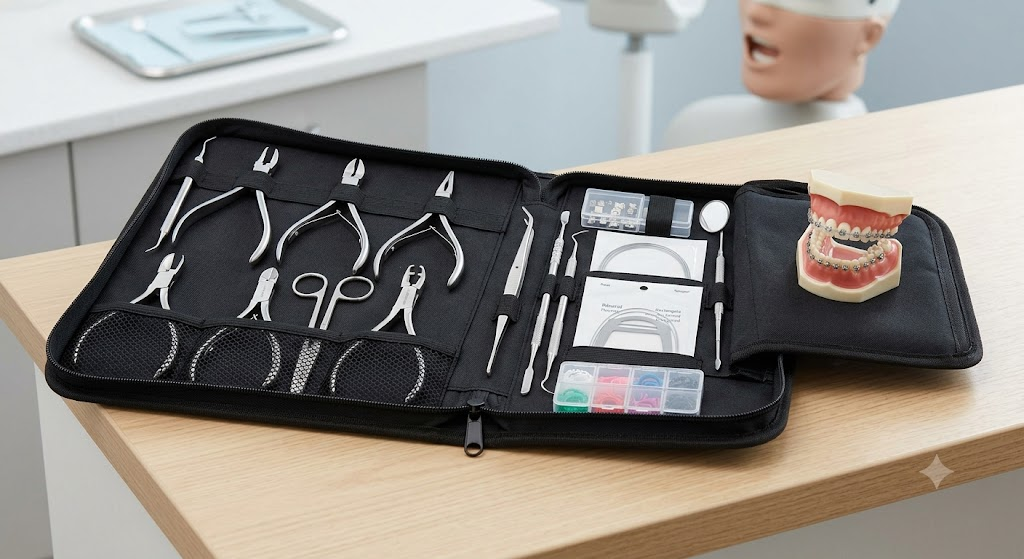
A well-organized orthodontic student kit helps students develop clinical confidence, improve hand skills, and perform procedures efficiently during dental school training and postgraduate orthodontic programs.
This guide answers the most common questions orthodontic students ask about essential orthodontic tools, recommended instruments, and how to choose a professional-quality orthodontic instrument set.
Q1: What Is an Orthodontic Student Kit?
An orthodontic student kit is a collection of specialized orthodontic instruments used by dental students during orthodontic education and clinical training.
These kits usually contain essential hand instruments required for:
- Bracket bonding procedures
- Archwire placement and removal
- Wire bending exercises
- Orthodontic appliance adjustments
- Ligature placement
- Band seating
- Clinical examinations
- Laboratory orthodontic work
A complete orthodontic kit allows students to practice the same techniques performed by professional orthodontists.
The contents may vary depending on the dental school curriculum, but most kits include orthodontic pliers, cutters, probes, scalers, band instruments, and wire manipulation tools.
Q2: What Are the Essential Orthodontic Instruments for Students?
The most important orthodontic tools for students include:
1. Orthodontic Pliers
Orthodontic pliers are the foundation of every orthodontic student kit. They are designed for gripping, bending, cutting, and adjusting orthodontic wires.
Starting orthodontic training is an exciting step for dental students who want to specialize in tooth alignment, malocclusion correction, and dentofacial development. However, one of the biggest challenges for new orthodontic students is understanding which orthodontic instruments they actually need for clinical practice, laboratory exercises, and orthodontic procedures.
Unlike general dentistry, orthodontics requires a specialized collection of precision instruments designed for tasks such as bracket placement, wire adjustment, archwire manipulation, band fitting, and appliance fabrication.
A well-organized orthodontic student kit helps students develop clinical confidence, improve hand skills, and perform procedures efficiently during dental school training and postgraduate orthodontic programs.
This guide answers the most common questions orthodontic students ask about essential orthodontic tools, recommended instruments, and how to choose a professional-quality orthodontic instrument set.
Q1: What Is an Orthodontic Student Kit?
An orthodontic student kit is a collection of specialized orthodontic instruments used by dental students during orthodontic education and clinical training.
These kits usually contain essential hand instruments required for:
- Bracket bonding procedures
- Archwire placement and removal
- Wire bending exercises
- Orthodontic appliance adjustments
- Ligature placement
- Band seating
- Clinical examinations
- Laboratory orthodontic work
A complete orthodontic kit allows students to practice the same techniques performed by professional orthodontists.
The contents may vary depending on the dental school curriculum, but most kits include orthodontic pliers, cutters, probes, scalers, band instruments, and wire manipulation tools.
Q2: What Are the Essential Orthodontic Instruments for Students?
The most important orthodontic tools for students include:
1. Orthodontic Pliers
Orthodontic pliers are the foundation of every orthodontic student kit. They are designed for gripping, bending, cutting, and adjusting orthodontic wires.
Common orthodontic pliers include:Common orthodontic pliers include:
Weingart pliers are among the most commonly used orthodontic instruments.
They are used for:
- Holding archwires
- Inserting wires into brackets
- Removing wires
- Making adjustments during treatment
Their angled design provides better access inside the oral cavity.
Bird Beak Pliers
Bird beak pliers are essential for wire bending exercises.
Students use them for:
- Creating loops
- Adjusting orthodontic wires
- Forming retainers
- Appliance fabrication
They are especially important during orthodontic laboratory training.
Three Jaw Pliers
Three jaw pliers are designed for controlled wire manipulation.
Applications include:
- Bending round wires
- Adjusting removable appliances
- Creating precise wire shapes
These pliers help students develop accuracy and control.
2. Distal End Cutters
A distal end cutter is one of the most important orthodontic cutting instruments.
It is used to:
- Cut excess archwire behind molar tubes
- Prevent soft tissue irritation
- Trim orthodontic wires safely
A high-quality distal end cutter provides:
- Sharp cutting edges
- Comfortable grip
- Long-lasting performance
For orthodontic students, selecting durable stainless steel cutters is important because these instruments are used repeatedly throughout training.
3. Ligature Cutters
Ligature cutters are designed specifically for cutting thin orthodontic wires and ligature materials.
Students commonly use them for:
- Cutting stainless steel ligature wires
- Removing excess wire ends
- Adjusting orthodontic appliances
A precise cutter helps prevent accidental wire deformation.
4. Mathieu Needle Holders
Mathieu needle holders are commonly included in orthodontic instrument kits.
They are used for:
- Placing elastomeric ligatures
- Handling small orthodontic components
- Securing materials during procedures
Their spring-loaded design allows controlled handling.
5. Orthodontic Explorer
An orthodontic explorer is used for examination and clinical procedures.
Uses include:
- Checking bracket bonding
- Detecting excess adhesive
- Evaluating orthodontic appliances
Its fine tip allows access to small areas around brackets and wires.
6. Bracket Positioning Instruments
Accurate bracket placement is critical in orthodontic treatment.
Bracket positioning tools help students:
- Measure bracket height
- Position brackets accurately
- Maintain correct alignment
Common examples include:
- Bracket gauges
- Boone gauges
- Positioning tweezers
Correct bracket placement directly affects treatment outcomes.
Q3: What Instruments Are Included in a Basic Orthodontic Student Kit?
A basic orthodontic student kit generally includes:
| Instrument | Main Purpose |
|---|---|
| Weingart Pliers | Holding and placing archwires |
| Bird Beak Pliers | Wire bending |
| Three Jaw Pliers | Wire adjustment |
| Distal End Cutter | Cutting archwire ends |
| Ligature Cutter | Cutting ligature wires |
| Mathieu Needle Holder | Ligature placement |
| Bracket Positioning Gauge | Accurate bracket placement |
| Orthodontic Explorer | Examination and bonding checks |
| College Tweezers | Handling small components |
| Mirror & Probe Set | Clinical examination |
The exact contents depend on university requirements and clinical training needs.
Q4: Do Orthodontic Students Need a Complete Orthodontic Plier Set?
Yes. An orthodontic plier set is one of the most valuable investments for students.
A complete orthodontic plier set provides multiple instruments designed for different procedures.
Instead of purchasing individual tools separately, students often choose complete sets because they offer:
- Better value
- Matching instrument quality
- Easier organization
- Compatibility with orthodontic procedures
A professional orthodontic plier set usually includes:
- Weingart plier
- Bird beak plier
- Distal cutter
- Ligature cutter
- Three jaw plier
- How plier
- Tweed arch bending plier
Q5: What Are Laboratory Orthodontic Instruments?
Orthodontic students also require instruments for laboratory exercises.
Laboratory orthodontic tools are used for creating and adjusting orthodontic appliances.
Common laboratory instruments include:
Adams Plier
Used for:
- Retainer fabrication
- Clasps formation
- Wire bending
Orthodontic Wax Knife
Used during appliance fabrication procedures.
Acrylic Trimmer
Used for:
- Appliance finishing
- Acrylic adjustments
Wire Cutter
Used for cutting orthodontic wires during laboratory work.
Q6: How Should Students Choose Orthodontic Instruments?
Choosing the correct orthodontic instruments is important because students use them frequently throughout their training.
Consider these factors:
1. Material Quality
High-quality orthodontic instruments are usually manufactured from:
- Surgical stainless steel
- Corrosion-resistant alloys
- High-strength materials
Good-quality instruments maintain sharpness and precision after repeated sterilization.
2. Ergonomic Design
Students spend many hours practicing orthodontic procedures.
Ergonomic instruments provide:
- Better hand comfort
- Improved control
- Reduced fatigue
3. Sterilization Compatibility
Orthodontic instruments should withstand:
- Autoclave sterilization
- Cleaning procedures
- Frequent clinical use
4. Precision Manufacturing
Orthodontics requires accuracy.
Poor-quality instruments may cause:
- Incorrect wire bending
- Damaged orthodontic components
- Reduced clinical efficiency
Q7: How Many Instruments Does an Orthodontic Student Need?
The number of instruments depends on the dental school curriculum.
A beginner orthodontic student usually needs approximately:
- 5–8 orthodontic pliers
- 3–5 examination instruments
- Wire cutting instruments
- Bracket placement tools
- Laboratory instruments
Advanced postgraduate orthodontic students may require additional specialized tools.
Q8: Are Orthodontic Student Kits Different From Professional Orthodontist Kits?
Yes.
A student orthodontic kit focuses on education and basic clinical procedures, while professional orthodontists often require specialized instruments for advanced treatments.
Student kits typically include:
- Basic wire bending pliers
- Cutting instruments
- Examination tools
- Training instruments
Professional orthodontic collections may include:
- Specialized bracket removal pliers
- Mini screw instruments
- Implant-related orthodontic tools
- Advanced wire forming pliers
Q9: How Should Orthodontic Students Maintain Their Instruments?
Proper maintenance increases instrument lifespan.
Students should:
Clean Instruments After Every Use
Remove:
- Blood contamination
- Adhesive residue
- Debris
Follow Sterilization Guidelines
Use proper:
- Cleaning solutions
- Autoclave procedures
- Sterilization protocols
Store Instruments Properly
Use:
- Instrument cassettes
- Protective trays
- Dry storage environments
Proper care protects precision edges and prevents corrosion.
Q10: Where Can Students Buy Quality Orthodontic Instruments?
Students should purchase orthodontic instruments from trusted dental instrument manufacturers and suppliers.
When selecting a supplier, check:
- Manufacturing experience
- Material quality
- Product certifications
- Customer reviews
- Warranty/support options
A reliable supplier ensures students receive instruments suitable for clinical training and long-term use.
Final Checklist: Essential Orthodontic Student Kit
Before starting orthodontic training, students should have:
✅ Orthodontic plier set
✅ Weingart utility pliers
✅ Bird beak pliers
✅ Three jaw pliers
✅ Distal end cutter
✅ Ligature cutter
✅ Mathieu needle holder
✅ Bracket positioning gauge
✅ Orthodontic explorer
✅ Examination instruments
✅ Laboratory orthodontic tools
✅ Instrument cassette for storage
Conclusion: Choosing the Right Orthodontic Tools for Student Success
A properly selected orthodontic student kit helps dental students develop essential clinical skills and prepares them for professional orthodontic practice.
Investing in high-quality orthodontic instruments for students improves precision, efficiency, and confidence during training. While requirements vary between universities, every orthodontic student should focus on durable, ergonomic, and sterilization-compatible tools.
By choosing reliable orthodontic tools from an experienced dental instrument manufacturer, students can build a strong foundation for their future orthodontic careers.