
What Are Gates Glidden Drills?
Gates Glidden drills are rotary endodontic instruments used mainly to enlarge the coronal portion of a root canal, remove cervical dentin interferences, and improve straight-line access. Traditionally available in sizes #1 to #6, these drills feature a flame-shaped cutting head and work especially well during the early stages of root canal preparation.
What Are Gates Glidden Drills Used For?
Gates Glidden drills, often called GG drills, have remained useful in endodontics for decades. Their primary purpose is to enlarge and taper the coronal part of the root canal rather than prepare the entire canal.
In particular, clinicians may use them for:
- Coronal canal enlargement
- Root canal orifice enlargement
- Cervical dentin removal
- Coronal flaring
- Improving straight-line access
- Removing coronal interferences
- Supporting selected retreatment procedures
Furthermore, controlled coronal enlargement can make subsequent file placement easier. However, clinicians should avoid unnecessary dentin removal because excessive enlargement can compromise remaining root structure.
Dentsply Sirona describes as instruments that widen and taper the root canal orifice. The manufacturer also recommends a brushing motion during use.
Gates Glidden Drill Sizes Explained
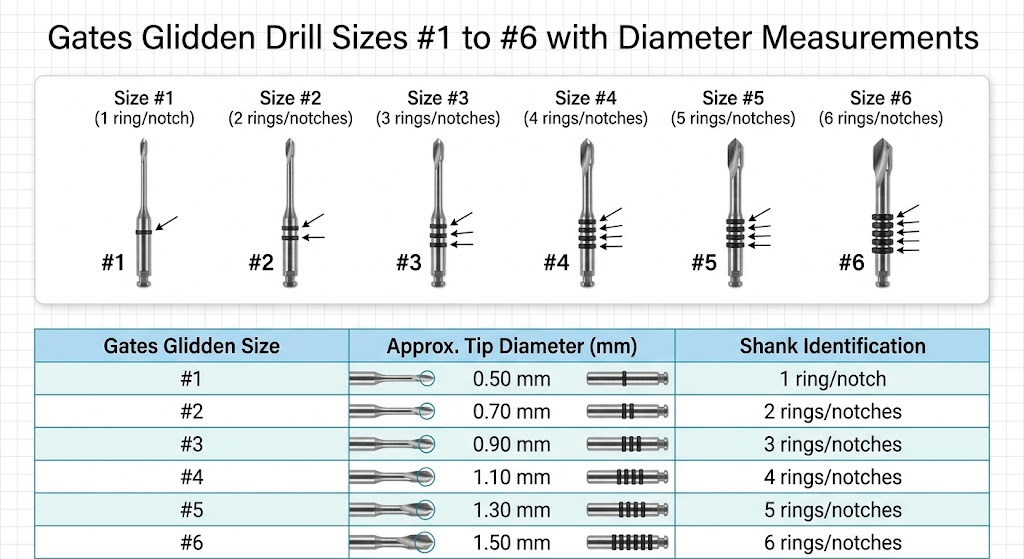
Understanding Gates Glidden drill sizes is important because the number does not indicate the diameter in millimetres.
The traditional sequence includes six sizes:
| Gates Glidden Size | Approx. Diameter |
|---|---|
| #1 | 0.50 mm |
| #2 | 0.70 mm |
| #3 | 0.90 mm |
| #4 | 1.10 mm |
| #5 | 1.30 mm |
| #6 | 1.50 mm |
Therefore, a #1 Gates Glidden drill does not measure 1.0 mm. Instead, it has an approximate diameter of 0.50 mm. Likewise, a #6 drill measures approximately 1.50 mm.
Manufacturers may use rings, notches, colours, or other identification systems. Consequently, clinicians should always confirm the manufacturer’s specifications before use. Research also shows that Gates Glidden dimensions correspond closely with established ISO dimensions (Dentsply Sirona , Gates Glidden Drills).
Which Gates Glidden Size Should You Use?
There is no single Gates Glidden sequence that works for every tooth. Instead, the clinician should select the size according to the anatomy and treatment objective.
Important factors include:
- Root canal diameter
- Canal curvature
- Root thickness
- Furcation anatomy
- Cervical interference
- Desired coronal enlargement
- Overall endodontic technique
For example, a clinician may begin with a smaller drill and progress only when additional enlargement is necessary. Therefore, the presence of six available sizes does not mean that every case requires all six.
Most importantly, clinicians should preserve as much healthy dentin as practical while creating adequate access.
How Do Gates Glidden Drills Work?
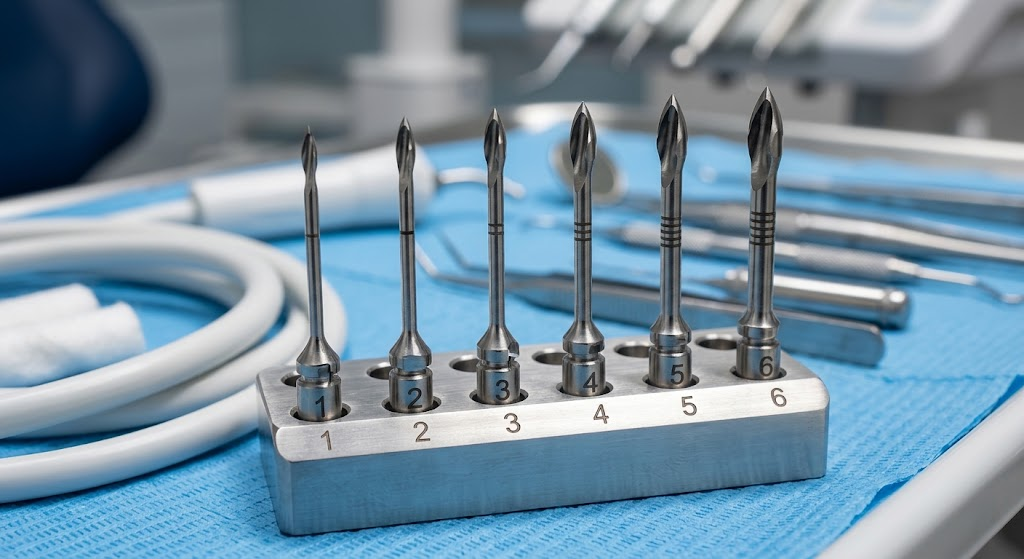
Gates Glidden drills typically work with a compatible low-speed or right-angle latch handpiece. As the cutting head rotates, it removes dentin from the coronal canal.
Rather than pushing the drill apically, clinicians generally use controlled brushing movements. This approach helps direct the cutting action toward the desired coronal area.
For instance, Dentsply Sirona states that its use a blunt tip and brushing motion, while its product range includes multiple lengths for different clinical requirements.
However, operating speed can vary between products. Therefore, always follow the current manufacturer’s instructions for the specific instrument rather than applying one generic speed.
Step-by-Step Gates Glidden Drill Technique
The exact technique depends on the tooth, canal anatomy, and clinical protocol. Nevertheless, the following workflow provides a useful general overview.
1. Assess the canal anatomy
First, evaluate the root shape, canal curvature, dentin thickness, and furcation area. This assessment helps determine how much coronal enlargement the tooth can safely tolerate.
2. Establish endodontic access
Next, create appropriate access and identify the canal orifices. At this stage, preserve sound tooth structure whenever possible.
3. Negotiate the canal
Then, use suitable hand instrumentation to establish an initial pathway before introducing rotary enlargement instruments.
4. Select the appropriate drill
Afterward, choose a Gates Glidden size that matches the canal anatomy and treatment objective.
5. Perform controlled coronal enlargement
Use light, controlled brushing movements rather than forcing the drill deeper into the canal.
6. Irrigate and reassess
Next, continue irrigation according to the overall endodontic protocol. Then reassess the canal before deciding whether additional enlargement is necessary.
7. Inspect the instrument
Finally, inspect the drill for bending, deformation, corrosion, or other visible damage. Remove damaged instruments from clinical use.
Advantages of Gates Glidden Drills
Gates Glidden drills continue to have several practical advantages in endodontics.
Efficient coronal enlargement
First, their cutting design allows clinicians to remove coronal dentin efficiently.
Simple size system
Additionally, the traditional #1–#6 sequence provides a straightforward sizing system.
Improved access
Furthermore, selective coronal enlargement can reduce cervical interferences and improve access for subsequent instruments.
Cost-effective option
They can also provide an economical alternative to some rotary nickel-titanium systems for specific coronal enlargement tasks.
Familiar clinical design
Finally, their long history in endodontics means that many dental professionals already understand their basic design and applications.
Limitations and Safety Considerations
Although Gates Glidden drills offer useful advantages, clinicians should also understand their limitations.
Excessive Dentin Removal
First, aggressive enlargement can remove more dentin than necessary. Consequently, clinicians should select the smallest practical size and avoid unnecessary enlargement.
Research comparing different canal preparation systems has found that they can remove significant amounts of dentin, particularly around vulnerable areas of the root.
Strip Perforation
Moreover, deep instrumentation can create a strip perforation when the clinician removes excessive dentin from a thin root wall.
For example, one study found strip perforations in 7.3% of canals after using a No. 4 during post-space preparation in distal roots of mandibular molars. The researchers also reported that larger drills increased the risk.
Therefore, clinicians should pay particular attention to the danger zone and furcal aspect of roots.
Instrument Fracture
Like other rotary endodontic instruments, they can fracture under mechanical stress. Laboratory research has examined their physical dimensions and torsional properties, including different fracture locations.
For this reason, clinicians should inspect instruments carefully and follow the manufacturer’s reuse recommendations.
Canal Transportation
Finally, aggressive use in curved canals can alter the original canal pathway. Therefore, clinicians should use Gates Glidden drills primarily for controlled coronal enlargement rather than deep instrumentation of curved canals.
Gates Glidden Drills vs Peeso Reamers
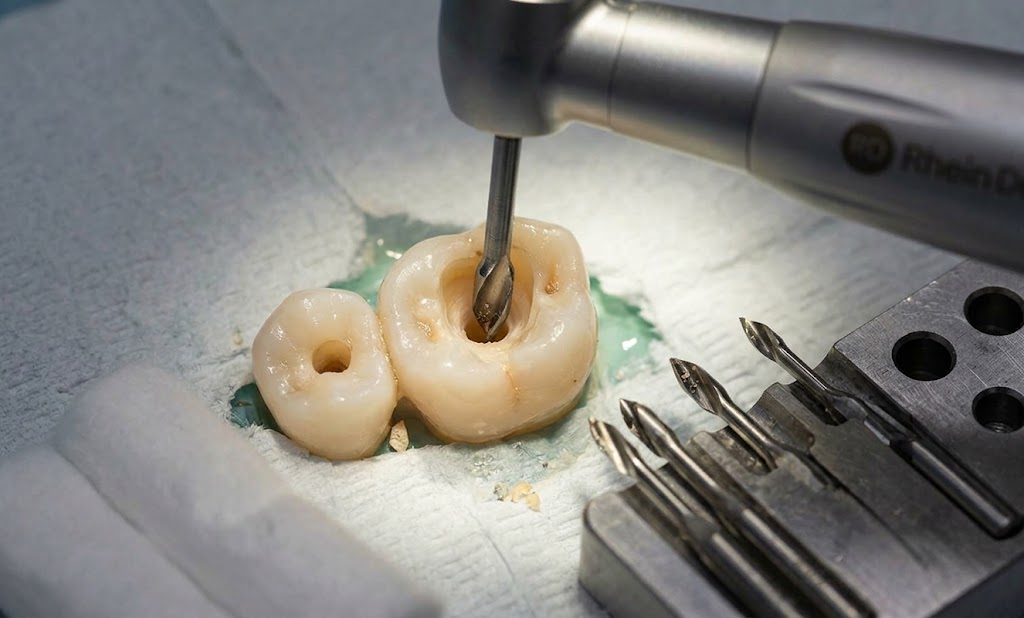
Gates Glidden drills and Peeso reamers are both rotary endodontic instruments. However, their designs and common applications differ.
| Feature | Gates Glidden Drills | Peeso Reamers |
| Main application | Coronal flaring and orifice enlargement | Canal enlargement and selected post-space procedures |
| Cutting design | Flame/football-shaped head | Longer cylindrical cutting section |
| Traditional sizes | #1–#6 | #1–#6 |
| Typical diameter range | Approx. 0.50–1.50 mm | Approx. 0.70–1.70 mm |
| Main consideration | Conservative coronal enlargement | Controlled enlargement and post-space applications |
Therefore, clinicians should choose between them according to the procedure rather than simply selecting the larger or faster instrument.
Gates Glidden Drills vs NiTi Rotary Files
Modern nickel-titanium (NiTi) rotary files have become widely used for root canal shaping because their flexibility helps clinicians manage curved canal anatomy.
Gates Glidden drills, on the other hand, mainly support coronal enlargement and cervical preflaring.
As a result, these instruments can serve different purposes within the same treatment workflow. For example, a clinician may use a Gates Glidden drill for selected coronal enlargement and then use a NiTi system for subsequent canal shaping.
Therefore, the choice should depend on the canal anatomy, treatment protocol, and clinical objective.
Practical Tips for Using Gates Glidden Drills
For safer and more predictable use, keep the following points in mind:
- Preserve dentin: Remove only the dentin required for adequate access.
- Start conservatively: Begin with an appropriate size rather than automatically using a large drill.
- Respect root anatomy: Pay close attention to thin roots and danger zones.
- Avoid excessive apical pressure: Use controlled brushing movements.
- Inspect instruments: Remove bent or damaged instruments from service.
- Follow the IFU: Always follow the manufacturer’s cleaning, sterilization, reuse, and operating instructions.
- Choose the correct length: Select an instrument length appropriate for the clinical application.
Most importantly, remember that effective endodontic instrumentation does not mean maximum dentin removal. Instead, the goal is controlled preparation that supports treatment while preserving sound tooth structure (PubMed , Gates Glidden Drill Research).
Gates Glidden Drills: Pros and Cons
| Advantages | Limitations |
| Efficient coronal enlargement | Can remove excessive dentin |
| Simple #1–#6 sizing | Requires careful technique |
| Helps improve coronal access | May increase perforation risk if misused |
| Economical for selected applications | Less suitable for deep curved-canal instrumentation |
| Familiar endodontic design | Can fracture under excessive stress |
Gates Glidden Drills: Quick Reference
| Question | Quick Answer |
| Main purpose | Coronal root canal enlargement |
| Traditional sizes | #1–#6 |
| Approx. diameter | 0.50–1.50 mm |
| Common material | Stainless steel |
| Main application | Coronal flaring and orifice enlargement |
| Main advantage | Efficient coronal access |
| Main concern | Excessive dentin removal |
| Can they fracture? | Yes |
| Suitable for every canal? | No |
| Can they complement NiTi files? | Yes, in selected techniques |
Choosing Quality Endodontic Instruments
Successful root canal treatment requires more than simply choosing the correct instrument size. Instead, clinicians should consider instrument design, dimensions, material, manufacturing consistency, intended application, and clinical technique.
Furthermore, the instrument should match the anatomy and the treatment objective.
Rhein Dental provides a broad range of dental and endodontic instruments for dental professionals, practices, distributors, and healthcare institutions. When selecting Gates Glidden drills, consider the available sizes, working lengths, material specifications, packaging, intended use, and applicable manufacturer instructions.
Why Choose Rhein Dental?
Rhein Dental focuses on precision dental and surgical instruments designed for professional applications. Its broader portfolio supports dental professionals across multiple clinical categories, including endodontics.
Consequently, dental practices and distributors can explore related instruments within the same product portfolio instead of sourcing every instrument separately.
Explore Gates Glidden Drills from Rhein Dental
Whether you need Gates Glidden drills, endodontic files, Peeso reamers, or other root canal instruments, selecting the right product starts with understanding its clinical purpose and specifications.
Explore Rhein Dental’s endodontic instrument range, request the latest catalogue, or contact the Rhein Dental team for product information and purchasing assistance.
Frequently Asked Questions
What are Gates Glidden drills used for?
Gates Glidden drills are mainly used for coronal flaring, root canal orifice enlargement, cervical dentin removal, and improving straight-line access during endodontic treatment.
What are the sizes of Gates Glidden drills?
The traditional Gates Glidden series contains #1 to #6, with approximate diameters from 0.50 mm to 1.50 mm.
What is a #1 Gates Glidden drill?
A #1 Gates Glidden drill has an approximate cutting diameter of 0.50 mm. It represents one of the smallest sizes in the traditional Gates Glidden sequence.
What is a #6 Gates Glidden drill?
A #6 Gates Glidden drill has an approximate diameter of 1.50 mm, making it the largest size in the traditional #1–#6 sequence.
Are Gates Glidden drills reusable?
Some Gates Glidden drills support reuse, while others may have specific reuse limitations. Therefore, always follow the manufacturer’s current instructions for cleaning, sterilization, inspection, and reuse.
Can Gates Glidden drills fracture?
Yes. Gates Glidden drills can fracture when mechanical stress exceeds the instrument’s limits. Consequently, clinicians should inspect instruments and follow the manufacturer’s recommended use.
Can Gates Glidden drills be used in curved canals?
Clinicians can use them selectively in the coronal portion of curved canals. However, aggressive or deep use can increase the risk of excessive dentin removal, transportation, or perforation.
What is the difference between Gates Glidden and Peeso reamers?
Gates Glidden drills generally feature a flame-shaped cutting head and mainly support coronal flaring. Peeso reamers use a different cutting geometry and commonly support canal enlargement and selected post-space procedures.
Are Gates Glidden drills still used in modern endodontics?
Yes. Although NiTi systems now play a major role in modern canal shaping, Gates Glidden drills can still provide useful coronal enlargement in selected cases.
What speed should Gates Glidden drills use?
The appropriate speed depends on the specific product and manufacturer. Therefore, clinicians should follow the current product-specific IFU instead of relying on a universal speed recommendation.