
Autoclaving NiTi Files: What You Should Know – NiTi File Sterilization
Nickel-titanium (NiTi) files have transformed modern endodontics, offering superior flexibility, shape memory, and cutting efficiency compared to stainless steel instruments. However, as reusable devices that come into direct contact with pulpal tissues, (NiTi File Sterilization) proper sterilization is essential to ensure both patient safety and file performance. Among all sterilization methods, autoclaving remains the gold standard, but there are important considerations every clinician should know before repeatedly autoclaving NiTi files. Let’s explore how to sterilize NiTi files correctly, what precautions to take, and how autoclaving affects their lifespan and efficiency (NiTi File Sterilization).
Why Sterilization of NiTi Files Matters
During root canal treatment, NiTi files come into contact with infected tissue, saliva, and blood. Without thorough sterilization, these instruments can become sources of cross-contamination and infection transmission.
However, NiTi instruments differ from stainless steel—they’re sensitive to heat and cyclic fatigue—so improper sterilization can compromise their mechanical properties and increase the risk of file fracture.
Can NiTi Files Be Autoclaved?
Yes, NiTi files can be safely autoclaved, but with strict adherence to manufacturer recommendations. Autoclaving is an effective method to achieve sterilization because it:
- Kills all microorganisms, including spores,
- Is a validated and standardized process,
- Leaves no toxic residue, and
- Ensures patient safety and regulatory compliance.
That said, autoclaving should be performed correctly to preserve the integrity of the NiTi alloy.
Step-by-Step Guide: How to Autoclave NiTi Files
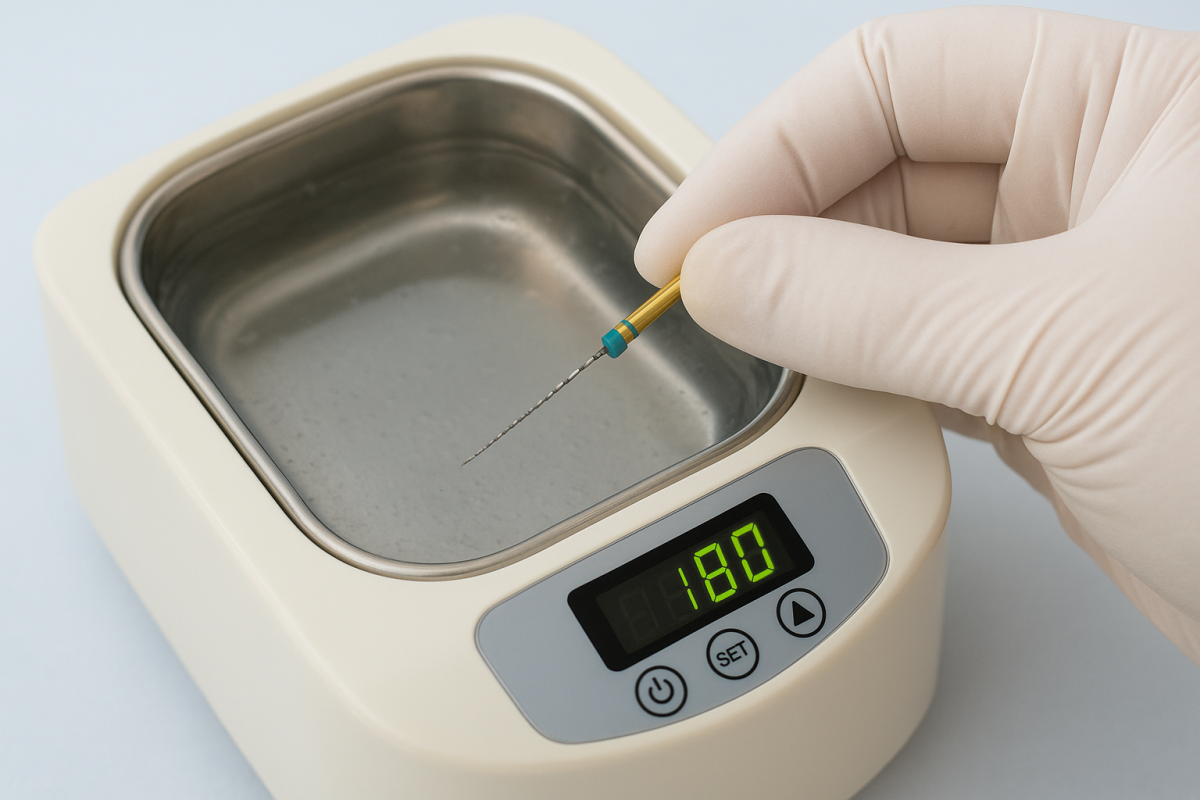
1. Pre-cleaning
Immediately after use, clean files to remove debris and organic material. Use:
- An ultrasonic cleaner with an enzymatic solution, or
- A manual rinse under running water using a soft brush.
💡 Never allow debris to dry on files before cleaning—it increases the risk of corrosion.
2. Drying and Inspection
After cleaning, dry the files completely using lint-free wipes or compressed air.
Inspect under magnification to check for:
- Unwinding or distortion of flutes,
- Cracks, bends, or tip fractures,
- Corrosion or discoloration.
Discard damaged files immediately—autoclaving will not restore compromised instruments.
3. Packaging
Place cleaned files in sterilization pouches or cassettes before autoclaving.
Use pouches with internal and external indicators to verify successful sterilization.
✅ Label the package with the date, cycle number, and operator initials for proper record keeping.
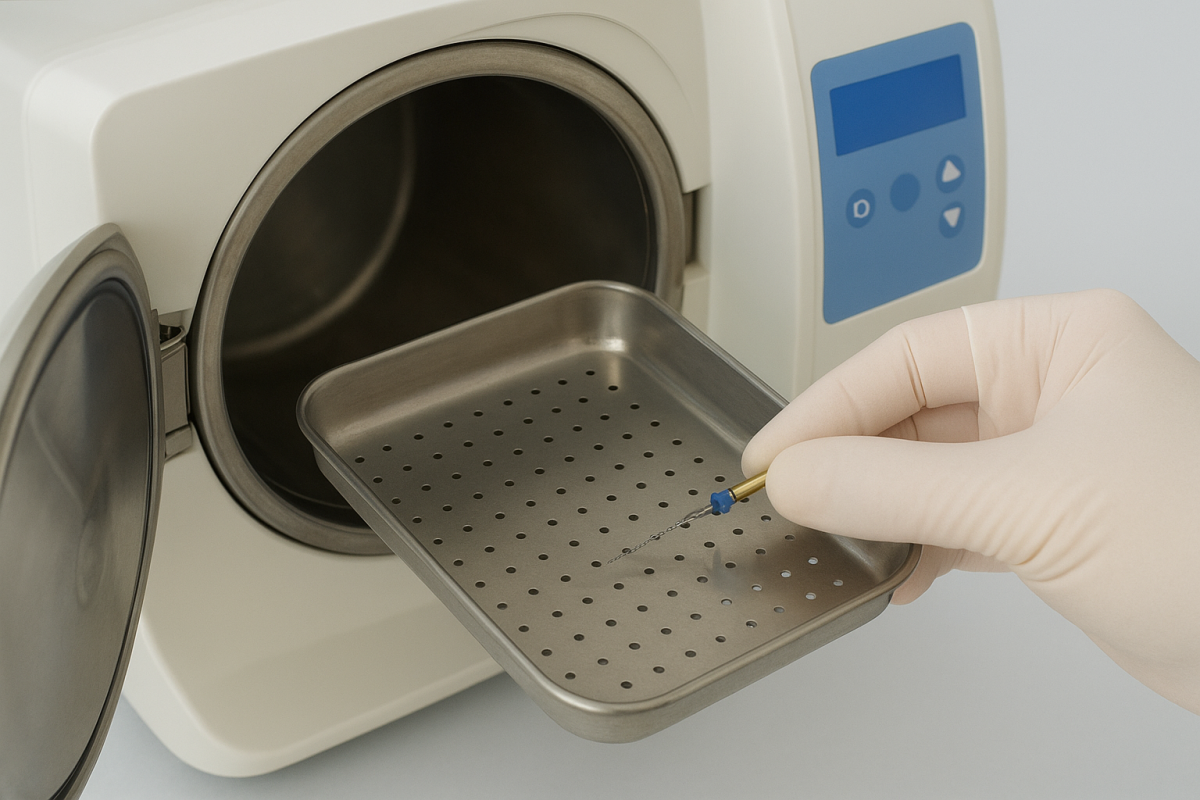
4. Autoclaving Parameters
Follow the recommended autoclave settings:
- Temperature: 121°C (standard cycle) or 134°C (rapid cycle)
- Pressure: 15–30 psi
- Cycle Time: 15–30 minutes (depending on the model and load size)
Allow the autoclave to complete drying before removing the instruments. Premature removal can cause condensation, leading to corrosion or contamination.
5. Storage
Once sterilized, store NiTi files in a clean, dry, and sealed environment.
Keep sterilized packs away from non-sterile areas to maintain their integrity until the next use.
How Autoclaving Affects NiTi Files
While autoclaving ensures sterilization, repeated cycles can affect file properties over time.
Research shows that:
- The shape memory and superelasticity of NiTi can degrade slightly after multiple cycles.
- Cyclic fatigue resistance may decrease, increasing fracture risk.
- Surface oxidation and microstructural changes may occur after several autoclave cycles.
📊 Studies suggest limiting the use of a NiTi file to 3–5 clinical uses (including sterilization cycles) depending on canal anatomy and file type.
Best Practices for NiTi File Sterilization
- Follow manufacturer guidelines for sterilization cycles.
- Avoid chemical sterilants or dry heat, which may damage the NiTi alloy.
- Do not mix used and new instruments during sterilization.
- Maintain sterilization logs for regulatory compliance.
- Replace files regularly to prevent fatigue-related breakage.
Common Mistakes to Avoid
❌ Skipping pre-cleaning before autoclaving
❌ Overloading the autoclave chamber
❌ Using high temperatures beyond manufacturer limits
❌ Reusing visibly distorted or fatigued files
❌ Opening autoclave doors before drying is complete
Conclusion
Proper NiTi file sterilization through autoclaving is essential for safe and predictable endodontic practice.
By following correct cleaning, inspection, and sterilization steps, clinicians can preserve the mechanical integrity of NiTi instruments while ensuring maximum infection control.
Remember: A well-maintained, properly sterilized file is not just a tool—it’s a safeguard for both patient and practitioner.