

A mouth mirror is one of the most frequently used tools in dentistry. It helps with indirect vision, illumination, tissue retraction, and improved access during oral examinations and procedures. However, choosing the right mirror size can make a significant difference in both patient comfort and clinical efficiency.
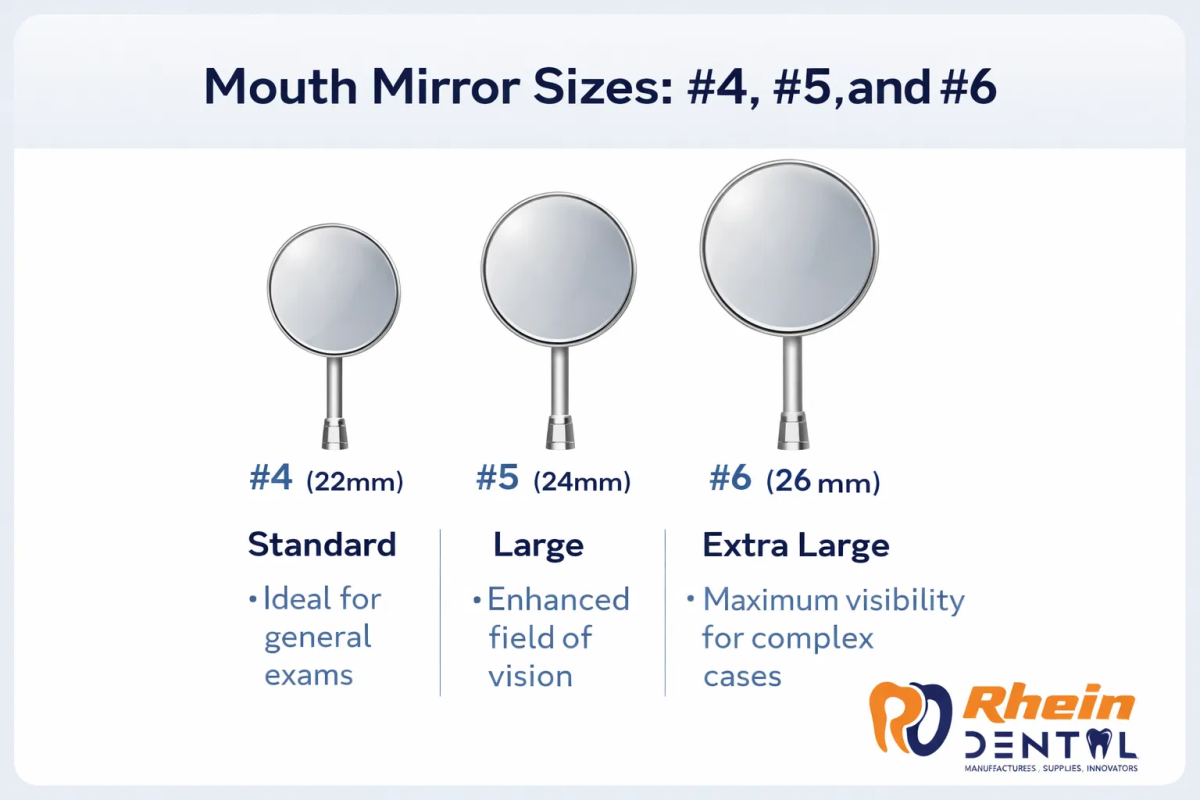
Among the most commonly used sizes are #4, #5, and #6. Each serves a specific purpose depending on the type of examination, patient age, and treatment area.
Why Mouth Mirror Size Matters
The size of a dental mirror affects:
- Field of view
- Ease of access
- Patient comfort
- Visibility in hard-to-reach areas
- Procedure efficiency
Using the correct size allows clinicians to work more accurately while minimizing discomfort for the patient.
Understanding Mouth Mirror Sizes
Mouth mirror sizes refer to the diameter of the mirror head.
#4 Mouth Mirror
- Approximate diameter: 18 mm
- Compact and easy to maneuver
Best for:
- Pediatric patients
- Patients with smaller mouths
- Posterior areas with limited access
- Routine basic exams
Benefits:
- Less bulky and more comfortable
- Easier to insert in tight spaces
- Better for gag-sensitive patients
Considerations:
- Smaller viewing area may require more repositioning
#5 Mouth Mirror
- Approximate diameter: 20 mm
- Most commonly used standard size
Best for:
- General dental examinations
- Hygiene procedures
- Restorative treatments
- Adult routine checkups
Benefits:
- Balanced field of view and maneuverability
- Comfortable for most patients
- Versatile for daily clinical use
Considerations:
- May feel slightly large for very small oral cavities
#6 Mouth Mirror
- Approximate diameter: 22 mm
- Largest commonly used mirror size
Best for:
- Comprehensive oral examinations
- Prosthodontic procedures
- Full-arch assessments
- Cases requiring wider visibility
Benefits:
- Larger reflected image
- Improved visibility and light reflection
- Fewer mirror adjustments needed
Considerations:
- Can feel bulky for some patients
- Less suitable for children or patients with limited opening
How to Choose the Right Mouth Mirror Size
1. Consider Patient Age and Mouth Size
For children or patients with smaller oral cavities, a #4 mirror is usually more suitable. Adults typically tolerate #5 or #6 more comfortably.
2. Assess the Procedure Type
- Quick checkups: #5 works well
- Detailed posterior exams: #4 may offer better access
- Full-mouth evaluations: #6 provides better visibility
3. Think About Patient Comfort
A smaller mirror can reduce discomfort and gag reflex, especially during longer appointments.
4. Factor in Clinician Preference
Some dentists prefer larger mirrors for better visibility, while others prioritize easier maneuverability.
Which Size Is Best for Everyday Practice?
For most dental professionals, the #5 mouth mirror is the best all-around choice. It offers a practical balance between visibility and comfort.
However:
- Keep #4 mirrors available for pediatric and difficult-access cases
- Use #6 mirrors for broader visibility during complex assessments
A well-equipped practice benefits from having all three sizes on hand.
Final Thoughts
Selecting the right mouth mirror size is a small decision that can have a big impact on examination quality and patient experience. While #5 mirrors are the standard for general use, #4 and #6 mirrors each provide valuable advantages in specific situations.
By understanding the strengths of each size, dental professionals can improve accuracy, comfort, and workflow in every procedure.