
Orthodontics demands precision, control, and efficiency at every stage of treatment. Whether placing archwires, adjusting appliances, or performing routine wire manipulation, clinicians rely on specialized orthodontic pliers that provide accuracy while protecting patient comfort.
Among these indispensable instruments, Weingart Pliers remain one of the most frequently used tools in modern orthodontic practice. Designed specifically for gripping, guiding, inserting, and removing orthodontic wires, Weingart orthodontic pliers have become a staple in clinics worldwide.
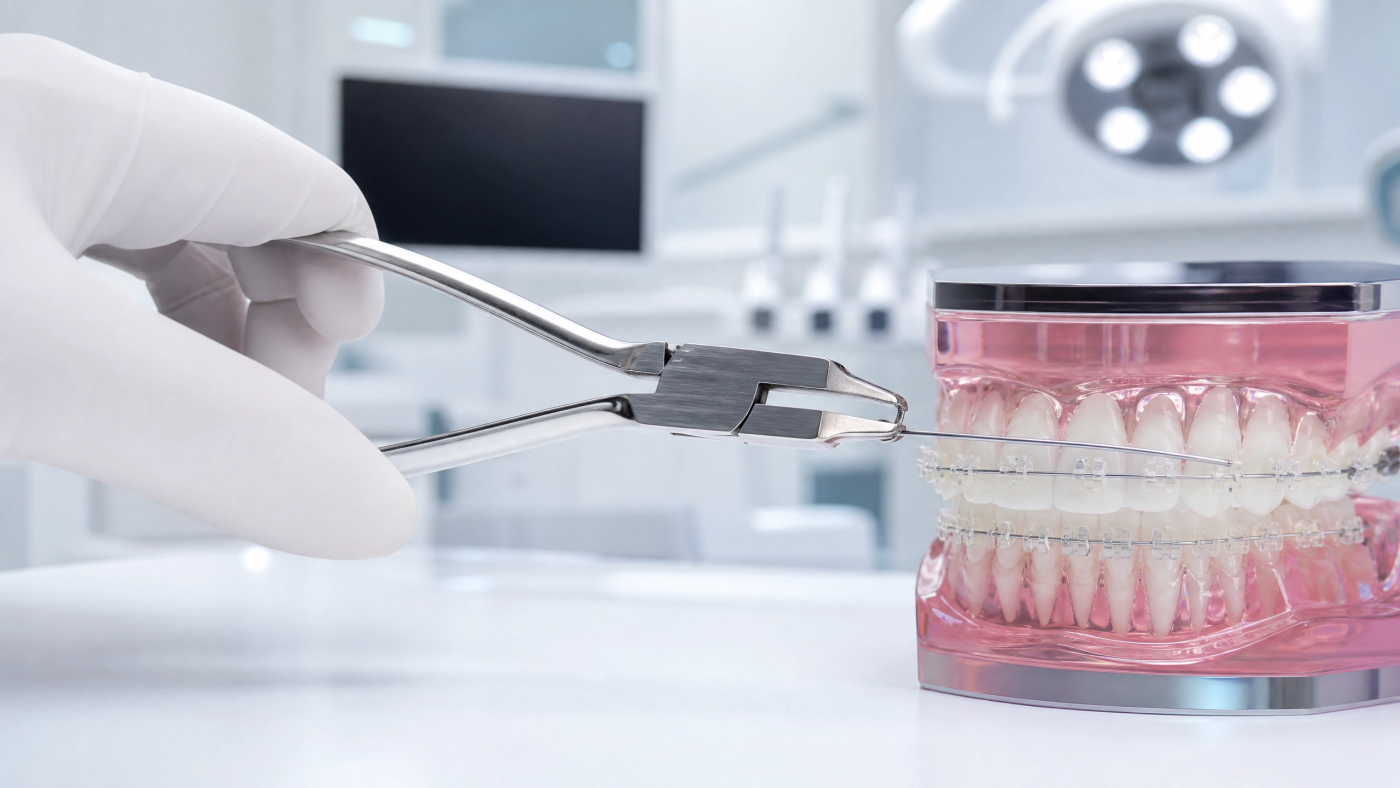
Their slim tapered design, serrated beaks, and secure grip allow orthodontists to work confidently in difficult-to-reach posterior regions without damaging wires or compromising treatment efficiency.
This comprehensive guide explores everything dental professionals need to know about including their design, applications, advantages, maintenance, selection criteria, and why they continue to be an essential instrument in contemporary orthodontics.
What Are Weingart Pliers?
Weingart Pliers are precision orthodontic pliers designed primarily for gripping and manipulating orthodontic archwires during treatment.
Unlike cutting pliers or bending pliers, their main function is secure wire handling rather than altering wire shape.
Their unique design provides exceptional control while minimizing slippage, making them suitable for both flexible nickel titanium (NiTi) wires and rigid stainless steel archwires.
Today, virtually every orthodontic practice includes Weingart pliers as part of its standard instrument kit because of their versatility and reliability.
Design Features of Weingart Orthodontic Pliers
The effectiveness of comes from their carefully engineered construction.
Long Tapered Beaks
The narrow tapered tips allow clinicians to access posterior teeth easily without obstructing visibility.
This makes them especially useful during difficult wire insertions.
Serrated Gripping Surface
The internal surfaces contain fine serrations that firmly hold orthodontic wires without excessive pressure.
This reduces accidental slipping while improving operator control.
Angled Working Ends
Many feature slightly angled beaks that improve access to difficult areas of the oral cavity.
Smooth External Finish
Rounded external edges minimize trauma to cheeks, lips, and gingival tissues during procedures.
Stainless Steel Construction
Premium-quality Weingart orthodontic pliers are manufactured from medical-grade stainless steel, offering:
- Corrosion resistance
- High durability
- Excellent strength
- Autoclavable performance
- Long service life
Main Applications of Weingart Pliers in Modern Orthodontics
The popularity of comes from their versatility.
1. Archwire Insertion
One of their primary uses is guiding archwires into bracket slots.
Clinicians can accurately position wires while maintaining full control.
Benefits include:
- Faster wire placement
- Improved patient comfort
- Reduced wire distortion
2. Archwire Removal
During adjustment appointments, Weingart pliers safely remove archwires without damaging brackets or surrounding tissues.
This procedure becomes significantly easier with a secure gripping instrument.
3. Ligature Wire Placement
Orthodontists frequently use Weingart pliers for handling ligature wires during bracket tying procedures.
Their narrow beaks improve access between crowded teeth.
4. Elastic Chain Positioning
The instrument assists with positioning elastomeric chains and auxiliaries during orthodontic treatment.
5. Appliance Adjustment
Many clinicians use for minor appliance adjustments where secure gripping is required.
6. Posterior Wire Manipulation
Working around molars often presents visibility challenges.
The elongated beaks allow clinicians to manipulate wires comfortably in posterior regions.
7. Holding Orthodontic Components
Besides wires, securely hold:
- Springs
- Hooks
- Attachments
- Small orthodontic components
- Auxiliary appliances
Why Weingart Pliers Are Essential in Orthodontics
Every orthodontic procedure depends on precise instrument. It provide:
- Superior grip
- Better precision
- Reduced wire slippage
- Faster appointments
- Improved ergonomics
- Greater treatment efficiency
- Enhanced patient safety
Their versatility eliminates the need to switch between multiple gripping instruments during routine procedures.
Advantages of Weingart Orthodontic Pliers
Excellent Wire Control
The serrated beaks securely grip orthodontic wires without crushing delicate materials.
Improved Access
Long narrow beaks reach posterior teeth with minimal obstruction.
Enhanced Precision
Clinicians can manipulate even small orthodontic components accurately.
Reduced Chair Time
Efficient wire handling speeds up routine orthodontic appointments.
Comfortable Grip
Modern ergonomic handles reduce hand fatigue during repeated use.
Long-Term Durability
High-quality stainless steel construction withstands repeated sterilization cycles.
Clinical Procedures That Commonly Require Weingart Pliers
Orthodontists frequently use during:
- Initial archwire placement
- Routine wire changes
- Finishing stages
- Retainer adjustments
- Appliance repairs
- Bracket repositioning
- Elastic chain placement
- Ligature adjustments
- Wire retrieval
- Appliance removal
Weingart Pliers vs Other Orthodontic Pliers
| Instrument | Primary Function | Can Grip Wire | Can Cut Wire | Can Bend Wire |
|---|---|---|---|---|
| Weingart Pliers | Wire handling | ✔ Excellent | ✘ | Limited |
| Bird Beak Pliers | Wire bending | ✔ | ✘ | ✔ Excellent |
| Mathieu Pliers | Ligature placement | ✔ | ✘ | ✘ |
| Distal End Cutter | Cutting archwire | Limited | ✔ | ✘ |
| How Plier | General handling | ✔ | ✘ | Limited |
Each orthodontic plier serves a unique purpose, but Weingart pliers remain the preferred instrument for routine wire insertion and removal.
Materials Compatible with Weingart Pliers
Modern Weingart pliers can safely handle:
- Stainless steel wires
- Nickel Titanium (NiTi) wires
- Beta Titanium wires
- Copper NiTi wires
- Ligature wires
- Auxiliary wires
- Retainer wires
Choosing High-Quality Weingart Pliers
Not all orthodontic pliers perform equally.
When purchasing Weingart orthodontic pliers, consider:
Material Quality
Choose surgical-grade stainless steel for maximum durability.
Precision Manufacturing
Accurate tip alignment improves gripping performance.
Comfortable Handles
Ergonomic handles reduce clinician fatigue during prolonged procedures.
Smooth Joint Action
The hinge should move smoothly without excessive looseness.
Fine Serrations
Well-machined serrations improve grip while protecting wire integrity.
Corrosion Resistance
Premium instruments resist staining, rust, and repeated sterilization.
Cleaning and Sterilization
Proper maintenance extends instrument lifespan.
Step 1
Rinse immediately after clinical use.
Step 2
Use enzymatic cleaning solution to remove debris.
Step 3
Ultrasonically clean if necessary.
Step 4
Dry thoroughly.
Step 5
Inspect serrations and hinge.
Step 6
Lubricate instrument joints periodically.
Step 7
Sterilize using a validated autoclave cycle.
Regular maintenance ensures optimal gripping performance and reduces wear.
Common Mistakes to Avoid
To maximize the lifespan of :
- Avoid using them for wire cutting.
- Do not twist excessively on thick wires.
- Never use damaged instruments.
- Avoid dropping the pliers.
- Lubricate the hinge regularly.
- Inspect tip alignment after sterilization.
Why Dental Professionals Prefer Weingart Pliers
Orthodontists appreciate because they combine:
- Reliability
- Versatility
- Precision
- Durability
- Comfortable handling
- Excellent posterior access
- Minimal wire slippage
These characteristics make them one of the most frequently used orthodontic hand instruments in everyday clinical practice.
Conclusion
They have earned their place as one of the most essential orthodontic pliers in modern dental practice. Their ability to securely grip and manipulate orthodontic wires with exceptional precision makes them indispensable for procedures ranging from routine archwire changes to complex appliance adjustments. Designed with tapered serrated beaks, ergonomic handles, and durable stainless steel construction, they help clinicians improve efficiency while enhancing patient comfort.
Investing in high-quality Weingart orthodontic pliers ensures consistent clinical performance, long-term durability, and reliable results throughout every stage of orthodontic treatment. Whether you are an orthodontist, general dentist, dental institution, or practice manager, choosing precision-engineered orthodontic instruments contributes to safer procedures and more predictable treatment outcomes.
Frequently Asked Questions (FAQs)
What are Weingart pliers used for?
They are primarily used for gripping, inserting, removing, and manipulating orthodontic archwires and other small orthodontic components during treatment.
Can Weingart pliers cut orthodontic wires?
No. They are gripping pliers, not cutting instruments. For cutting wires, clinicians should use distal end cutters or hard wire cutters.
Are Weingart pliers suitable for NiTi wires?
Yes. They securely hold nickel titanium (NiTi), stainless steel, beta titanium, and other orthodontic wires without causing significant deformation when used correctly.
Why are the beaks serrated?
The serrated inner surfaces improve grip and reduce wire slippage, allowing precise control during insertion and removal.
How long do high-quality Weingart pliers last?
With proper cleaning, lubrication, and sterilization, premium stainless steel Weingart pliers can provide many years of dependable clinical use.