
Whether you’re an orthodontist, dental surgeon, oral surgeon, veterinary professional, or dental student, learning how to use Mathieu needle holders correctly is essential for achieving precise suturing, efficient ligature placement, and improved clinical outcomes (Mathieu Needle Holders).
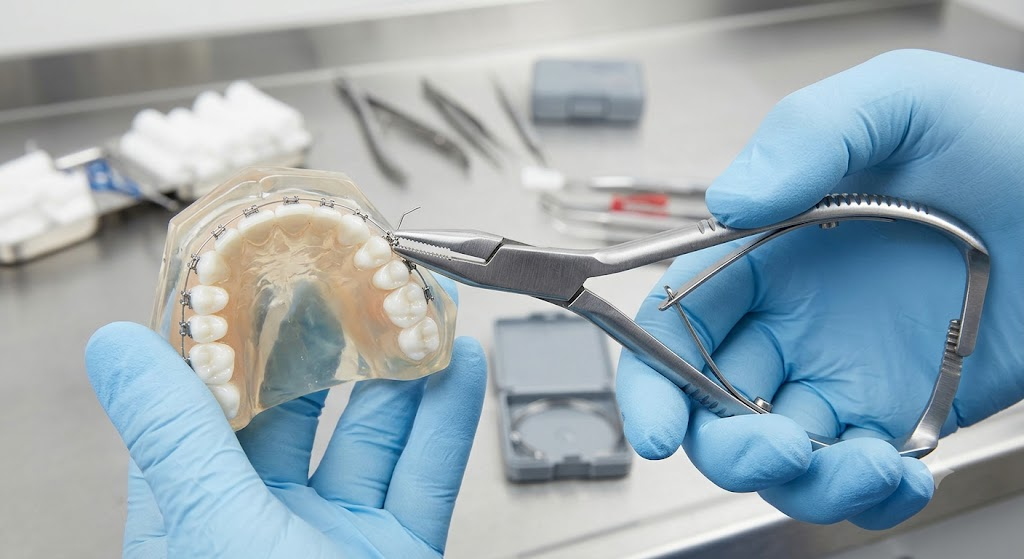
Mathieu orthodontic pliers, commonly known as Mathieu needle holders, are among the most versatile instruments found in orthodontic and surgical practices. Their unique spring-loaded design allows clinicians to maintain excellent control while reducing hand fatigue during repetitive procedures.
This comprehensive guide explains everything you need to know about Mathieu needle holders, including their anatomy, uses, operating techniques, common mistakes, maintenance, and how to choose the right instrument.
What Are Mathieu Needle Holders?
Mathieu needle holders are precision surgical instruments specifically designed to securely grasp and control suture needles during suturing procedures. In orthodontics, they are also widely used for placing and securing elastic ligatures.
Unlike conventional needle holders that use finger rings, Mathieu needle holders feature:
- Spring-loaded handles
- Palm grip design
- Ratchet locking mechanism
- Fine serrated jaws
- Excellent tactile control
These features make them particularly useful for repetitive procedures where speed and accuracy are essential.
Primary Uses of Mathieu Orthodontic Pliers
Mathieu orthodontic pliers are commonly used for:
- Holding suture needles
- Placing elastic ligatures
- Removing ligatures
- Securing orthodontic elastics
- Minor oral surgery
- Periodontal procedures
- Implant surgeries
- Veterinary surgery
- General surgical suturing
Their versatility makes them an essential instrument in many clinical environments.
Why Professionals Prefer Mathieu Needle Holders
Modern clinicians choose Mathieu needle holders because they offer several practical advantages.
Better Ergonomics
The spring mechanism reduces continuous squeezing, decreasing hand fatigue during lengthy procedures.
Improved Precision
Fine serrated jaws securely hold delicate needles without slipping.
Faster Workflow
The palm-operated locking mechanism enables rapid opening and closing.
Excellent Visibility
The compact design improves visibility within confined treatment areas.
Reduced Tissue Trauma
Secure needle control minimizes accidental tissue damage.
Parts of a Mathieu Needle Holder
Understanding each component helps improve handling.
Jaws
The finely serrated jaws grip the needle firmly.
Ratchet Lock
Locks the instrument securely around the needle.
Spring Handles
Automatically reopen after pressure is released.
Pivot Joint
Allows smooth instrument movement.
Tips
Available in straight or curved configurations depending on clinical requirements.
Step-by-Step: How to Use Mathieu Needle Holders
Proper technique improves precision and extends instrument life.
Step 1: Select the Appropriate Needle
Choose a suture needle suitable for the procedure.
The needle should match:
- Tissue thickness
- Suture size
- Surgical location
Step 2: Hold the Instrument Correctly
Unlike ring-handled needle holders, Mathieu needle holders are held in the palm.
Position:
- Thumb on one handle
- Index and middle fingers supporting control
- Palm applying gentle pressure
Avoid excessive gripping force.
Step 3: Lock the Needle
Place the needle approximately one-third of the distance from the swaged end.
Close the handles until the ratchet locks.
The needle should remain stable without excessive pressure.
Step 4: Drive the Needle Through Tissue
Rotate the wrist rather than pushing directly.
This follows the natural curve of the needle and reduces tissue trauma.
Avoid forcing the needle.
Step 5: Unlock the Instrument
Compress the handles slightly to release the ratchet.
The spring automatically opens the instrument.
Remove the needle smoothly.
Step 6: Repeat as Needed
Continue each suture using consistent wrist motion and controlled pressure.
How to Use Mathieu Orthodontic Pliers for Ligature Placement
In orthodontics, Mathieu pliers are commonly used for elastic ligatures.
Procedure
- Pick up the elastic ligature.
- Stretch it using the plier tips.
- Position around the orthodontic bracket.
- Release carefully.
- Confirm secure placement.
This technique improves efficiency during bracket engagement.
Best Grip Technique
Professionals recommend:
- Relaxed wrist
- Controlled finger pressure
- Minimal squeezing
- Smooth rotational movements
- Stable hand support
Good ergonomics improve both speed and accuracy.
Common Mistakes to Avoid
Many beginners develop habits that reduce efficiency.
Gripping Too Tightly
Excessive force may damage needles and increase fatigue.
Locking Too Firmly
Over-tightening can deform delicate surgical needles.
Incorrect Needle Position
Holding the needle too close to the tip reduces control.
Twisting the Instrument
Always rotate the wrist instead of bending the needle.
Using Damaged Instruments
Worn jaws reduce grip and increase slipping.
Applications Across Dental and Surgical Specialties
Orthodontics
- Elastic ligature placement
- Wire handling
- Appliance adjustment
Oral Surgery
- Surgical wound closure
- Flap suturing
- Tooth extraction closure
Periodontics
- Soft tissue grafting
- Gingival surgery
Implant Dentistry
- Implant site closure
- Membrane stabilization
Veterinary Medicine
- Small animal surgery
- Soft tissue closure
Choosing the Right Mathieu Needle Holder
Several factors influence instrument selection.
Length
Common sizes include:
- 14 cm
- 17 cm
- 18 cm
Longer instruments improve access to posterior regions.
Jaw Type
Options include:
- Straight
- Curved
- Tungsten carbide inserts
Material
High-quality instruments are manufactured from:
- German stainless steel
- Surgical stainless steel
- Tungsten carbide jaw inserts
These materials improve durability and corrosion resistance.
Mathieu Needle Holders vs Mayo-Hegar Needle Holders
| Feature | Mathieu Needle Holder | Mayo-Hegar Needle Holder |
|---|---|---|
| Handle Design | Spring-loaded | Ring handles |
| Operation | Palm grip | Finger grip |
| Speed | Faster | Moderate |
| Hand Fatigue | Lower | Higher |
| Orthodontics | Excellent | Limited |
| Ligature Placement | Excellent | Not ideal |
| Fine Precision | High | High |
Mathieu needle holders are generally preferred for orthodontic applications due to their ergonomic spring mechanism.
Cleaning and Sterilization
Proper maintenance extends instrument lifespan.
After Every Procedure
- Rinse immediately
- Remove debris
- Brush hinges carefully
Ultrasonic Cleaning
Recommended for removing microscopic contaminants.
Lubrication
Use surgical instrument lubricant on joints regularly.
Sterilization
Autoclave according to manufacturer guidelines.
Storage
Store dry in protective instrument trays.
Instrument Inspection Checklist
Before every procedure inspect:
- Jaw alignment
- Ratchet engagement
- Spring tension
- Tip integrity
- Surface corrosion
- Joint movement
Replace damaged instruments immediately.
Tips for Longer Instrument Life
- Avoid dropping instruments.
- Never use as wire cutters.
- Lubricate joints routinely.
- Clean immediately after surgery.
- Store in protective cassettes.
- Use only for intended procedures.
Why High-Quality Mathieu Orthodontic Pliers Matter
Premium instruments provide:
- Superior needle control
- Reduced clinician fatigue
- Better surgical precision
- Longer service life
- Reliable locking mechanisms
- Improved patient safety
Investing in well-manufactured Mathieu needle holders supports consistent clinical performance and long-term value.
Conclusion
Understanding how to use Mathieu needle holders is an essential skill for orthodontists, dentists, oral surgeons, periodontists, and veterinary professionals. Their ergonomic spring-loaded design, secure locking mechanism, and precise grip make them indispensable for suturing and orthodontic ligature placement.
By using proper handling techniques, selecting the right instrument, and following recommended cleaning and maintenance practices, clinicians can improve efficiency, reduce hand fatigue, and achieve more predictable clinical outcomes.
Frequently Asked Questions:
They are primarily used for holding suture needles during surgical procedures and placing elastic ligatures during orthodontic treatment.
Their spring-loaded design reduces hand fatigue while improving precision and speed.
Yes. With proper training and practice, they are easy to master and provide excellent control.
The instrument is held in the palm using thumb pressure while the fingers guide precision movements.
High-quality surgical stainless steel with tungsten carbide inserts offers superior durability and gripping performance.
Inspect them before every clinical procedure to ensure proper alignment, locking, and jaw integrity.