
Modern orthodontics depends on precision, control, and consistency. Every bracket placement, wire adjustment, ligation procedure, and diagnostic examination requires instruments that allow clinicians to work accurately while maintaining comfort during long procedures.
For decades, dental instruments were designed primarily around functionality. However, as research into occupational health and biomechanics has advanced, manufacturers have recognized another critical factor: ergonomics.
Ergonomic orthodontic tools are designed around the natural movement, grip strength, and working posture of dental professionals. These instruments help reduce hand fatigue, improve procedural accuracy, and support long-term clinician health.
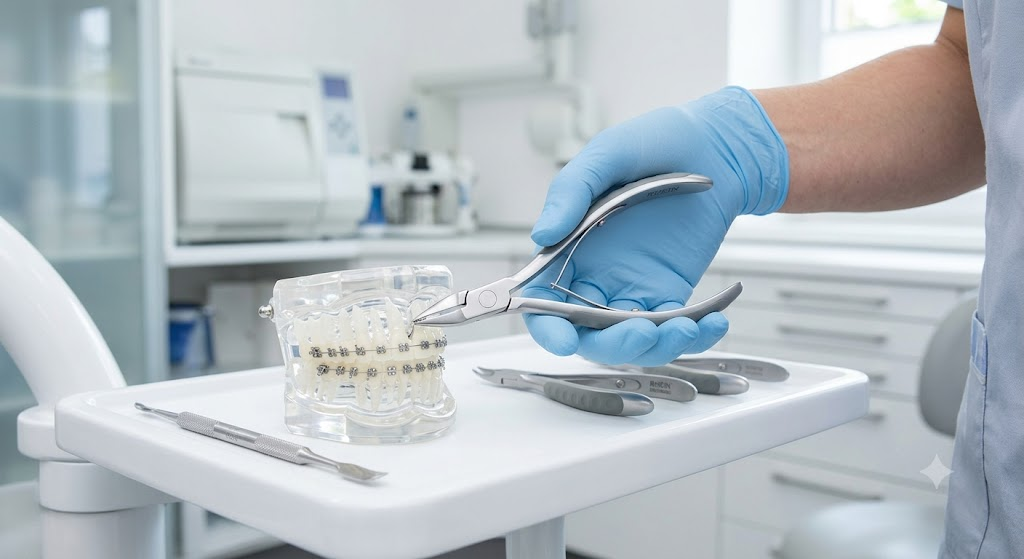
Today, ergonomic design has become a defining feature of high-quality orthodontic instruments, influencing everything from handle shape and weight distribution to grip texture and material selection.
What Are Ergonomic Orthodontic Tools?
Ergonomic orthodontic tools are dental instruments specifically designed to reduce physical stress on orthodontists and dental professionals while improving handling efficiency.
Unlike traditional instruments, ergonomic tools consider:
- Natural hand anatomy
- Finger positioning
- Wrist movement
- Required grip pressure
- Procedure duration
- Instrument balance and weight
- Repetitive motion risks
Examples of ergonomic orthodontic instruments include:
- Ergonomic orthodontic pliers
- Lightweight bracket placement tools
- Comfortable wire cutters
- Precision orthodontic tweezers
- Improved handle dental scalers
- Ergonomic dental explorers
- Hand instruments with anti-slip grips
The goal is simple: allow clinicians to perform delicate orthodontic procedures with greater control and less physical strain.
Why Ergonomics Matters in Orthodontic Instrument Design
Orthodontists often perform procedures that require small, repetitive hand movements. During a typical clinical day, professionals may spend several hours holding instruments in fixed positions while applying controlled pressure.
Poorly designed instruments can contribute to:
- Hand fatigue
- Wrist discomfort
- Reduced grip control
- Muscle strain
- Repetitive stress injuries
According to occupational health research in dentistry, musculoskeletal problems are common among dental professionals because of prolonged static postures and repetitive hand movements.
Ergonomic orthodontic tools address these challenges by creating instruments that work naturally with the clinician’s body rather than forcing unnatural movements.
Key Features of Ergonomic Orthodontic Tools
1. Optimized Handle Design
The handle is one of the most important elements in orthodontic instrument ergonomics.
Traditional narrow handles may require excessive gripping force, increasing pressure on fingers and hand muscles.
Modern ergonomic dental instruments often feature:
- Wider handles
- Rounded edges
- Improved finger positioning
- Comfortable grip surfaces
- Reduced pressure points
A well-designed handle allows orthodontists to maintain control without unnecessary force.
2. Lightweight Construction for Reduced Hand Fatigue
Instrument weight plays a major role in clinical comfort.
Heavy orthodontic tools increase muscle workload, especially during procedures requiring extended precision.
Modern manufacturers use advanced materials such as:
- Medical-grade stainless steel
- Lightweight alloys
- Precision-engineered components
Balanced weight distribution helps clinicians maintain stability while reducing wrist strain.
3. Improved Grip Control and Stability
Orthodontic procedures require extremely accurate movements.
Whether placing brackets, adjusting archwires, or removing excess adhesive, even small movements matter.
Ergonomic tools often include:
- Textured grip surfaces
- Anti-slip finishes
- Finger grooves
- Balanced jaw mechanisms
These features improve instrument control and reduce accidental movement.
4. Reduced Force Requirements
A major goal of ergonomic orthodontic tool design is minimizing the amount of force required during use.
For example:
- Self-opening pliers reduce finger effort
- Precision spring mechanisms improve movement efficiency
- Smooth hinge systems reduce resistance
Lower force requirements allow orthodontists to work comfortably for longer periods.
How Ergonomic Orthodontic Tools Improve Clinical Performance
Greater Precision During Procedures
Orthodontics requires exceptional accuracy.
Ergonomic instruments provide:
- Better fingertip control
- Increased stability
- Improved visibility
- More predictable movements
This helps clinicians perform procedures such as:
- Bracket placement
- Wire bending
- Ligature adjustment
- Appliance modification
with greater confidence.
Increased Treatment Efficiency
When instruments are comfortable and easy to control, orthodontists can complete procedures more efficiently.
Benefits include:
- Faster instrument handling
- Reduced repositioning
- Better workflow organization
- Improved clinical productivity
For busy orthodontic practices, small improvements in efficiency can significantly impact daily operations.
Lower Risk of Occupational Injuries
Dental professionals commonly experience:
- Neck discomfort
- Shoulder tension
- Wrist problems
- Hand fatigue
Poor instrument ergonomics can contribute to these conditions.
Ergonomic orthodontic tools support healthier working habits by reducing unnecessary physical stress.
Ergonomics and Repetitive Strain Injury Prevention in Dentistry
Repetitive strain injuries (RSI) occur when muscles, tendons, and nerves are repeatedly stressed without adequate recovery.
Dental professionals are particularly vulnerable because they frequently perform:
- Repeated gripping motions
- Fine motor movements
- Static hand positions
- Precision procedures
Ergonomic dental instruments help reduce RSI risk through:
- Comfortable grips
- Balanced designs
- Reduced activation force
- Improved hand positioning
Choosing ergonomic tools is not only about comfort; it is also a long-term investment in clinician health.
Traditional vs Ergonomic Orthodontic Tools
| Feature | Traditional Orthodontic Tools | Ergonomic Orthodontic Tools |
|---|---|---|
| Handle Design | Narrow standard grips | Anatomically designed grips |
| Weight | May cause fatigue | Lightweight balanced construction |
| Control | Requires more hand pressure | Improved precision control |
| Comfort | Less comfortable during long procedures | Designed for extended use |
| Injury Risk | Higher repetitive strain potential | Helps reduce hand stress |
Materials Used in Ergonomic Orthodontic Instrument Manufacturing
High-quality ergonomic orthodontic instruments depend on advanced manufacturing techniques and carefully selected materials.
Common materials include:
Medical-Grade Stainless Steel
Advantages:
- Corrosion resistance
- High durability
- Easy sterilization
- Long service life
Titanium Components
Some premium instruments use titanium because it offers:
- Lower weight
- Excellent strength
- High corrosion resistance
Advanced Surface Finishes
Modern finishing techniques improve:
- Grip comfort
- Instrument appearance
- Cleaning performance
- Resistance to wear
How Manufacturers Design Ergonomic Orthodontic Instruments
Developing ergonomic dental instruments involves multiple stages:
1. Understanding Clinician Requirements
Manufacturers study:
- Common hand movements
- Procedure requirements
- User feedback
- Clinical challenges
2. Creating Balanced Designs
Engineers evaluate:
- Weight distribution
- Handle dimensions
- Mechanical performance
- User comfort
3. Testing Instrument Performance
Quality testing evaluates:
- Grip stability
- Durability
- Precision
- Sterilization resistance
This ensures instruments meet professional clinical standards.
Choosing the Right Ergonomic Orthodontic Tools for Your Practice
When selecting orthodontic instruments, dentists should consider:
Comfort During Long Procedures
Choose tools that reduce hand pressure and fatigue.
Instrument Balance
A well-balanced instrument improves control and accuracy.
Grip Design
Look for handles that support natural finger positioning.
Manufacturing Quality
Select instruments made from high-quality materials with reliable craftsmanship.
Sterilization Compatibility
Ensure instruments can withstand repeated cleaning and sterilization cycles.
Future Trends in Ergonomic Dental Instrument Design
The future of orthodontic tool design is moving toward smarter, more personalized solutions.
Emerging trends include:
Digital Ergonomic Analysis
Manufacturers are increasingly using digital modeling to analyze:
- Hand movements
- Grip patterns
- Instrument interaction
Customized Instruments
Future instruments may be designed according to individual clinician preferences.
Lightweight Advanced Materials
New materials will continue improving:
- Strength
- Comfort
- Durability
Smart Dental Instruments
Technology may introduce instruments capable of tracking:
- Usage patterns
- Applied pressure
- Clinical performance
Why Ergonomic Orthodontic Tools Are Important for Modern Dental Practices
Ergonomics is no longer an optional feature in dental instrument design. It has become a critical factor influencing clinician comfort, efficiency, and long-term performance.
The right ergonomic orthodontic tools allow professionals to:
- Work with greater precision
- Reduce hand fatigue
- Improve workflow efficiency
- Protect their physical health
- Deliver better patient care
As orthodontic procedures continue becoming more advanced, instrument design must evolve alongside clinical needs.
Investing in ergonomic dental instruments represents an investment in both practitioner wellbeing and superior treatment outcomes.
Conclusion
The role of ergonomics in tool design has transformed modern orthodontic instruments. Today’s ergonomic orthodontic tools are created not only to perform technical functions but also to support the health, comfort, and efficiency of dental professionals.
From improved handles and lightweight materials to precision-focused engineering, ergonomic design helps orthodontists achieve better control while reducing physical stress.
For dental practices looking to improve productivity and clinician comfort, choosing high-quality ergonomic orthodontic instruments is a smart step toward a more efficient and sustainable future.
Frequently Asked Questions:
Ergonomic orthodontic tools are dental instruments designed to improve comfort, reduce hand strain, and provide better control during orthodontic procedures.
Ergonomic dental instruments help reduce fatigue, improve precision, and minimize the risk of repetitive strain injuries among dental professionals.
Yes. Ergonomic instruments are designed around human hand mechanics, providing improved comfort, control, and efficiency compared with many traditional designs.
Important features include lightweight construction, balanced weight distribution, comfortable handles, anti-slip grips, and smooth mechanical operation.
By improving grip stability and reducing hand fatigue, ergonomic tools allow orthodontists to perform delicate procedures with greater precision.