
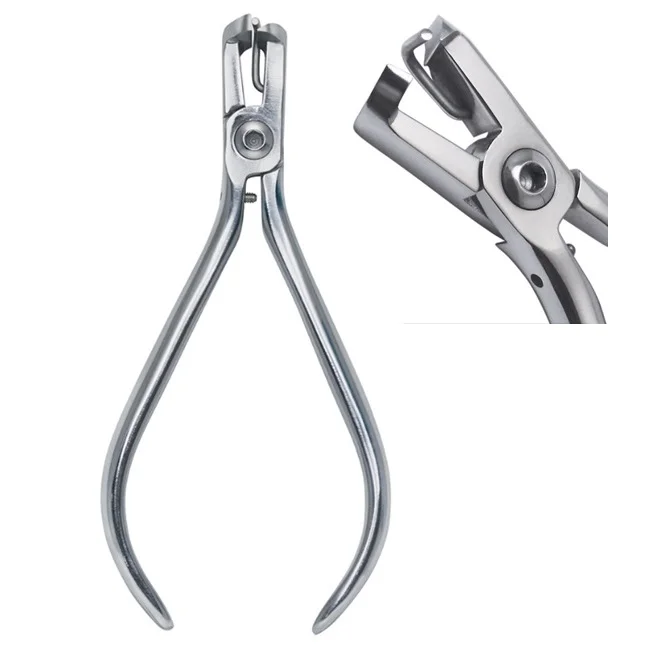
In orthodontics, precision is everything—especially when working in the confined, hard-to-reach posterior regions of the mouth. One instrument that plays a critical role in both efficiency and patient safety is the distal end cutter. Designed specifically for trimming archwires at the distal end of molar tubes, this tool has evolved significantly, with angled head designs becoming the gold standard for modern clinical practice.
What Are Distal End Cutters?
Distal end cutters are specialized orthodontic pliers used to cut excess archwire extending beyond the last bracket or molar tube. Unlike standard wire cutters, these instruments are engineered with a safety hold feature, which securely grips the cut wire segment to prevent it from falling into the patient’s oral cavity—a crucial aspect of safe clinical procedures.
The Challenge of Posterior Wire Cutting
Cutting wires in posterior regions presents unique challenges:
- Limited visibility and access
- Risk of soft tissue injury
- Patient discomfort due to awkward instrument positioning
- Potential for wire fragments to dislodge and be swallowed or aspirated
This is where angled head distal end cutters offer a clear advantage.
Why Angled Heads Matter
1. Improved Access to Posterior Areas
Angled heads—commonly available in 15°, 30°, or even 45° configurations—allow clinicians to reach distal molar क्षेत्रों without excessive hand manipulation. This reduces strain on both the practitioner and the patient.
2. Enhanced Visibility
By adjusting the angle of approach, clinicians can maintain a better line of sight while cutting, ensuring more accurate wire trimming and reducing the risk of leaving sharp edges.
3. Safer Soft Tissue Management
The angled design minimizes the need to stretch the patient’s cheeks or retract soft tissues aggressively. This lowers the chances of ಗಾಯ or post-operative soreness.
4. Efficient Cutting with Controlled Force
High-quality distal end cutters with angled heads are designed to deliver optimal القوة at the cutting եզ, ensuring clean cuts even on stainless steel or nickel-titanium wires.
Key Features to Look For
When selecting distal end cutters for posterior wire trimming, consider the following features:
- Angled Head Design: Choose the angle based on your clinical preference and access needs.
- Safety Hold Mechanism: Ensures the cut wire is retained securely.
- Tungsten Carbide Inserts: Provide superior cutting القوة and durability.
- Slim Beak Profile: Facilitates access in tight posterior spaces.
- Ergonomic Handles: Reduce hand fatigue during repetitive procedures.
Clinical Tips for Safe Use
- Always ensure the cutter is fully seated on the wire before applying pressure.
- Use steady, controlled force to avoid wire deformation.
- Inspect the safety hold mechanism regularly for wear or ضعف.
- Sterilize instruments according to standard infection control protocols.
Conclusion
Angled head distal end cutters are more than just a design variation—they are a clinical necessity for safe, efficient orthodontic wire trimming in posterior regions. By improving access, visibility, and control, these instruments help clinicians deliver better outcomes while enhancing patient comfort and safety.
Investing in high-quality angled distal end cutters is a smart choice for any orthodontic practice aiming to optimize performance and uphold the highest standards of care.