
How to Prevent Corrosion on Stainless Steel Dental Instruments
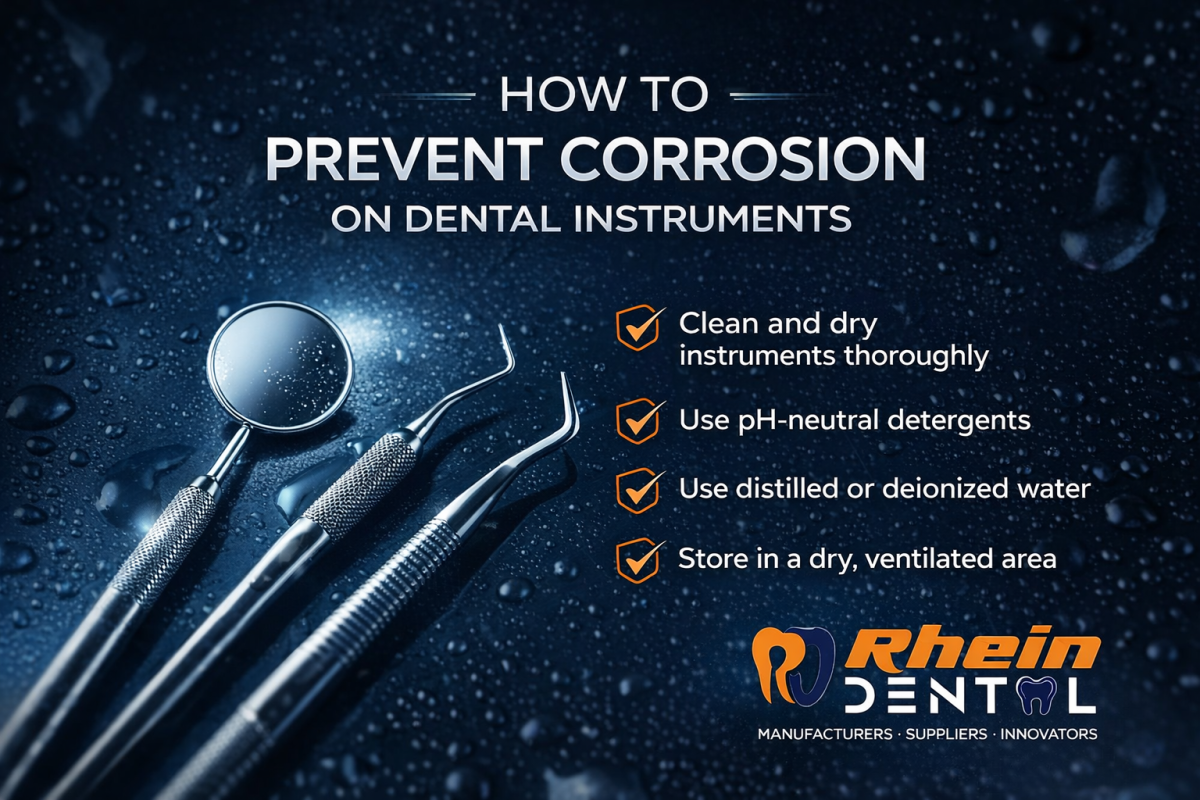
Stainless steel dental instruments are designed for durability, precision, and repeated sterilization. However, despite their corrosion-resistant properties, improper handling, cleaning, or storage can lead to rust, pitting, and surface damage. Corrosion not only shortens instrument life but can also compromise infection control and clinical performance.
This guide explains why corrosion occurs and outlines practical steps to prevent it, helping dental practices protect their investment and maintain high clinical standards.
Why Stainless Steel Instruments Corrode
Stainless steel resists corrosion due to a thin protective chromium oxide layer on its surface. When this passive layer is damaged, corrosion can occur. Common causes include:
- Prolonged exposure to moisture
- Improper cleaning agents or detergents
- High mineral content in water
- Incomplete drying after washing or sterilization
- Contact with dissimilar metals
- Excessive heat or incorrect autoclave cycles
Understanding these factors is the first step toward effective corrosion prevention.
Proper Cleaning Practices
Clean Immediately After Use
Blood, saliva, and chemical residues left on instruments can attack the steel surface. Rinse instruments promptly after procedures to prevent debris from drying and becoming corrosive.
Use pH-Neutral Detergents
Avoid acidic or alkaline cleaners, chlorine-based solutions, and bleach. Always use enzymatic or pH-neutral detergents specifically approved for dental instruments.
Avoid Abrasive Scrubbing
Steel wool and hard brushes can scratch the surface and damage the protective layer. Use soft brushes or ultrasonic cleaners instead.
Importance of Thorough Drying
Moisture is a major contributor to corrosion. After cleaning and sterilization:
- Dry instruments completely before storage
- Use lint-free cloths or medical-grade air drying
- Never leave instruments wet inside trays or pouches
Even stainless steel can rust when moisture is trapped over time.
Best Sterilization Practices
Follow Correct Autoclave Settings
Excessive temperature, prolonged cycles, or improper loading can damage instruments. Always follow manufacturer-recommended sterilization parameters.
Do Not Overload Trays
Crowded trays prevent proper steam circulation and drying, increasing the risk of corrosion.
Use Distilled or Deionized Water
Hard water minerals can cause staining and corrosion. Using treated water in autoclaves reduces mineral deposits on instruments.
Proper Storage Techniques
- Store instruments in a dry, well-ventilated area
- Avoid sealed containers that trap moisture
- Use instrument cassettes or trays designed for airflow
- Ensure instruments are completely cool before storage
Correct storage prevents condensation and long-term moisture exposure.
Avoid Mixing Metals
Contact between stainless steel instruments and other metals (such as carbon steel or aluminum) during cleaning or sterilization can cause galvanic corrosion. Always separate instruments by material type.
Routine Inspection and Maintenance
Regularly inspect instruments for:
- Discoloration or rust spots
- Pitting or surface roughness
- Stiff joints or hinges
Early detection allows corrective action before corrosion spreads. Severely corroded instruments should be removed from service to ensure patient safety.
Final Thoughts
Preventing corrosion on stainless steel dental instruments requires consistent cleaning, proper sterilization, complete drying, and correct storage. By following best practices and using approved products, dental clinics can extend instrument lifespan, reduce replacement costs, and maintain high infection control standards.
A proactive maintenance routine not only protects your instruments—but also your reputation for quality care.