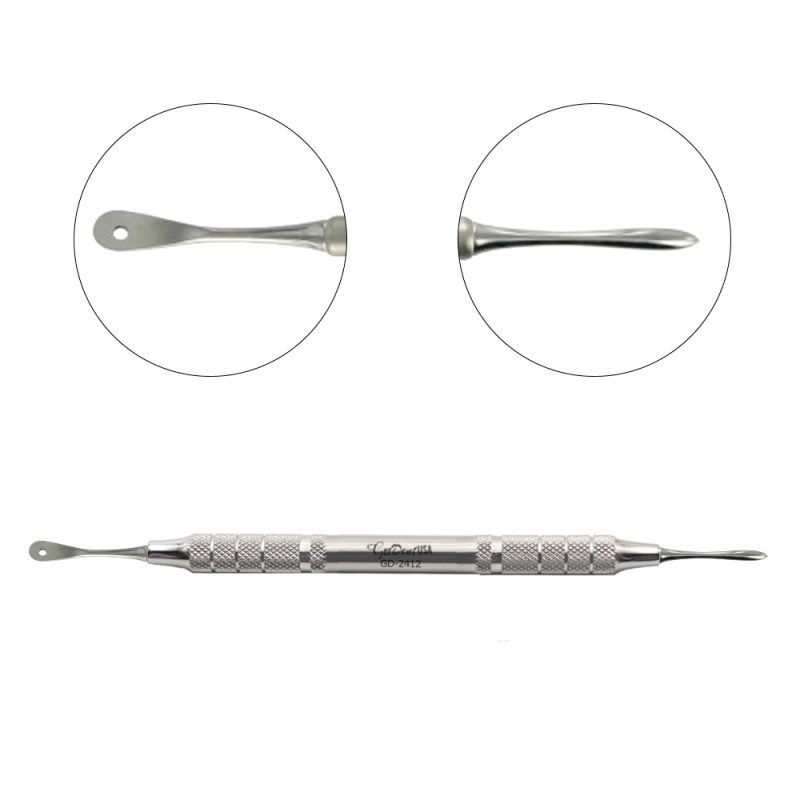
Allen Periosteal Elevator Fig. 9A: Tapered Blade, Beveled Edge & Double-Ended Design for Flap Reflection
Introduction
Flap reflection demands precision and efficiency. A poor instrument increases procedure time, risks tearing the flap, and stresses both surgeon and patient (Allen Periosteal Elevator Fig. 9A). The Allen Periosteal Elevator Fig. 9A solves these challenges through three key structural features — a tapered blade, a beveled edge, and a double-ended design — making it a trusted choice among oral surgeons, periodontists, and implant specialists .
Understanding the Allen Periosteal Elevator Fig. 9A
Surgeons use periosteal elevators to lift the mucoperiosteal flap cleanly away from bone. This exposes the surgical site and protects soft tissue during bone work or implant placement. The Allen Fig. 9A excels at this task. Its double-ended construction lets surgeons access multiple tissue zones without switching instruments, keeping the procedure smooth and uninterrupted (Allen Periosteal Elevator Fig. 9A).
Feature #1: Tapered Blade — Precision Entry Into Tight Tissue Spaces
What Makes a Blade “Tapered”?
A tapered blade gradually narrows toward its working tip. This geometry reduces resistance as the blade advances into the tissue-bone interface, allowing entry into tight spaces with minimal force (Allen Periosteal Elevator Fig. 9A).
Why the Tapered Blade Matters for Flap Reflection
Wide or blunt blades require excessive force at the tissue-bone junction, causing trauma and tearing. The Allen Fig. 9A’s tapered blade enters cleanly with controlled pressure. It also delivers strong tactile feedback, helping surgeons adjust their angle and pressure in real time. Furthermore, the narrower tip navigates confined areas — near roots, interdental spaces, or irregular bony contours — far more accurately than broader blades (Allen Periosteal Elevator Fig. 9A).
Clinical Impact
The tapered blade shortens the most difficult part of any flap procedure — initial tissue entry. Surgeons gain access faster, with less force, reducing both procedure time and post-operative tissue morbidity.
Feature #2: Beveled Edge — Atraumatic, Efficient Tissue Separation
What Is a Beveled Edge?
A beveled edge features an angled, sharpened surface along the blade’s working margin. Rather than cutting tissue, it separates the periosteal attachment with a smooth, sweeping motion.
Why the Beveled Edge Elevates Flap Reflection Performance
Without a proper bevel, surgeons apply more force and more strokes to achieve clean separation — increasing the risk of flap tears and bone gouging. The Allen Fig. 9A’s beveled edge glides beneath the periosteum efficiently. It maintains consistent tissue contact during lateral sweeping motions, preventing the blade from catching or skipping. Moreover, clean periosteal separation preserves tissue integrity, resulting in less post-operative swelling, bruising, and patient discomfort.
Clinical Impact
The beveled edge transforms flap reflection into a precise, efficient motion. Surgeons complete the elevation cleanly and move directly to the primary surgical task without managing tissue complications.
Feature #3: Double-Ended Design — Two Functions, One Instrument
What Does “Double-Ended” Mean?
A double-ended instrument carries two different working ends on a shared handle. Each end offers a distinct blade size or geometry, covering a broader range of clinical situations than a single-ended instrument.
Why the Double-Ended Design Improves Surgical Efficiency
Flap reflection often moves between wider bony surfaces and narrow interdental or interarticular spaces. The Allen Fig. 9A handles both without instrument changes. One end manages broader buccal bone elevation while the other navigates tighter areas near roots or implant sites. Additionally, the shared handle preserves ergonomic consistency — surgeons keep the same grip throughout, reducing hand fatigue and maintaining fine motor control.
Clinical Impact
The double-ended design keeps the surgical workflow uninterrupted, reduces instrument tray clutter, and allows the instrument to adapt to the procedure rather than forcing the surgeon to adapt to the instrument.
How All Three Features Work Together
Each feature covers a distinct phase of flap reflection. The tapered blade handles clean initial entry. The beveled edge performs smooth, atraumatic periosteal separation. The double-ended design addresses all tissue zones without instrument changes. Together, they deliver a seamless surgical workflow from the first tissue contact to the final flap margin — consistently, across varying procedure types and patient anatomies.
Who Should Use the Allen Periosteal Elevator Fig. 9A?
The Allen Fig. 9A suits a broad range of professionals, including oral and maxillofacial surgeons, periodontists, implant surgeons, general dentists expanding into surgery, and surgical training programs. Its versatility makes it equally effective in simple single-tooth extractions and complex full-arch implant procedures.
Maintenance and Sterilization
The instrument uses high-grade stainless steel that withstands repeated autoclave cycles. After each use, clinicians should inspect the tapered tip for deformation, check the beveled edge for dulling, and confirm both working ends remain properly aligned. Storing it in a cassette or protective pouch further extends service life and preserves blade quality.
Conclusion
The Allen Periosteal Elevator Fig. 9A brings together three powerful structural features — a tapered blade for precise entry, a beveled edge for atraumatic separation, and a double-ended design for full procedural coverage. Together, they make flap reflection faster, cleaner, and more controlled. For any surgical practice that prioritizes efficiency and patient outcomes, the Allen Fig. 9A is an essential, high-performing instrument.