
Getting surgical bur speed and torque settings right is one of the most overlooked factors in successful bone-cutting procedures. Set the RPM too high, and friction can overheat the bone before you even notice. Set it too low, and you risk excessive pressure, poor control, and prolonged procedure time. This guide breaks down practical RPM and torque ranges for oral and implant surgery, along with the reasoning behind them, so you can match settings to the case in front of you with confidence.
What Determines the Right Bur Speed and Torque
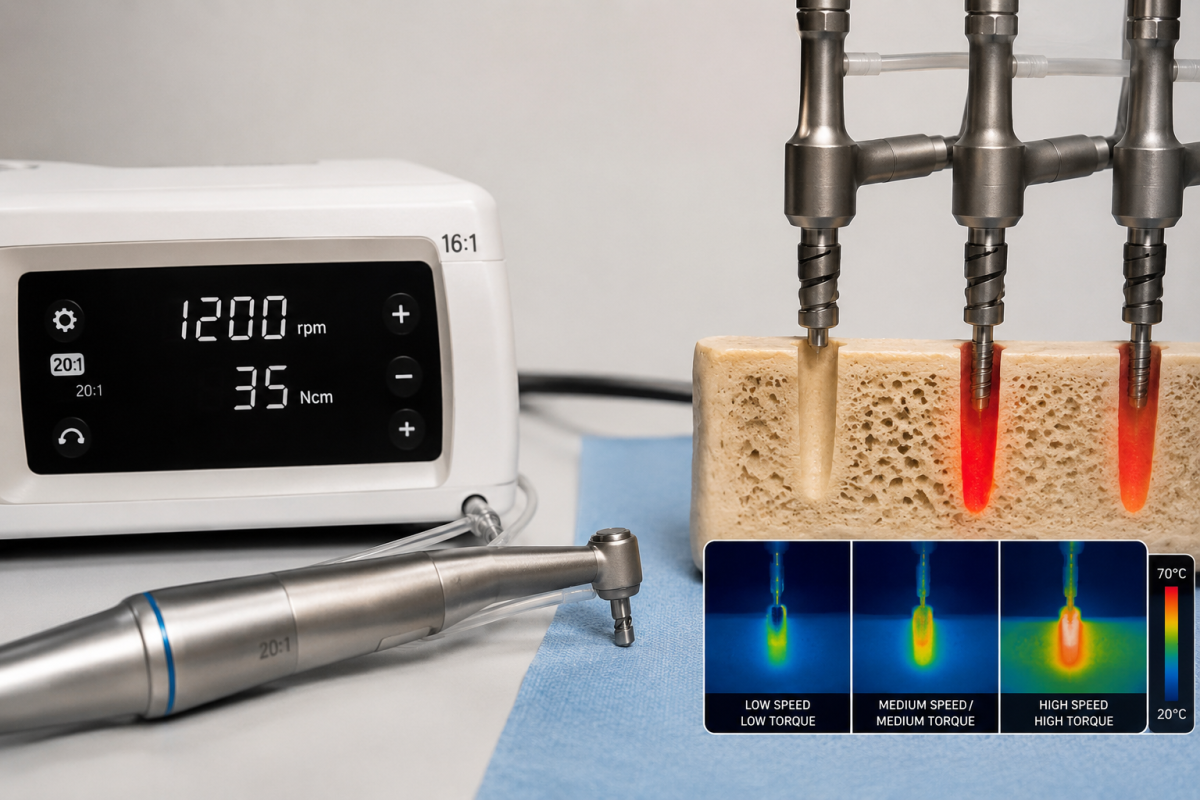
Surgical burs differ significantly from restorative burs in both design and function. While general-purpose burs handle enamel and dentin at very high speeds, surgical burs are engineered specifically for cutting bone during osteotomy and implant site preparation a task that demands a completely different approach to speed and pressure of surgical bur speed & torque settings.
Several factors influence which settings are appropriate for a given case:
- Bone density denser cortical bone generates more heat at a given speed than softer cancellous bone
- Bur diameter and design larger diameter burs create more drag, which affects effective RPM under load
- Irrigation adequate saline irrigation allows for slightly higher speeds without crossing the heat threshold
- Drill/bur sharpness a worn or dull instrument requires more force to cut, which raises both torque demand and heat output
Because these variables interact, there isn’t a single universal number that applies to every case. Instead, most clinical protocols work within defined ranges depending on the procedure.
Instrument wear is often underestimated in this equation. A study examining drill sharpness and bone damage found that a worn cutting edge produced heat above the necrotic threshold at depths where a sharp instrument remained well within safe limits.
Typical Surgical Bur Speed and Torque Ranges
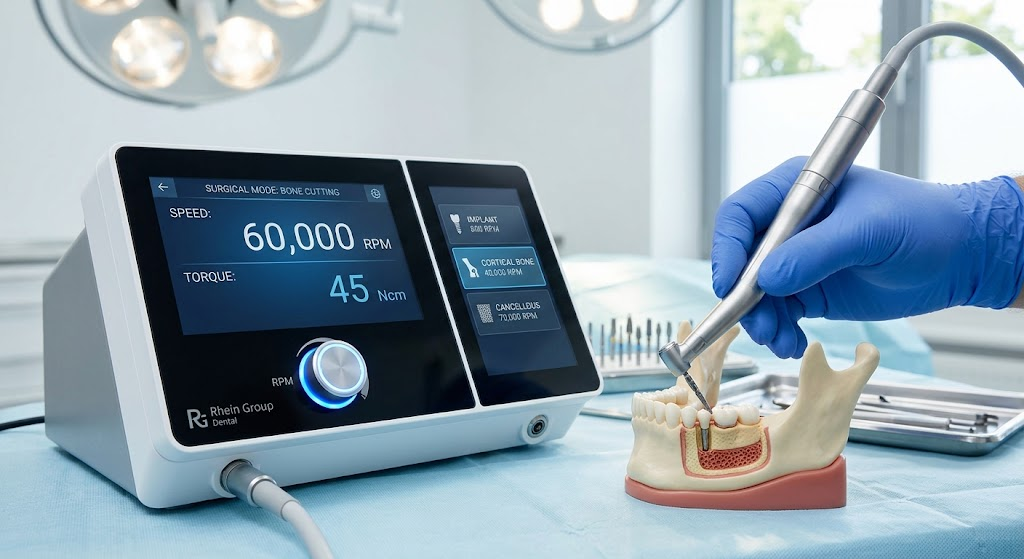
For general oral surgery bone-cutting applications, surgical burs typically operate in the 40,000–80,000 RPM range, which is considerably lower than the speeds used for enamel or dentin preparation. This slower range helps minimize heat generation in cortical bone while still maintaining acceptable cutting efficiency.
Implant osteotomy protocols, however, run even slower. Depending on the drill system and manufacturer protocol, many implant drilling sequences operate between 800 and 2,500 RPM, with torque settings commonly falling in the 35–50 Ncm range for the final seating stages. As a general rule, torque and speed move in opposite directions on most surgical motors as RPM increases, available torque decreases, and vice versa.
Multiple studies point to a similar conclusion here. Research on heat generated by dental implant drills found that a drill speed of roughly 2,500 rpm combined with moderate applied force produced sufficient cutting efficiency while keeping heat production low enough to avoid osseous damage.
For comparison, general restorative dentistry sits at a completely different scale: high-speed air-turbine handpieces run at roughly 250,000–400,000 RPM for crown and cavity preparation, while low-speed handpieces used for polishing and endodontic work typically stay between 5,000 and 40,000 RPM. This contrast highlights why surgical burs and restorative burs are never interchangeable, even when the shank type appears compatible.
Why Getting the Settings Wrong Matters: Thermal Necrosis Risk
The biggest clinical risk of incorrect speed and torque settings isn’t just a slower procedure it’s thermal osteonecrosis. When bone temperature rises beyond a critical threshold, cell death occurs at the drilling site, which can compromise healing and, in implant cases, threaten osseointegration entirely.
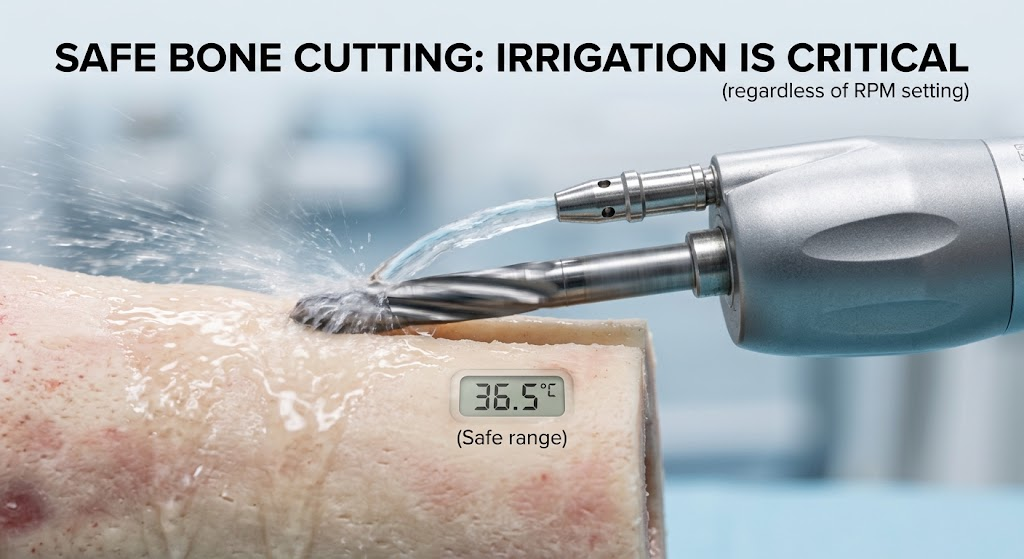
Research on implant osteotomy has shown that drilling at excessive speeds without adequate irrigation can push bone temperature past the necrotic threshold, even during standard preparation. Conversely, studies have also found that moderate speeds combined with generous irrigation and light, intermittent pressure keep temperatures within a safe range across most bone densities. This is why irrigation volume and technique matter just as much as the RPM number itself a correct speed setting paired with poor irrigation can still cause damage.
Instrument condition plays a role too. A worn or dull surgical bur requires more force to achieve the same cut, which increases both torque demand and frictional heat often pushing temperatures above safe limits even at settings that would otherwise be appropriate.
Practical Recommendations by Procedure Type
General Osteotomy / Bone Reduction
Use lower RPM settings (roughly 40,000–80,000 RPM for surgical burs, or 800–2,000 RPM for dedicated implant drills) with continuous, generous irrigation. Apply light, consistent pressure rather than forcing the bur through denser sections.
Implant Site Preparation
Follow the specific manufacturer protocol for your drill system, since torque and speed sequences vary by implant design. As a general guideline, initial osteotomy stages tend to use lower torque, with values increasing modestly during final seating but exceeding roughly 50 Ncm during placement raises the risk of both instrument damage and bone trauma.
Dense Cortical Bone
Favor the lower end of the recommended RPM range and rely on the bur’s torque rather than speed to maintain cutting efficiency. Pairing a sharp, appropriately sized bur with irrigation is more effective and safer than increasing RPM to compensate for resistance.
Several drilling variables interact to influence this risk. A review of cortical bone drilling parameters identified drilling speed, feed rate, cooling, bur diameter, and instrument wear as the key factors determining whether thermal osteonecrosis occurs.
Final Thoughts
Correct surgical bur speed and torque settings aren’t just about efficiency they directly influence bone health, healing outcomes, and implant success. As a general principle, lower RPM combined with adequate torque and thorough irrigation offers the safest and most predictable results across most bone-cutting procedures. When in doubt, always default to your specific drill or implant manufacturer’s documented protocol, since exact ranges can vary between systems even when the underlying clinical goals stay the same.
FAQ
What RPM should I use for a surgical bur on bone?
Most surgical burs used for general bone-cutting and osteotomy procedures run between 40,000 and 80,000 RPM, while dedicated implant drilling systems often use much lower speeds typically 800 to 2,500 RPM depending on the manufacturer’s protocol and bone density at the site.
What torque setting prevents implant damage during placement?
Many clinical protocols recommend keeping torque below approximately 50 Ncm during final implant seating. Exceeding this threshold increases the risk of implant driver breakage, implant deformation, and bone tissue damage that can affect osseointegration.
Does higher RPM always mean more heat?
Generally, yes but not in isolation. Heat generation depends on the combination of speed, applied pressure, bur sharpness, and irrigation. A sharp bur with proper irrigation can run at a given RPM with far less heat buildup than a dull bur running at the same speed without adequate cooling.
Why do surgical burs use lower RPM than restorative burs?
Restorative burs cut enamel and dentin, tissues that tolerate high-speed cutting well. Bone is far more heat-sensitive; drilling too fast risks thermal necrosis and can compromise healing. That’s why surgical bur protocols intentionally run at a fraction of the speed used in general tooth preparation.
How does irrigation affect the ideal speed setting?
Adequate irrigation removes heat from the cutting site in real time, which allows a slightly wider safe speed range. Without sufficient irrigation, even moderate RPM settings can push bone temperature past the necrotic threshold, particularly in dense cortical bone.