
Choosing between autoclavable and disposable suction tips is an important decision for any dental practice. The right choice affects not only daily costs, but also infection control, workflow efficiency, and patient confidence. Both options offer clear advantages, so the best solution depends on your clinic’s patient volume, sterilization setup, and long-term goals.
Understanding the Two Options
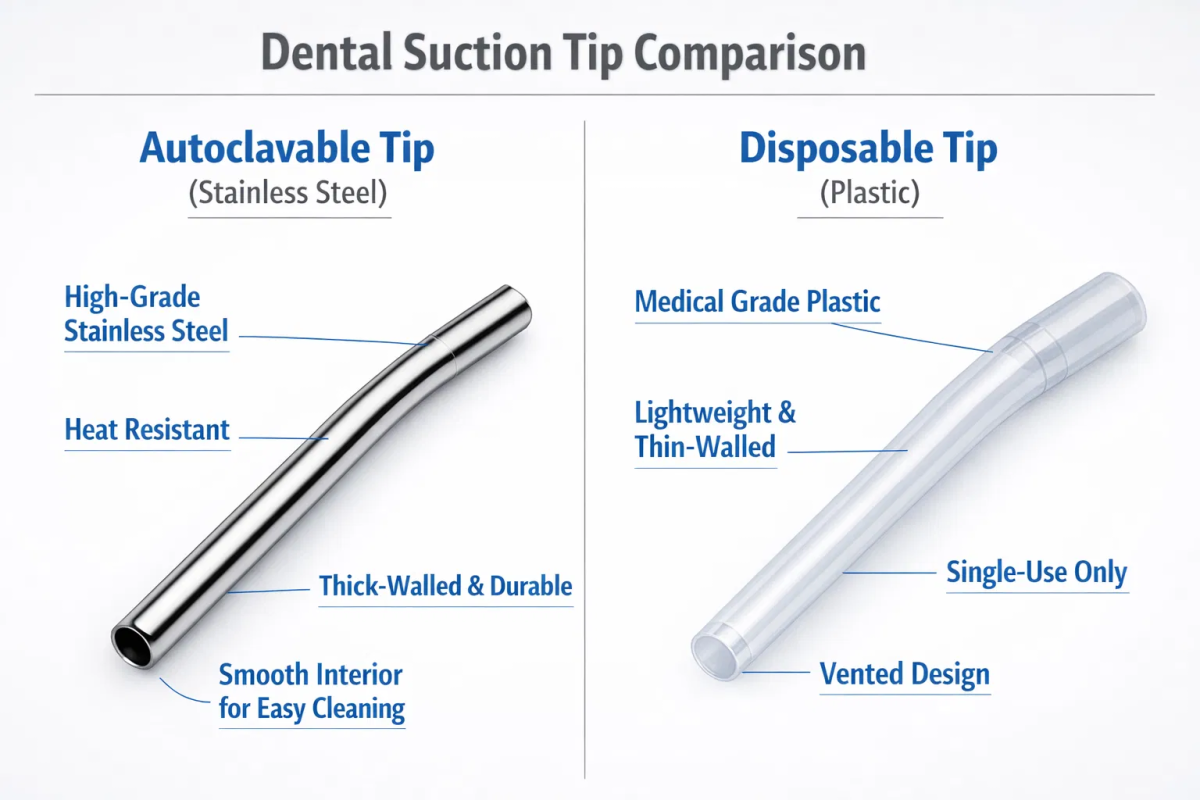
Autoclavable suction tips are reusable instruments, usually made from stainless steel or durable medical-grade materials. They are cleaned, sterilized, and reused between patients.
Disposable suction tips are designed for single-patient use and discarded after treatment. According to the Centers for Disease Control and Prevention, single-use dental devices should not be reprocessed and must be discarded after one patient use.
Cost Comparison
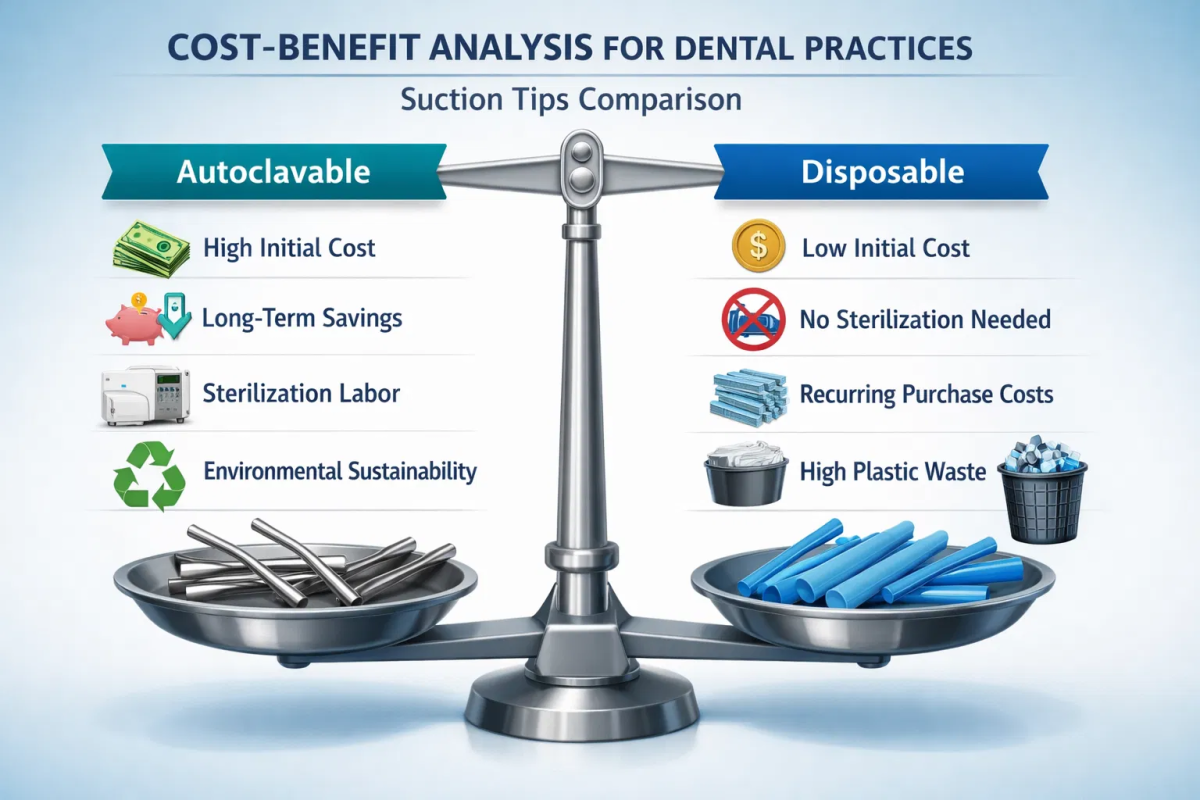
Upfront Cost: Disposable Wins
Disposable suction tips are cheaper to purchase initially. This makes them attractive for:
- New clinics with limited budgets
- Mobile dental units
- Temporary outreach setups
Since there is no need to buy multiple reusable sets, startup expenses stay lower.
Long-Term Cost: Autoclavable Often Saves More
While autoclavable tips cost more upfront, they can be reused many times, making them more cost-effective over the long run.
Long-term savings come from:
- Reduced repeat purchasing
- Lower per-patient instrument cost
- Fewer supply shortages
For busy clinics with steady patient flow, reusable tips often provide better financial value over time.
Infection Control and Safety
Disposable Tips: Maximum Convenience
Disposable suction tips reduce cross-contamination risk because they are used once and discarded. Benefits include:
- No sterilization required
- Lower chance of reprocessing errors
- Faster turnover between patients
They are especially useful in:
- High-volume hygiene appointments
- Emergency visits
- Clinics with limited sterilization capacity
Autoclavable Tips: Safe with Proper Protocols
Autoclavable tips are safe when practices follow strict cleaning and sterilization standards.
However, reusable tips require:
- Thorough pre-cleaning
- Internal lumen flushing
- Proper autoclave cycles
- Routine inspection for wear
If sterilization is inconsistent, reusable tips can increase contamination risk.
Workflow and Staff Efficiency
Disposable Tips Improve Speed
Disposable suction tips help save chairside time because staff can:
- Replace tips quickly
- Avoid cleaning delays
- Reduce turnaround time
This can improve scheduling efficiency in busy practices.
Autoclavable Tips Need More Handling
Reusable tips require:
- Cleaning after each use
- Packaging for sterilization
- Drying and storage
This adds labor and operational steps, which can affect workflow if staffing is limited.
Environmental Impact
One major downside of disposable suction tips is increased plastic waste. Practices focused on sustainability may prefer autoclavable options because they:
- Reduce clinical waste
- Support eco-friendly branding
- Lower landfill impact
Autoclavable tips are often a better fit for environmentally conscious clinics.
Which Option Is Best?
Choose Disposable Suction Tips If:
- You prioritize convenience
- You have high patient turnover
- You want minimal sterilization workload
- You run outreach or mobile services
Choose Autoclavable Suction Tips If:
- You want long-term savings
- You already have strong sterilization systems
- You value durability
- You want to reduce waste
Final Thoughts
There is no one-size-fits-all answer. Disposable suction tips offer convenience and speed, while autoclavable tips provide better long-term value and sustainability.
For many modern dental practices, a hybrid approach works best: using disposable tips for routine hygiene or high-turnover cases, and autoclavable tips for surgical or specialized procedures. This balance helps optimize cost, safety, and efficiency for better patient care.