Dental mirrors are one of the most frequently used instruments in every dental practice. While the mirror head often gets the attention, the handle and mounting system play an equally important role in comfort, visibility, and efficiency. Choosing between cone socket and thread mount systems can affect how smoothly procedures are performed.
In this guide, we’ll explain how both systems work, their advantages, and which option may be best for your practice.
Why Dental Mirror Handle Systems Matter
A dental mirror is used for indirect vision, illumination, retraction, and improved access during examinations and treatments. The handle system connects the mirror head securely, allowing clinicians to work with precision (Dental mirror handle types).
A reliable handle system helps with:
- Better mirror stability
- Faster mirror head replacement
- Improved grip and control
- Reduced hand fatigue
- Easier cleaning and sterilization
The wrong connection type can lead to loose fittings, wobbling, or incompatibility with replacement heads.
What Is a Cone Socket Mirror Handle?
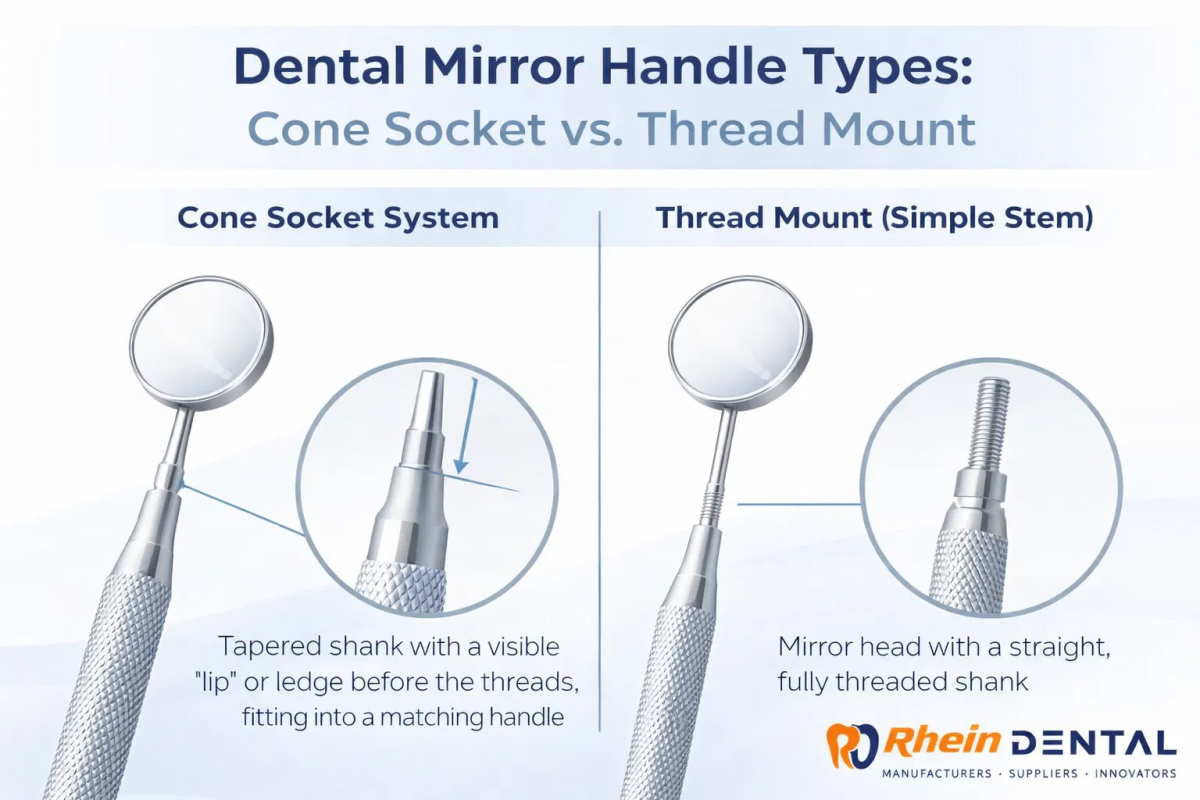
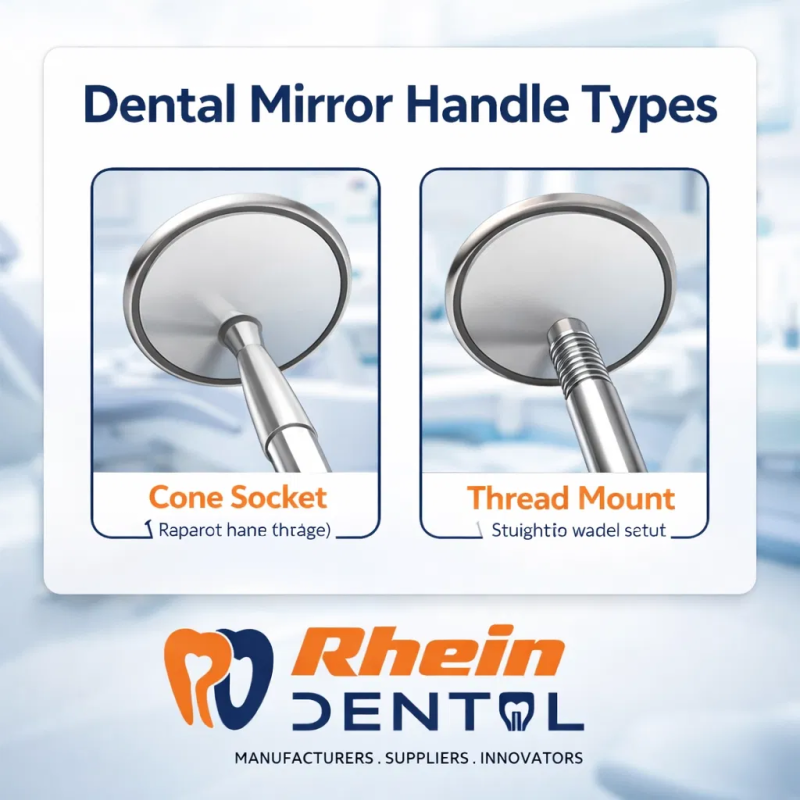
A cone socket (C.S.) mirror handle uses a tapered friction-fit or socket-style connection. The mirror head stem is inserted into the handle and held firmly in place.
Key Features of Cone Socket Handles
- Quick and secure attachment
- Strong, wobble-free fit
- Easy replacement of mirror heads
- Common in reusable stainless steel systems
- Often preferred in professional dental settings
Benefits of Cone Socket Systems
1. Better Stability
Cone socket systems provide a snug fit, reducing movement during delicate procedures.
2. Faster Chairside Efficiency
Mirror heads can be replaced quickly without excessive twisting.
3. Cost-Effective Over Time
Only the mirror head needs replacement when scratched or worn.
4. Ideal for Autoclaving
Most cone socket handles are made from stainless steel and withstand repeated sterilization cycles.
What Is a Thread Mount Mirror Handle?
Thread mount systems use a screw-thread mechanism where the mirror head twists into the handle.
These are often known as:
- Simple stem systems
- Standard thread systems
- European thread systems (in some markets)
Key Features of Thread Mount Handles
- Traditional screw-in connection
- Widely available
- Simple design
- Suitable for general diagnostics
Benefits of Thread Mount Systems
1. Familiar and Easy to Use
Many clinicians are already comfortable with threaded designs.
2. Secure with Proper Tightening
When properly fitted, thread mount mirrors stay in place.
3. Broad Product Availability
Common across many brands and mirror styles.
4. Budget-Friendly Options
Often available in economical sets or entry-level kits.
Cone Socket vs. Thread Mount: Key Differences
| Feature | Cone Socket | Thread Mount |
|---|---|---|
| Attachment Style | Push-fit / tapered socket | Screw-in thread |
| Stability | Very high | Good |
| Replacement Speed | Faster | Slower |
| Risk of Loosening | Low | Moderate if not tightened |
| Cleaning Convenience | Excellent | Good |
| Best For | High-volume practices | General use / budget setups |
Which One Should You Choose?
Choose Cone Socket If:
- You want faster mirror head changes
- You prefer premium ergonomics
- Your clinic handles high patient volume
- You need maximum stability
Choose Thread Mount If:
- You use a traditional setup
- You want cost-effective replacements
- You already stock threaded mirror heads
- You need a simple diagnostic solution
Tips Before Buying Dental Mirror Handles
To choose the right handle system:
- Check compatibility with your existing mirror heads
- Select ergonomic, non-slip grip designs
- Choose autoclavable stainless steel materials
- Consider handle weight and balance
- Standardize one system across your practice to avoid mix-ups
Using the right dental mirror handle improves comfort, saves time, and supports more accurate treatment. A small design choice can make a big difference in daily workflow (Dental mirror handle types).