
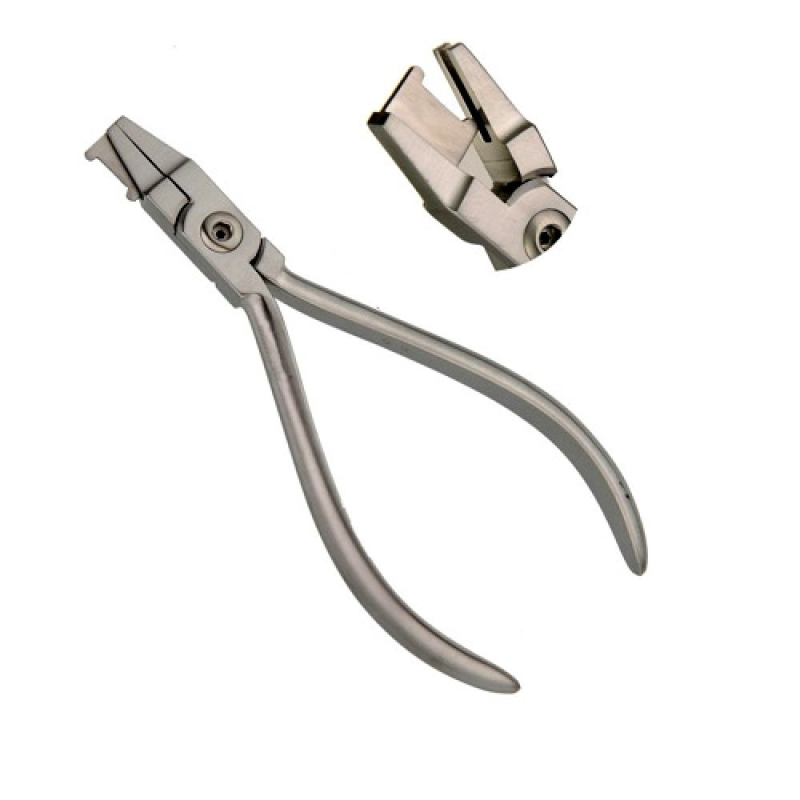
In orthodontic procedures, secure and efficient ligation plays a vital role in maintaining archwire stability and achieving controlled tooth movement. Therefore, clinicians rely heavily on ligature wire tying pliers for precision and consistency. More importantly, the twisting mechanism defines how effectively these instruments perform in daily practice.
What Are Ligature Wire Tying Pliers?
Ligature wire tying pliers are specialized orthodontic tools that help clinicians grip, twist, and secure stainless steel ligature wires around brackets. Unlike elastic ligatures, wire ligation provides stronger and more controlled pressure on the archwire. As a result, clinicians often prefer it during treatment stages that demand higher precision.
Why the Twisting Mechanism Matters
The twisting mechanism sits at the core of these pliers. In simple terms, it allows smooth and controlled wire rotation during ligation. Because of this, clinicians can achieve consistent and reliable results.
1. Consistent and Controlled Twisting
The beaks firmly grip the ligature wire and prevent slipping. Then, as the clinician rotates the pliers, the wire twists evenly. Consequently, this uniform twisting ensures balanced force distribution across all brackets.
2. Reduced Risk of Wire Breakage
A smooth twisting action minimizes stress points along the wire. In addition, controlled rotation prevents sudden strain. Therefore, the wire maintains its integrity during tightening.
3. Improved Clinical Efficiency
Efficient twisting reduces the need for repeated adjustments. As a result, clinicians complete ligation faster and with greater accuracy. Moreover, this streamlined process improves workflow in busy practices.
4. Better Patient Comfort
Uniform twists prevent sharp wire ends from protruding. For this reason, patients experience less irritation in the cheeks and gums. Ultimately, this leads to a more comfortable post-procedure experience.
Key Features to Consider
When selecting ligature wire tying pliers, you should evaluate both the twisting mechanism and the overall design. Specifically, look for:
- Precision-aligned beaks to ensure a secure grip
- Slim profiles for better access in tight spaces
- Tungsten carbide inserts for durability and enhanced grip
- Ergonomic handles to reduce hand fatigue
- High-quality stainless steel for corrosion resistance
How the Twisting Mechanism Works
Understanding the process helps clinicians improve efficiency. So, here’s a quick step-by-step breakdown:
- Position the wire around the bracket and archwire.
- Grip both ends of the ligature wire firmly with the pliers.
- Rotate the instrument in a controlled motion to twist the wire.
- Trim and tuck the excess wire to prevent irritation.
By following these steps, clinicians can achieve secure and clean ligation every time.
Clinical Tips for Better Results
- Use smooth, controlled rotations instead of abrupt movements.
- Avoid over-tightening, as it may cause discomfort.
- Check beak alignment regularly to maintain precision.
- Combine with high-quality ligature wire for optimal outcomes.
Additionally, regular instrument maintenance ensures consistent performance over time.
Conclusion
Ligature wire tying pliers remain essential in orthodontics. More importantly, their twisting mechanism directly influences efficiency, precision, and patient comfort. By choosing well-designed instruments and using proper technique, clinicians can significantly improve treatment outcomes.
In the end, a refined twisting mechanism does more than save time—it elevates the overall quality of care.nt satisfaction.